
Malicious Chrome Extension Steals SOL Crypto Without Draining Wallets


Malicious Chrome Extension Exploits Solana Swaps, Stealing User Funds


A recently identified malicious Google Chrome extension is facilitating fake Solana trades while covertly siphoning a portion of each transaction into the attacker’s wallet. The extension, dubbed Crypto Copilot, manipulates users attempting to execute swaps on the Solana blockchain, according to a report from cybersecurity firm Socket.


Crypto Copilot allows users to trade Solana directly from their Twitter feeds, promising quick execution without switching apps. However, behind the scenes, the extension injects an additional transfer instruction into every swap—effectively draining a minimum of 0.0013 SOL or 0.05% of the total trade—without the user's awareness. The mechanism leverages the decentralized exchange Raydium to facilitate these swaps, then appends a second, hidden transfer that reroutes SOL from the user’s wallet to the attacker’s address.


On the user interface, only the intended swap appears, with wallet confirmation screens summarizing the transaction without highlighting the extra, malicious instruction. “Users sign what appears to be a single swap, but both instructions execute atomically on-chain,” Socket explained.
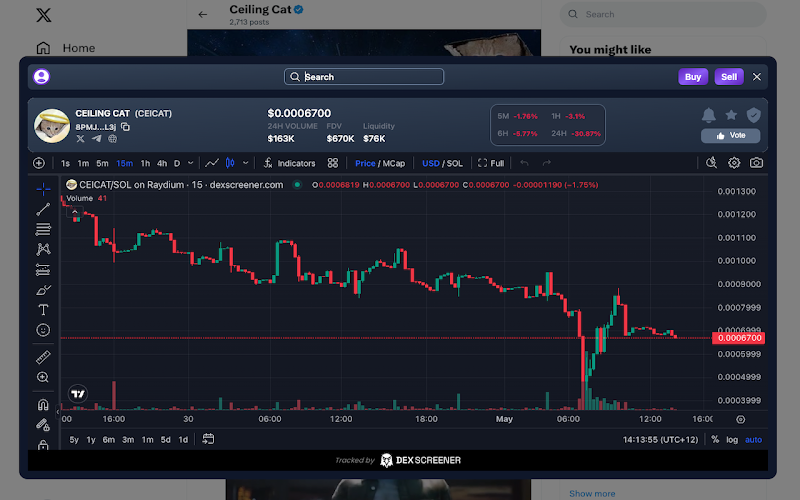


Chrome extension malicious activity
Featured image of the Google Chrome extension. Source: Chrome Web Store


Socket has already submitted a takedown request to the Chrome Web Store security team. Despite being publicly available since June 18, 2024, the extension remains relatively obscure, with only 15 users reported so far. Crypto Copilot markets itself as an effortless way for Solana traders to execute swaps directly from social media, claiming to streamline trading opportunities without the hassle of multiple platform switches.


The proliferation of malicious Chrome extensions targeting the crypto community is well-documented. Earlier this month, Socket flagged another malicious wallet extension that drained user funds from the Chrome Web Store’s crypto ecosystem. In August, Jupiter, a decentralized exchange aggregator, identified yet another extension designed to empty Solana wallets. The risks are compounded by high-profile incidents, including a June 2024 case where a Chinese trader lost over $1 million after installing a rogue Binance plugin that hijacked account cookies.


As the browser extension ecosystem continues to attract malicious actors, security experts urge users to exercise caution when installing and confirming transactions in browser-based crypto tools. The ongoing exploitation highlights the importance of verifying extensions and transaction details before signing any blockchain-related activity.


https://www.cryptobreaking.com/malicious-chrome-extension-steals-sol/?utm_source=blogger%20&utm_medium=social_auto&utm_campaign=Malicious%20Chrome%20Extension%20Steals%20SOL%20Crypto%20Without%20Draining%20Wallets%20

Comments

Popular posts from this blog

Coinbase's x402 launches AI agents app store for payments

Coinbase-backed x402 has unveiled Agentic.market, a dedicated marketplace aimed at increasing the usefulness of AI agents by aggregating thousands of apps and services that agents can access without any API keys. The rollout positions the platform as a central hub for agents to discover, evaluate, and deploy capabilities across a standardized payments layer. Coinbase product lead Nick Prince described Agentic.market in a video posted on X as a storefront for discovering, comparing, and using x402 services. The marketplace is designed to give both humans and their AI agents access to a wide range of tools—from data feeds to consumer apps—without the friction of managing API credentials. A storefront for discovering, comparing, and using x402 services. Thousands of services. Zero API keys. Powered by x402. Prince added that the market offers a web interface for humans to browse and assess services, alongside a programming layer that lets AI agents autonomously search, filter, and integra...

Top Cryptocurrencies to Watch: BTC, ETH, BNB, XRP, Solana, Dogecoin & More

Market Analysis and Price Predictions for Key Cryptocurrencies Recent market dynamics reveal a cautious sentiment across the cryptocurrency landscape, with Bitcoin struggling to maintain levels above $90,000 and many major altcoins facing downward pressure. Indicators point toward reduced participation from both institutional and retail investors, raising concerns about a potential consolidation phase after notable gains earlier in the year. Bitcoin has fallen below $87,000, reflecting waning demand at higher price points. Institutional fund flows into BTC and ETH ETFs have turned negative, indicating a period of subdued market activity. Active addresses and Binance deposit/withdrawal activities are at annual lows, suggesting market indecision. Most leading altcoins are approaching support levels, with some poised for potential breakdowns. Tickers mentioned: Bitcoin, Ethereum, Binance Coin, XRP, Solana, Dogecoin, Cardano, Bitcoin Cash, Chainlink, Hyperliquid Sentiment: Neutral to Sli...

Analyst: Bitcoin can reclaim $100K without a new narrative

Bitcoin has stalled below the $100,000 threshold, marking a run of almost five months without a breakout above that level. As of the latest market close, BTC hovered around $78,250 after a February nadir of about $60,000, underscoring a slow, grinding recovery amid broader market dynamics. In parallel, tech markets—especially AI-focused equities—have captured the spotlight, with investors rotating capital away from crypto in search of different risk-reward profiles. Nvidia (NVDA), the leading AI stock by market cap, has gained about 5.08% since the start of the year, while Bitcoin has faced a roughly 10% dip over the same period, illustrating a diverging performance within risk assets. MN Trading Capital founder Michael van de Poppe suggested that Bitcoin may not require a fresh narrative to push back above $100,000. In a post on X, he asked what narrative would drive BTC to the milestone and concluded that “price moves upwards, and the narrative will create itself.” He continued that ...