
UK Tightens Crypto Tax Rules Amid Global Crackdown on Digital Assets


United Kingdom Enhances Crypto Transaction Reporting with New Domestic Regulations


The United Kingdom is set to impose new reporting requirements on domestic cryptocurrency platforms starting in 2026, marking a significant step toward increased regulatory oversight. This move expands the scope of the current Cryptoasset Reporting Framework (CARF), enabling HM Revenue & Customs (HMRC) to access comprehensive transaction data from both local and international sources for UK-resident users. The updated framework aims to bolster tax compliance and curb illicit activity in digital assets ahead of its scheduled international data exchange in 2027.


Key Developments in Crypto Regulatory Oversight


  • UK authorities will require crypto service providers to perform due diligence, verify identities, and report detailed transaction data annually, aligning domestic reporting with global standards.

  • The expansion aims to prevent cryptocurrencies from becoming an “off-CRS” asset class, which would allow activity to evade traditional tax reporting standards like the Common Reporting Standard.

  • The move is part of broader efforts by various governments worldwide to tighten oversight of digital assets and facilitate international cooperation against tax evasion.

  • UK officials emphasize that the unified approach will simplify compliance for crypto companies while providing tax authorities with a more complete dataset to identify non-compliance and enforce obligations.
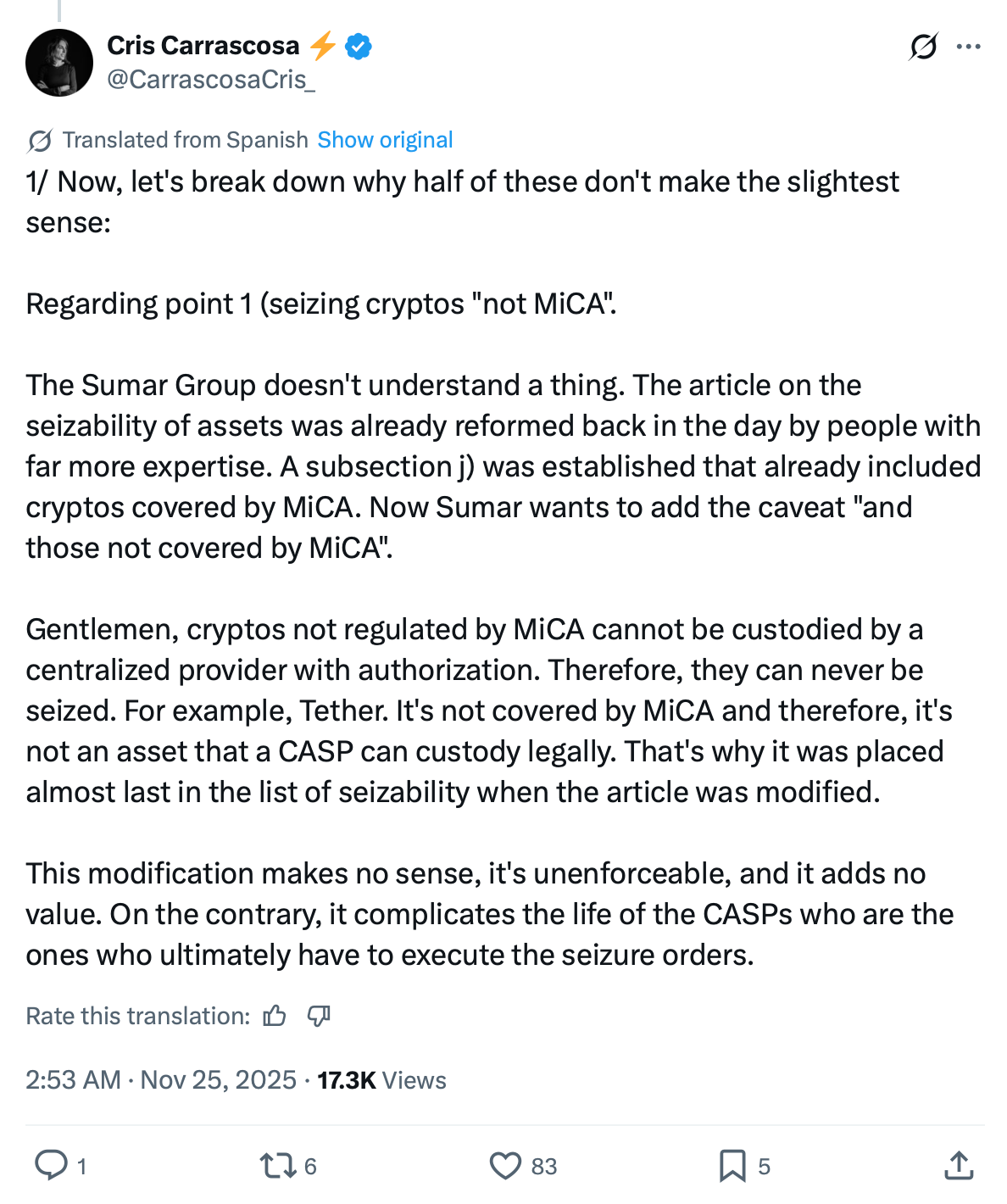


Switzerland, Spain, South Korea, United States, United Kingdom
Source: Cris Carrascosa


In addition to expanding its reporting scope, the UK introduced a “no gain, no loss” tax framework for DeFi users, which defers capital gains until tokens are sold. This approach has received favorable feedback from the local industry, signaling a shift towards a more nuanced taxation model for crypto assets.


Global Trend Toward Crypto Tax Enforcement


Worldwide, governments are intensifying their efforts to regulate and monitor digital assets. For instance, South Korea’s National Tax Service announced plans to seize crypto assets stored in cold wallets and conduct home searches for hardware devices suspected of harboring concealed holdings. Similarly, Spain’s Parliament proposed increasing the top tax rate on crypto gains to 47%, aiming to incorporate digital asset profits into broader income categories.


Switzerland has postponed the start of its automatic crypto information exchange with foreign tax authorities until 2027, pending a review of potential partner countries. The upcoming CARF rules will still be enacted on January 1, with transitional measures introduced for domestic firms.


Meanwhile, in the United States, Congressman Warren Davidson has introduced legislation proposing that Americans could pay federal taxes using Bitcoin, with these payments funneled into a national BTC reserve. The bill, known as the Bitcoin for America Act, also seeks to exempt such bitcoin payments from capital gains taxes, treating the transferred crypto as neither a gain nor a loss.


https://www.cryptobreaking.com/uk-tightens-crypto-tax-rules/?utm_source=blogger%20&utm_medium=social_auto&utm_campaign=UK%20Tightens%20Crypto%20Tax%20Rules%20Amid%20Global%20Crackdown%20on%20Digital%20Assets%20

Comments

Popular posts from this blog

Mastercard Launches AI Agent Pay System With Ripple and Solana Help

Mastercard has launched Agent Pay for Machines, a payments system built for autonomous software agents. The service allows AI agents to send and receive payments without direct human action. It brings Ripple, Coinbase, and Solana Foundation into Mastercard’s push for automated digital commerce. Ripple Brings XRPL and RLUSD to Mastercard’s Agent Pay System Mastercard introduced Agent Pay for Machines on June 10 as a tool for machine-led payments. The system targets high-volume and low-value transactions across business and consumer use cases. It also supports automated settlement between software agents and connected machines. Ripple will support the system through the XRP Ledger and its RLUSD stablecoin. The company said that settlement will become more important as automated commerce grows. It also sees blockchain rails as useful for fast and rule-based payments. RippleX senior vice president Markus Infanger said XRPL and RLUSD support enterprise-grade agent payments. He said the tool...

Coinbase's x402 launches AI agents app store for payments

Coinbase-backed x402 has unveiled Agentic.market, a dedicated marketplace aimed at increasing the usefulness of AI agents by aggregating thousands of apps and services that agents can access without any API keys. The rollout positions the platform as a central hub for agents to discover, evaluate, and deploy capabilities across a standardized payments layer. Coinbase product lead Nick Prince described Agentic.market in a video posted on X as a storefront for discovering, comparing, and using x402 services. The marketplace is designed to give both humans and their AI agents access to a wide range of tools—from data feeds to consumer apps—without the friction of managing API credentials. A storefront for discovering, comparing, and using x402 services. Thousands of services. Zero API keys. Powered by x402. Prince added that the market offers a web interface for humans to browse and assess services, alongside a programming layer that lets AI agents autonomously search, filter, and integra...

Top Cryptocurrencies to Watch: BTC, ETH, BNB, XRP, Solana, Dogecoin & More

Market Analysis and Price Predictions for Key Cryptocurrencies Recent market dynamics reveal a cautious sentiment across the cryptocurrency landscape, with Bitcoin struggling to maintain levels above $90,000 and many major altcoins facing downward pressure. Indicators point toward reduced participation from both institutional and retail investors, raising concerns about a potential consolidation phase after notable gains earlier in the year. Bitcoin has fallen below $87,000, reflecting waning demand at higher price points. Institutional fund flows into BTC and ETH ETFs have turned negative, indicating a period of subdued market activity. Active addresses and Binance deposit/withdrawal activities are at annual lows, suggesting market indecision. Most leading altcoins are approaching support levels, with some poised for potential breakdowns. Tickers mentioned: Bitcoin, Ethereum, Binance Coin, XRP, Solana, Dogecoin, Cardano, Bitcoin Cash, Chainlink, Hyperliquid Sentiment: Neutral to Sli...