Blockchain Group Urges US Lawmakers to Support Crypto Customer Reward Policies


Crypto Industry Pushes Back Against Stablecoin Yield Restrictions


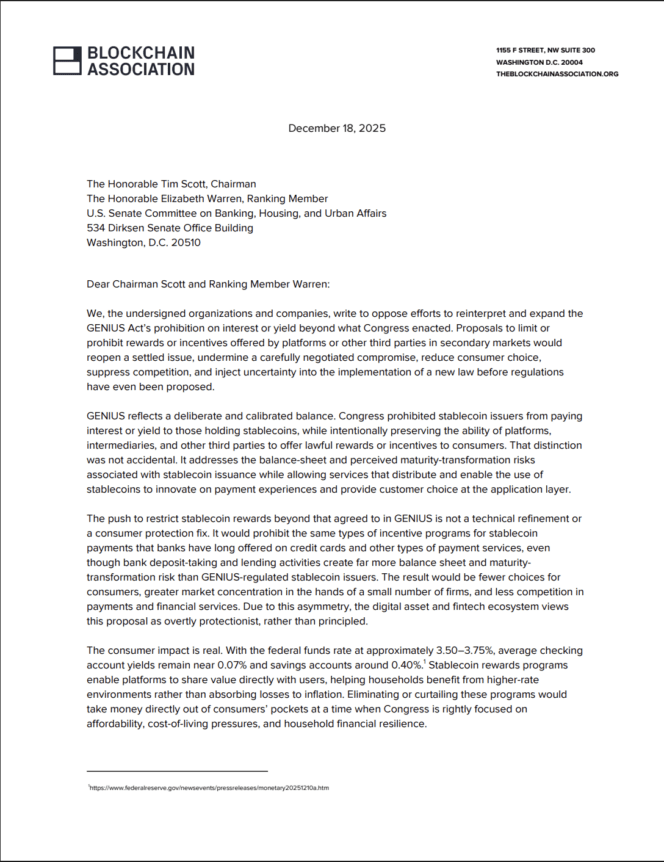
The Blockchain Association, a leading non-profit organization advocating for the cryptocurrency industry, has formally opposed new regulatory measures aimed at restricting stablecoin yield-sharing and third-party platform rewards. In a letter signed by over 125 industry groups and companies, the association warned that such restrictions could hinder innovation, stifle competition, and favor incumbent financial institutions.


Specifically, the association challenged proposed expansions within the GENIUS stablecoin regulatory framework that seek to prohibit third-party service providers from offering rewards and yields to stablecoin holders. The group argued that these measures would impose unnecessary barriers on crypto platforms, limiting their ability to compete with traditional financial services like banks and credit card companies, which routinely provide incentives to consumers.


Banks, United States, Stablecoin, Genius Act, Yields
The letter opposes efforts to prevent crypto platforms from sharing yield with customers. Source: The Blockchain Association


Advocates for the crypto industry emphasize that rewards and incentives are crucial features of competitive markets. “The potential benefits of payment stablecoins will not be realized if these types of payments cannot compete on a level playing field,” the association stated. They further noted that hindering these yields effectively grants unfair advantages to existing banking institutions, impeding innovation within the digital asset ecosystem.


The association pointed out that previous efforts to block yield-sharing and reward offerings are unjustified, as evidence indicates these incentives help consumers hedge against inflation and bolster financial inclusion. Multiple letters and statements have been sent to policymakers advocating for fair regulation that recognizes crypto’s potential to enhance the financial system.


FDIC’s Proposal to Enable Banks to Issue Stablecoins


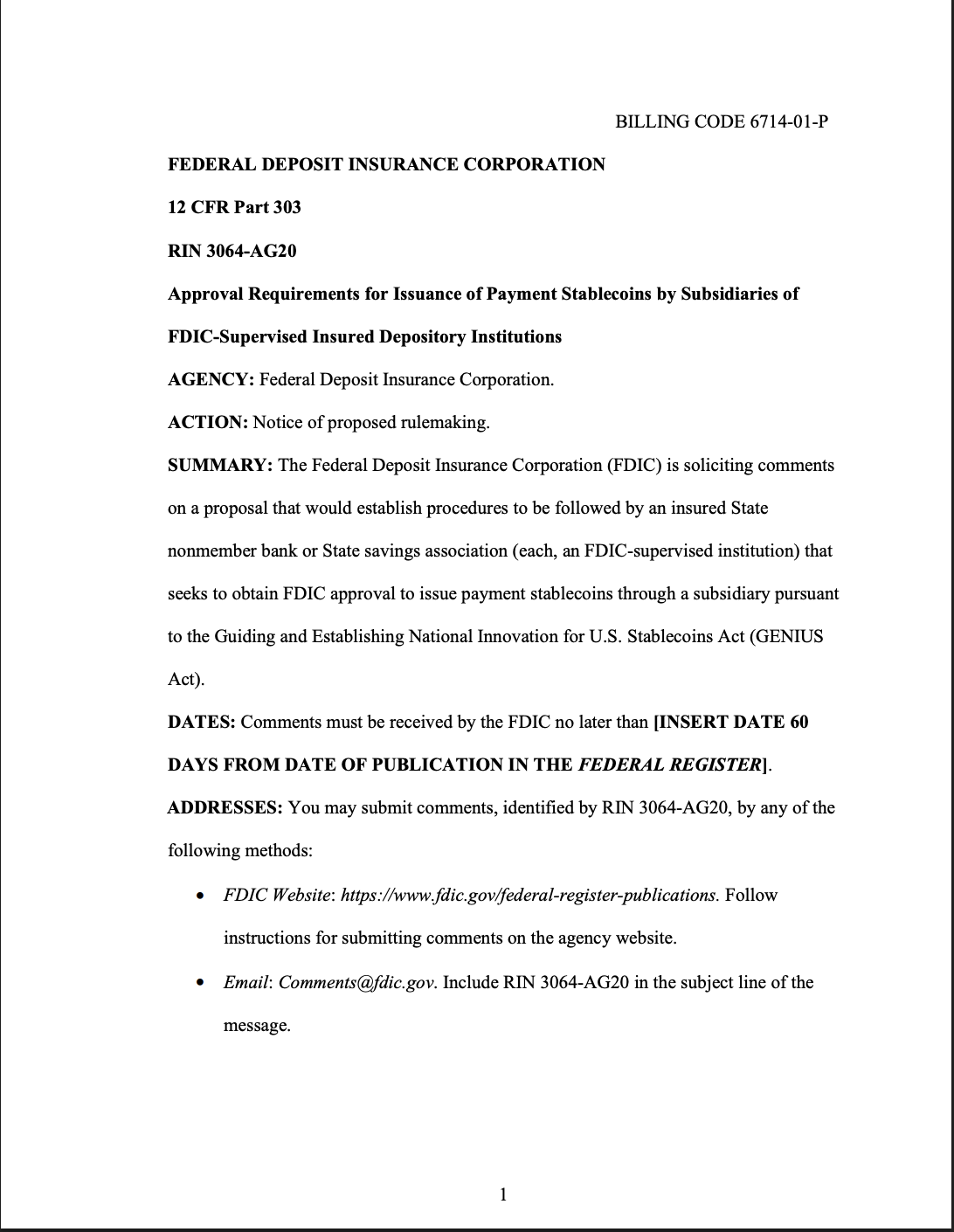
Meanwhile, the Federal Deposit Insurance Corporation (FDIC) has introduced a proposal that could pave the way for banks to issue stablecoins through subsidiaries, subject to regulatory oversight, including reserve requirements. The FDIC's latest document aims to legitimize stablecoin issuance within the existing banking infrastructure, promising increased oversight and compliance for involved institutions.


Banks, United States, Stablecoin, Genius Act, Yields
The FDIC proposal to allow banks to issue stablecoins. Source: FDIC


Despite the regulatory strides, the Blockchain Association continues to contest claims that yield-bearing stablecoins and the sharing of rewards threaten the banking sector or diminish lending capacity. They argue that current evidence does not support the notion that these innovations erode traditional banking operations, emphasizing that digital assets can coexist with conventional finance to foster competition and innovation.


Although industry advocates remain optimistic about the potential for stablecoins, their push for balanced regulation reflects ongoing tensions between innovative digital assets and entrenched banking interests. As discussions unfold, crypto advocates emphasize the importance of creating a regulatory environment that encourages growth without stifling innovation.


https://www.cryptobreaking.com/blockchain-group-urges-us-lawmakers/?utm_source=blogger%20&utm_medium=social_auto&utm_campaign=Blockchain%20Group%20Urges%20US%20Lawmakers%20to%20Support%20Crypto%20Customer%20Reward%20Policies%20

Comments

Popular posts from this blog

Mastercard Launches AI Agent Pay System With Ripple and Solana Help

Mastercard has launched Agent Pay for Machines, a payments system built for autonomous software agents. The service allows AI agents to send and receive payments without direct human action. It brings Ripple, Coinbase, and Solana Foundation into Mastercard’s push for automated digital commerce. Ripple Brings XRPL and RLUSD to Mastercard’s Agent Pay System Mastercard introduced Agent Pay for Machines on June 10 as a tool for machine-led payments. The system targets high-volume and low-value transactions across business and consumer use cases. It also supports automated settlement between software agents and connected machines. Ripple will support the system through the XRP Ledger and its RLUSD stablecoin. The company said that settlement will become more important as automated commerce grows. It also sees blockchain rails as useful for fast and rule-based payments. RippleX senior vice president Markus Infanger said XRPL and RLUSD support enterprise-grade agent payments. He said the tool...

Coinbase's x402 launches AI agents app store for payments

Coinbase-backed x402 has unveiled Agentic.market, a dedicated marketplace aimed at increasing the usefulness of AI agents by aggregating thousands of apps and services that agents can access without any API keys. The rollout positions the platform as a central hub for agents to discover, evaluate, and deploy capabilities across a standardized payments layer. Coinbase product lead Nick Prince described Agentic.market in a video posted on X as a storefront for discovering, comparing, and using x402 services. The marketplace is designed to give both humans and their AI agents access to a wide range of tools—from data feeds to consumer apps—without the friction of managing API credentials. A storefront for discovering, comparing, and using x402 services. Thousands of services. Zero API keys. Powered by x402. Prince added that the market offers a web interface for humans to browse and assess services, alongside a programming layer that lets AI agents autonomously search, filter, and integra...

Top Cryptocurrencies to Watch: BTC, ETH, BNB, XRP, Solana, Dogecoin & More

Market Analysis and Price Predictions for Key Cryptocurrencies Recent market dynamics reveal a cautious sentiment across the cryptocurrency landscape, with Bitcoin struggling to maintain levels above $90,000 and many major altcoins facing downward pressure. Indicators point toward reduced participation from both institutional and retail investors, raising concerns about a potential consolidation phase after notable gains earlier in the year. Bitcoin has fallen below $87,000, reflecting waning demand at higher price points. Institutional fund flows into BTC and ETH ETFs have turned negative, indicating a period of subdued market activity. Active addresses and Binance deposit/withdrawal activities are at annual lows, suggesting market indecision. Most leading altcoins are approaching support levels, with some poised for potential breakdowns. Tickers mentioned: Bitcoin, Ethereum, Binance Coin, XRP, Solana, Dogecoin, Cardano, Bitcoin Cash, Chainlink, Hyperliquid Sentiment: Neutral to Sli...