
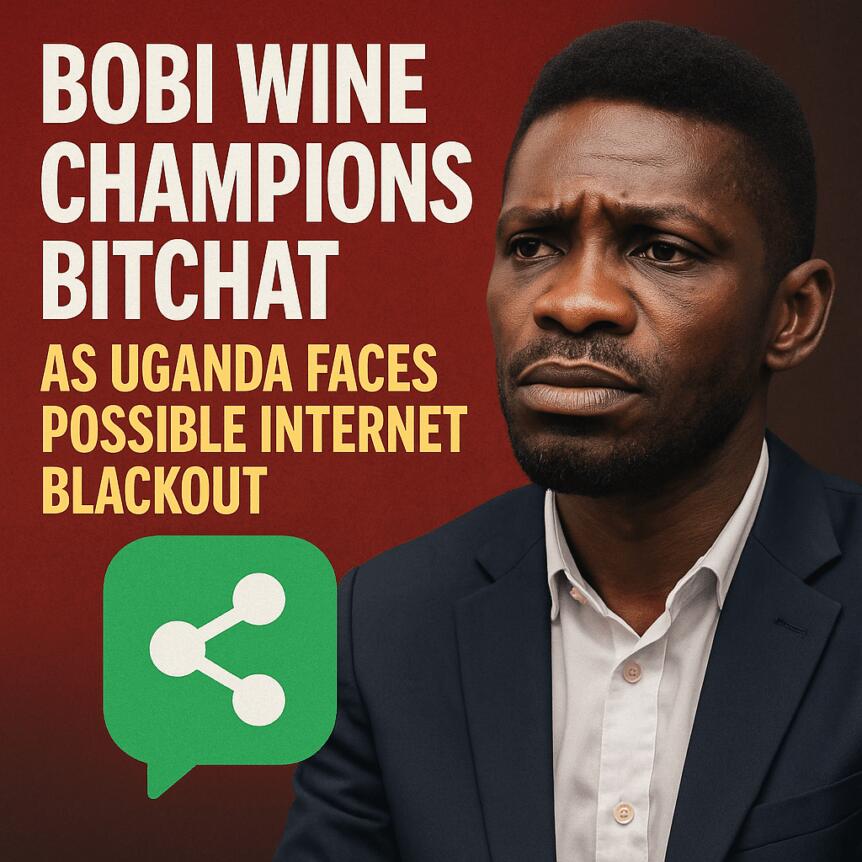
Ugandan Opposition Leader Promotes Decentralized Messaging Amid Election Concerns
As Uganda approaches its 2026 presidential election, opposition leader Bobi Wine is advocating for the use of Jack Dorsey's decentralized messaging app, Bitchat, to counter potential government communication blackouts. With past elections witnessing extensive internet shutdowns, Wine warns that authorities may try similar tactics to hinder political organizing and civil engagement.
Key Takeaways
- Ugandan authorities have a history of shutting down internet and social media platforms during elections.
- Bobi Wine is promoting Bitchat, a peer-to-peer messaging app designed for secure, decentralized communication.
- The government is reportedly restricting the import of Elon Musk's Starlink satellite internet technology.
- Bitchat's popularity surged in Uganda, reflecting public concern over communication restrictions amid elections.
Tickers mentioned: N/A
Sentiment: Cautiously optimistic about the potential of decentralized communications tools to preserve free speech during political unrest.
Price impact: None — the discussion centers on political and technological developments rather than market movements.
Trading idea (Not Financial Advice): Hold — the focus remains on political strategy and technology adoption rather than investment actions.
Market context: The story highlights ongoing challenges around internet censorship and the growing importance of decentralized networks in emerging markets.
Ugandan Political Figures and Election Integrity Concerns
Bobi Wine, leader of the National Unity Platform and a former presidential candidate, has raised alarms over potential internet shutdowns slated to coincide with the upcoming elections. In a recent publication on X (formerly Twitter), he accused the government of planning to cut off communications as a means to prevent citizens from organizing protests or scrutinizing election results. Historically, Ugandan authorities have resorted to such measures, citing national security concerns, as they did during the 2016 and 2021 elections.
The Pan-African Human Rights Defenders Network reported that such social media blackouts disproportionately impact the political opposition, which relies heavily on these platforms for mobilization and advocacy efforts. Indeed, the government contends these measures are necessary to maintain public order.
Restrictions on Connectivity Technologies
In a broader move, Reuters reported that Uganda is restricting the importation of Elon Musk’s Starlink satellite internet equipment, which could provide high-speed connectivity in underserved areas. This restriction likely aims to limit access to alternative communication channels, further constraining information flow during the electoral period.
Meanwhile, Jack Dorsey’s Bitchat, launched in July, offers a privacy-focused, decentralized messaging platform that uses Bluetooth mesh networks for offline, encrypted communication. Bobi Wine highlighted its potential to facilitate rapid and secure communication among supporters and the broader populace, especially in case of service disruptions. Since its launch, Bitchat has gained significant traction, with millions of installs across Africa, including Madagascar, where it facilitated protests and civil unrest.
As activity around Bitchat surges on Google Trends in Uganda, this technological development underscores the growing reliance on decentralized tools in regions wary of censorship and crackdowns. The platform’s viral adoption reflects broader concerns about digital rights and government oversight during politically sensitive times.
https://www.cryptobreaking.com/bobi-wine-champions-bitchat-as/?utm_source=blogger%20&utm_medium=social_auto&utm_campaign=Bobi%20Wine%20Champions%20Bitchat%20as%20Uganda%20Faces%20Possible%20Internet%20Blackout%20
Comments
Post a Comment