How 'Skinny' Fed Accounts Protect Crypto Users from Debanking — Lummis


Introduction


U.S. lawmakers and industry insiders are witnessing a potential shift in how the federal banking system interacts with cryptocurrency firms. A recent proposal from Federal Reserve officials aims to grant crypto and fintech companies access to "skinny" master accounts, signaling a move toward more inclusive payment infrastructure and a departure from aggressive banking restrictions previously associated with Operation Chokepoint 2.0.


Key Takeaways


  • The Federal Reserve is considering providing crypto firms with restricted access to master accounts, a step toward more open banking services.

  • Wyoming Senator Cynthia Lummis supports the proposal, emphasizing it would mitigate Operation Chokepoint 2.0 and foster innovation in payments.

  • Operation Chokepoint 2.0 was reportedly a concerted effort to block banking services to crypto companies; multiple founders reported debanking despite regulatory orders against such practices.

  • This development signals a possible regulatory shift in the U.S., with officials recognizing crypto as a vital part of future financial systems.


Tickers mentioned: None


Sentiment: Bullish


Price impact: Neutral. The proposal indicates a potential easing of banking restrictions, which could positively influence crypto company operations without immediate market price changes.


Market Context


As the U.S. regulatory environment evolves, increased openness toward crypto banking access reflects broader efforts to integrate blockchain technology into mainstream finance, aligning with global trends of financial innovation.


The Future of Crypto Banking


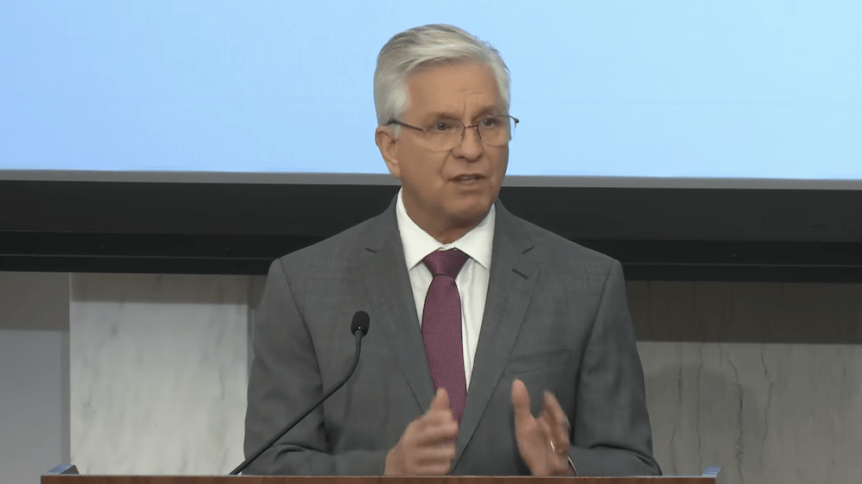
Recently, Federal Reserve Governor Christopher Waller proposed a framework that would allow crypto and fintech startups to access "skinny" master accounts, akin to those used by traditional banks but with specific restrictions. The initiative aims to dismantle remnants of Operation Chokepoint 2.0, which was characterized as a targeted campaign to cut off banking services to crypto businesses. Over 30 founders have reported being debanked under this operation, despite regulatory orders from the Trump administration explicitly prohibiting such actions without lawful cause.


Federal Reserve, US Government, United States
Governor Waller delivers a speech at the Payments Innovation Conference. Source: Federal Reserve


Despite a presidential order prohibiting debanking without just cause, crypto entrepreneurs like Jack Mallers, CEO of Bitcoin payments firm Strike, reported being debanked by JPMorgan Chase without explanation. Mallers recounted, “Every time I asked them why, they said the same thing: ‘We aren’t allowed to tell you.’” In addition, JPMorgan froze the bank accounts of stablecoin startups BlindPay and Kontigo in December, citing alleged exposure to sanctioned jurisdictions.


The shifting stance from regulators and legislators suggests an acknowledgment of cryptocurrency’s role in future financial infrastructure. The proposed framework by the Federal Reserve could pave the way for more equitable access to banking services for crypto firms, fostering innovation and competition in the evolving digital economy.


https://www.cryptobreaking.com/how-skinny-fed-accounts-protect/?utm_source=blogger%20&utm_medium=social_auto&utm_campaign=How%20'Skinny'%20Fed%20Accounts%20Protect%20Crypto%20Users%20from%20Debanking%20—%20Lummis%20

Comments

Popular posts from this blog

Coinbase's x402 launches AI agents app store for payments

Coinbase-backed x402 has unveiled Agentic.market, a dedicated marketplace aimed at increasing the usefulness of AI agents by aggregating thousands of apps and services that agents can access without any API keys. The rollout positions the platform as a central hub for agents to discover, evaluate, and deploy capabilities across a standardized payments layer. Coinbase product lead Nick Prince described Agentic.market in a video posted on X as a storefront for discovering, comparing, and using x402 services. The marketplace is designed to give both humans and their AI agents access to a wide range of tools—from data feeds to consumer apps—without the friction of managing API credentials. A storefront for discovering, comparing, and using x402 services. Thousands of services. Zero API keys. Powered by x402. Prince added that the market offers a web interface for humans to browse and assess services, alongside a programming layer that lets AI agents autonomously search, filter, and integra...

Top Cryptocurrencies to Watch: BTC, ETH, BNB, XRP, Solana, Dogecoin & More

Market Analysis and Price Predictions for Key Cryptocurrencies Recent market dynamics reveal a cautious sentiment across the cryptocurrency landscape, with Bitcoin struggling to maintain levels above $90,000 and many major altcoins facing downward pressure. Indicators point toward reduced participation from both institutional and retail investors, raising concerns about a potential consolidation phase after notable gains earlier in the year. Bitcoin has fallen below $87,000, reflecting waning demand at higher price points. Institutional fund flows into BTC and ETH ETFs have turned negative, indicating a period of subdued market activity. Active addresses and Binance deposit/withdrawal activities are at annual lows, suggesting market indecision. Most leading altcoins are approaching support levels, with some poised for potential breakdowns. Tickers mentioned: Bitcoin, Ethereum, Binance Coin, XRP, Solana, Dogecoin, Cardano, Bitcoin Cash, Chainlink, Hyperliquid Sentiment: Neutral to Sli...

Analyst: Bitcoin can reclaim $100K without a new narrative

Bitcoin has stalled below the $100,000 threshold, marking a run of almost five months without a breakout above that level. As of the latest market close, BTC hovered around $78,250 after a February nadir of about $60,000, underscoring a slow, grinding recovery amid broader market dynamics. In parallel, tech markets—especially AI-focused equities—have captured the spotlight, with investors rotating capital away from crypto in search of different risk-reward profiles. Nvidia (NVDA), the leading AI stock by market cap, has gained about 5.08% since the start of the year, while Bitcoin has faced a roughly 10% dip over the same period, illustrating a diverging performance within risk assets. MN Trading Capital founder Michael van de Poppe suggested that Bitcoin may not require a fresh narrative to push back above $100,000. In a post on X, he asked what narrative would drive BTC to the milestone and concluded that “price moves upwards, and the narrative will create itself.” He continued that ...