
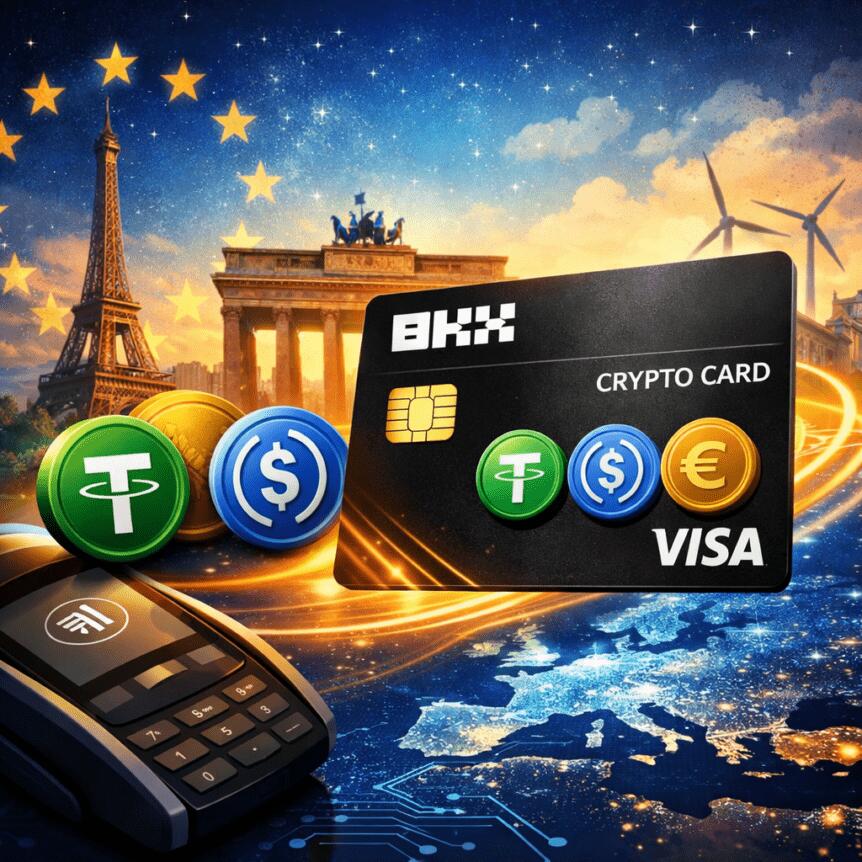
OKX is expanding its European footprint with a payment card designed to bring crypto-purchases into everyday retail via Mastercard’s network. The card, issued through Monavate under an Electronic Money Institution license, represents a calculated step by a growing cohort of crypto firms toward moving stable value off-chain for consumer spending. The rollout aligns with Europe’s evolving regulatory framework for crypto assets, particularly the Markets in Crypto-Assets Regulation (MiCA), which is shaping how crypto-enabled financial products operate in the region. OKX notes that access will hinge on regulatory compliance and rigorous identity checks, underscoring a cautious approach to bringing crypto into mainstream commerce. In a broader context, the arrangement also signals ongoing consolidation and strategic partnerships in crypto infrastructure, highlighted by Monavate’s forthcoming acquisition by Exodus as part of a wider corporate restructuring.
Key takeaways
- OKX is launching a European payment card linked to its crypto services, issued via Monavate and connected to Mastercard’s network.
- The initial card wave supports spending in stablecoins, with USDC and USDG among the first issuances.
- The card is an extension of OKX Pay and is available only to users who complete the required KYC/AML checks under MiCA and EU directives.
- Monavate is set to be acquired by Exodus as part of a larger deal involving W3C Corp and affiliated entities, announced in late 2025.
- The move reflects a broader push by crypto firms to normalize stablecoin payments within regulated European markets.
- Industry context includes rising popularity of crypto cards, with Visa-backed programs reporting significant increases in spend in 2025.
Tickers mentioned: $USDC, $USDG
Sentiment: Neutral
Price impact: Neutral. The card launch signals broader adoption of crypto-enabled payments but does not imply an immediate price move for the assets involved.
Market context: The European Union’s MiCA framework is shaping how crypto-enabled payment products operate, with CASPs like OKX operating under the regulation. The growing interest in stablecoin-based payments sits within a broader pattern of increased activity in crypto cards, aligning with industry data showing rising usage across card networks in 2025.
Why it matters
The introduction of an EU-facing card that lets users spend stablecoins at merchants accepting Mastercard marks another milestone in the integration of digital assets into everyday finance. By tying the card to OKX Pay, the company emphasizes a seamless on-ramp from crypto custody to real-world spending, while also placing emphasis on user control and security. The narrative here is practical: for many, the friction of converting crypto to fiat and managing separate wallets can deter everyday use. A card that enables direct on-card spending with clear regulatory oversight could reduce that friction, bringing crypto into a broader wallet—one that blends self-custody principles with compliant, institutionally backed payment rails.
“Fundamentally, most people have three financial needs: to pay and be paid, to accrue wealth and to access credit. OKX Card provides a practical tool to meet the first of those,” OKX Europe CEO Erald Ghoos told us, adding: “While the ability to freely make payments is core to the founding vision of crypto, for the average user this can be technically challenging while staying in total control of their assets.”
The card’s regulatory footing is notable. OKX operates as a regulated crypto-asset service provider (CASP) within the EU under MiCA, with Monavate handling the card’s issuance as an EMI and processing through Mastercard’s network. Monavate’s UK base and its operation within the European Economic Area are described as compliant with stringent AML and KYC standards. The arrangement reflects a broader industry trend: while many crypto wallets and exchanges focus on on-chain functionality, the demand for tangible, widely accepted payment methods continues to grow, mirrored by the observed intensification of stablecoin usage in everyday transactions elsewhere in the payments ecosystem.
In addition, the strategic context surrounding Monavate’s and OKX’s moves is meaningful. The announced acquisition of Monavate by Exodus, as part of the W3C Corp deal, highlights ongoing consolidation in crypto infrastructure as firms seek to scale compliance frameworks, custody capabilities, and user onboarding. The interplay between card offerings, self-custody philosophy, and centralized issuance models illustrates the industry’s ongoing negotiation between user empowerment and regulatory accountability. OKX’s emphasis on KYC/AML underscores the EU’s insistence on robust identity controls for products that blend crypto with conventional payment rails.
From a payments perspective, the EU environment remains a proving ground for stablecoins as a practical medium of exchange. The card’s use of stablecoins rather than direct fiat accounts could offer a smoother on-ramp for users who maintain crypto balances, while also meeting regulatory expectations around consumer protection and anti-money laundering. As the EU continues to refine its crypto rules, product rollouts like this one provide a live testbed for how well stablecoins can function in everyday commerce without compromising financial security or compliance standards.
What to watch next
- Rollout timeline: which European countries will be included in the initial launch phase and when new jurisdictions will follow.
- KYC/AML milestones: any changes in the verification process that could impact eligibility or onboarding speed for additional users.
- Expansion of supported stablecoins: whether USDC and USDG are joined by others and how this affects user choice.
- Regulatory developments: ongoing MiCA implementation updates and how CASPs adapt to evolving EU directives.
- Exodus-Monavate/W3C Corp integration: milestones and product-roadmap implications for crypto custody, wallet services, and card issuance.
Sources & verification
- OKX announces European card rollout through Monavate EMI and Mastercard network, with regulatory compliance under MiCA.
- Monavate operates in the EU under strict AML/KYC standards and is linked to a broader corporate acquisition by Exodus as part of the W3C Corp deal.
- Markets in Crypto-Assets Regulation (MiCA) and CASP licensing framework foundations referenced in the rollout; EU regulatory context for crypto payment products.
- Industry context on crypto card usage and regulatory compliance as part of broader payments ecosystem trends.
Market reaction and key details
The OKX European card launch illustrates how exchanges are increasingly seeking to convert crypto balances into tangible purchasing power without forcing users to leave their preferred on-ramp ecosystems. By leveraging Monavate’s EMI framework and Mastercard’s network, OKX offers a scalable model that could be replicated across other regions as regulatory clarity improves. The focus on KYC/AML underscores a prudent approach to consumer protection and compliance, a critical consideration as EU regulators continue to tighten oversight over crypto products that intersect with traditional payment rails.
In a broader market context, the move aligns with the rising traction of crypto-linked cards across the payments sector. Earlier industry data pointed to a substantial jump in net spend on Visa-backed crypto cards in 2025, underscoring growing consumer appetite for spending crypto value in everyday life rather than converting to fiat first. As the EU provides a structured regulatory environment through MiCA, and as crypto firms seek to bridge on-chain assets with real-world spend, products like the OKX Card will be watched closely for adoption rates, merchant acceptance, and the downstream effects on liquidity and price dynamics for the underlying stablecoins.
https://www.cryptobreaking.com/okx-debuts-europe-crypto-card/?utm_source=blogger%20&utm_medium=social_auto&utm_campaign=OKX%20Debuts%20Europe%20Crypto%20Card%20for%20Stablecoin%20Payments%20
Comments
Post a Comment