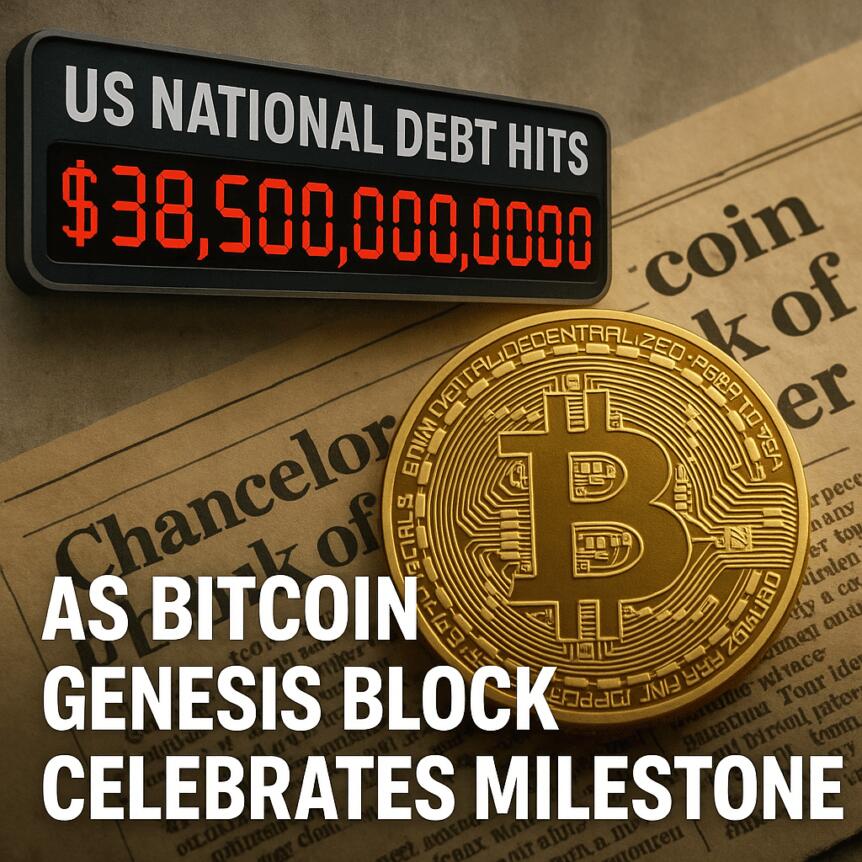
US National Debt Hits $38.5T as Bitcoin Genesis Block Celebrates Milestone


U.S. National Debt Surpasses $38.5 Trillion Mark Amid Bitcoin Anniversary


The United States national debt has eclipsed the $38.5 trillion threshold, prompting renewed discussions about the sustainability of fiat currency systems. Coinciding with the anniversary of Bitcoin's genesis, many market observers highlight the contrast between traditional monetary practices and the decentralized digital currency that emerged as a response to monetary debasement.


Key Takeaways


  • U.S. federal debt exceeds $38.5 trillion, with daily increases averaging roughly $6 billion in 2025.

  • Bitcoin commemorates its Genesis Day, marked by the mining of the first block in 2009, embedded with a message referencing the 2008 financial crisis.

  • Crypto advocates leverage Bitcoin’s capped supply to argue against inflationary fiat policies.

  • U.S. money supply continues to grow, diluting fiat currency value amid rising debt levels.


Tickers mentioned: None


Sentiment: Neutral to cautious


Price impact: The ongoing debt escalation underscores risks to fiat stability, potentially bolstering interest in hard assets like Bitcoin.


Trading idea (Not Financial Advice): Consider accumulating Bitcoin as a hedge against fiat currency debasement.


Market context: The story aligns with broader concerns over inflation and monetary policy inefficiencies in the global economy.


Annual Surge in U.S. Debt Sparks Fears of Economic Instability


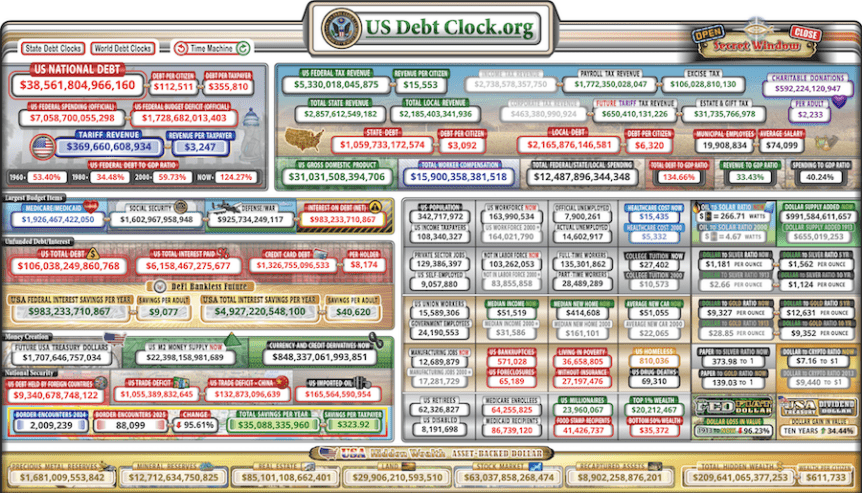
The U.S. government has added about $6 billion daily to its national debt in 2025, totaling approximately $2.2 trillion for the year, according to Congressional data. This rapid increase starkly contrasts with the over two centuries it took to surpass the $1 trillion mark, which the federal government first achieved in October 1981. The trend highlights mounting concerns over fiscal discipline and the long-term sustainability of debt-financed policies.


Simultaneously, the Federal Reserve’s M2 money supply continues its upward trajectory, reaching $22.4 trillion. This expansion reflects aggressive monetary stimulus measures that have devalued the dollar’s purchasing power, fueling inflationary pressures. Inflation erodes fiat currency value, diminishing its ability to store wealth over time.


Dollar, Economics, Economy, US Government, Inflation, National Debt, Genesis Block, Bitcoin Adoption
A detailed view of the rising U.S. national debt. Source: US Debt Clock


This environment has fostered increased interest in Bitcoin, which offers a fixed supply of 21 million coins against a backdrop of limitless fiat printing. Bitcoin’s decentralized nature and scarcity have made it an attractive hedge against inflation, with proponents highlighting its ability to preserve value over time.


Bitcoin Genesis Block
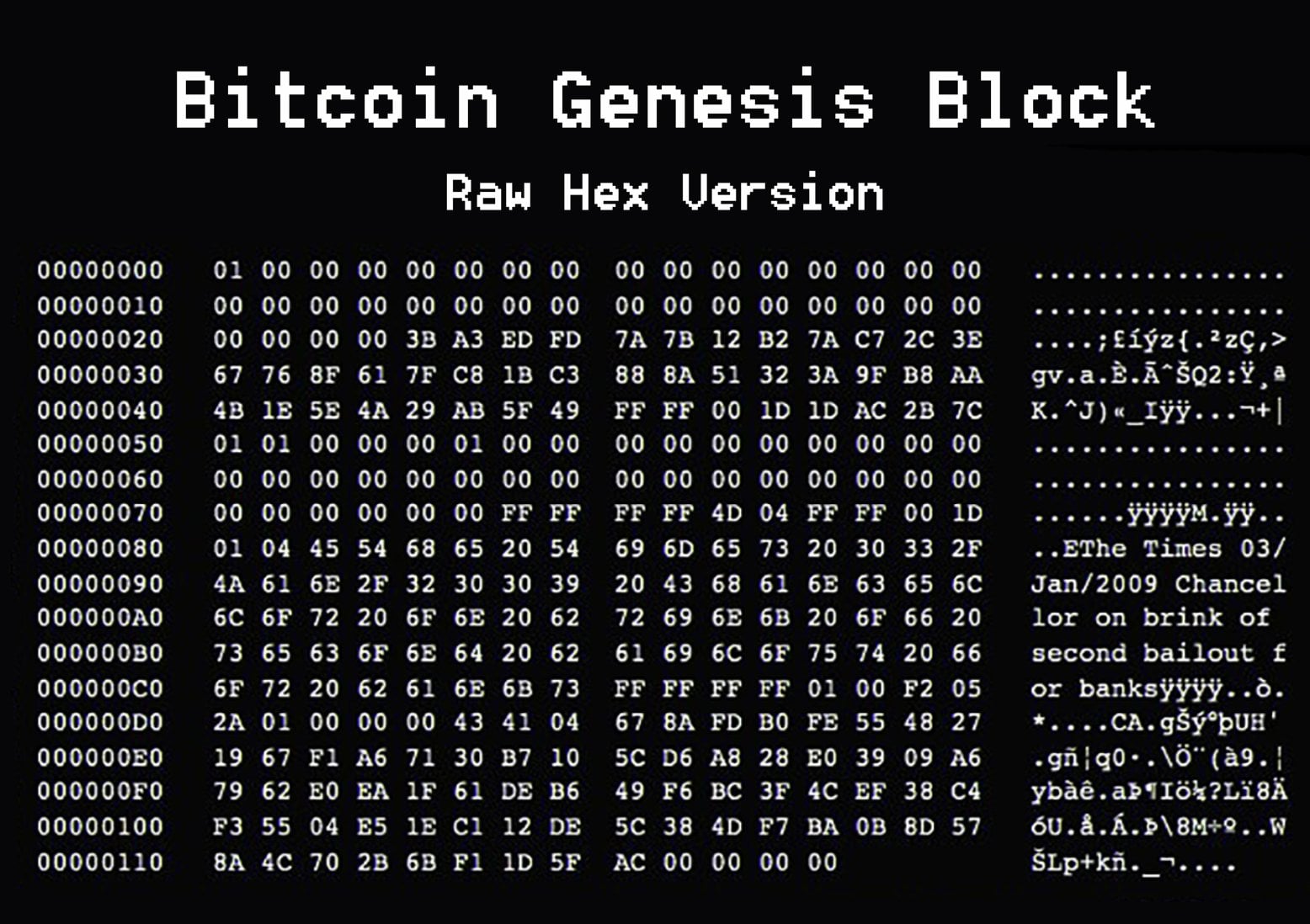
The Bitcoin Genesis Block. Source: Bitcoin Policy UK


In celebration of Bitcoin's Genesis Day, industry leaders acknowledged the significance of the first block mined on January 3, 2009, which contained a headline referencing the UK's bailout measures during the financial crisis. This embedded message is often seen as a symbol of Bitcoin's intent to provide a resilient alternative to flawed fiat systems.


Market observers continue to debate the implications of mounting U.S. debt and expansive monetary policies. As the global economy grapples with inflation and currency devaluation, Bitcoin’s role as a potential safe haven remains a focal point for investors seeking stability amid currency debasement.


https://www.cryptobreaking.com/us-national-debt-hits-38/?utm_source=blogger%20&utm_medium=social_auto&utm_campaign=US%20National%20Debt%20Hits%20$38.5T%20as%20Bitcoin%20Genesis%20Block%20Celebrates%20Milestone%20

Comments

Popular posts from this blog

Mastercard Launches AI Agent Pay System With Ripple and Solana Help

Mastercard has launched Agent Pay for Machines, a payments system built for autonomous software agents. The service allows AI agents to send and receive payments without direct human action. It brings Ripple, Coinbase, and Solana Foundation into Mastercard’s push for automated digital commerce. Ripple Brings XRPL and RLUSD to Mastercard’s Agent Pay System Mastercard introduced Agent Pay for Machines on June 10 as a tool for machine-led payments. The system targets high-volume and low-value transactions across business and consumer use cases. It also supports automated settlement between software agents and connected machines. Ripple will support the system through the XRP Ledger and its RLUSD stablecoin. The company said that settlement will become more important as automated commerce grows. It also sees blockchain rails as useful for fast and rule-based payments. RippleX senior vice president Markus Infanger said XRPL and RLUSD support enterprise-grade agent payments. He said the tool...

Coinbase's x402 launches AI agents app store for payments

Coinbase-backed x402 has unveiled Agentic.market, a dedicated marketplace aimed at increasing the usefulness of AI agents by aggregating thousands of apps and services that agents can access without any API keys. The rollout positions the platform as a central hub for agents to discover, evaluate, and deploy capabilities across a standardized payments layer. Coinbase product lead Nick Prince described Agentic.market in a video posted on X as a storefront for discovering, comparing, and using x402 services. The marketplace is designed to give both humans and their AI agents access to a wide range of tools—from data feeds to consumer apps—without the friction of managing API credentials. A storefront for discovering, comparing, and using x402 services. Thousands of services. Zero API keys. Powered by x402. Prince added that the market offers a web interface for humans to browse and assess services, alongside a programming layer that lets AI agents autonomously search, filter, and integra...

Top Cryptocurrencies to Watch: BTC, ETH, BNB, XRP, Solana, Dogecoin & More

Market Analysis and Price Predictions for Key Cryptocurrencies Recent market dynamics reveal a cautious sentiment across the cryptocurrency landscape, with Bitcoin struggling to maintain levels above $90,000 and many major altcoins facing downward pressure. Indicators point toward reduced participation from both institutional and retail investors, raising concerns about a potential consolidation phase after notable gains earlier in the year. Bitcoin has fallen below $87,000, reflecting waning demand at higher price points. Institutional fund flows into BTC and ETH ETFs have turned negative, indicating a period of subdued market activity. Active addresses and Binance deposit/withdrawal activities are at annual lows, suggesting market indecision. Most leading altcoins are approaching support levels, with some poised for potential breakdowns. Tickers mentioned: Bitcoin, Ethereum, Binance Coin, XRP, Solana, Dogecoin, Cardano, Bitcoin Cash, Chainlink, Hyperliquid Sentiment: Neutral to Sli...