

Prediction markets have grown more pessimistic on Bitcoin after a weekend retreat that briefly pushed the price below $75,000 on Monday. On Polymarket, a leading platform for crypto-related bets, the odds that Bitcoin (BTC) would trade under $65,000 in 2026 rose to roughly 72%, with nearly $1 million in volume traded. Bets on BTC slipping to below $55,000 and then reclaiming $100,000 by year-end also captured attention, carrying implied probabilities around 61% and 54%, respectively. This confluence of downside bets underscored a shift in sentiment after weeks of consolidation.
Key takeaways
- Polymarket priced in a bearish scenario for Bitcoin in 2026, with a 72% probability of sub-$65,000 outcomes and sizable volume signaling growing conviction among speculators.
- Bets extending to sub-$55,000 and a return to $100,000 by year-end reflect a broad range of downside-to-upside bets, highlighting heightened uncertainty about the mid-term path.
- The move follows a weekend sell-off that briefly pushed prices under the $75,000 level, erasing some earlier recovery gains tied to macro optimism.
- Analysts point to a broader bear narrative and a liquidity squeeze in the United States as contributing factors rather than idiosyncratic crypto-only events.
- Regulatory friction around prediction markets, including Nevada actions against Polymarket and related enforcement in other states, adds a new layer of risk for crypto-related betting platforms.
Tickers mentioned: $BTC
Sentiment: Bearish
Price impact: Negative. The weekend and Monday price action, coupled with rising downside bets, points to renewed downward pressure for Bitcoin.
Trading idea (Not Financial Advice): Hold. Given the mixed signals from on-chain metrics, sentiment indicators, and regulatory developments, a cautious stance is warranted until clearer price signals emerge.
Market context: The move sits within a wider backdrop of waning liquidity in U.S. markets and evolving ETF inflows, with analysts warning that a protracted bear phase could persist absent supportive macro or regulatory catalysts. Some observers have tied the pullback to tighter liquidity conditions rather than crypto-specific factors.
Why it matters
The emerging sentiment shift matters for investors who have been navigating the delicate balance between institutional interest and macro headwinds. Bitcoin’s price trajectory has long acted as a barometer for risk appetite in crypto markets, and the surge in downside bets suggests traders are bracing for a slower ramp in liquidity and a potentially choppier price environment. The stakes are not only about where prices land next week, but how risk premiums and hedging behavior adapt when institutions reassess exposure to a volatile, highly liquid asset class.
On the fundamental side, the market is observing how large holders manage potential drawdowns. Michael Saylor’s Strategy, the largest publicly listed Bitcoin holder, has seen price action fall below its average purchase cost for the first time since late 2023, a development that can influence owner behavior and market psychology. In addition, analysts have debated whether bitcoin’s primary use-case remains as a form of sovereign money rather than a speculative asset, a dichotomy that can influence long-run demand dynamics.
Macro researchers have pointed to broader liquidity constraints in the U.S. as a contributing factor to the current price action. Notably, investors like Raoul Pal have linked the downturn to tight domestic liquidity rather than purely crypto-specific catalysts. This framing highlights how crypto markets remain sensitive to macro-financial conditions, including credit conditions, risk-off shifts, and regulatory clarity that can affect institutional participation and liquidity availability.
Looking further ahead, some traditional finance firms have forecast more bullish multi-year scenarios for Bitcoin, underscoring the tension between near-term weakness and longer-term narrative anchored by institutional demand and clearer regulation. Grayscale Investments has previously projected BTC could surpass all-time highs near $126,000 by mid-2026, while banks like Standard Chartered and Bernstein have issued targets around $150,000 for 2026, then revised higher or lower based on ETF flows and market breadth. The contrast between these longer-horizon projections and the current pullback illustrates the ongoing divergence between macro timing and secular demand.
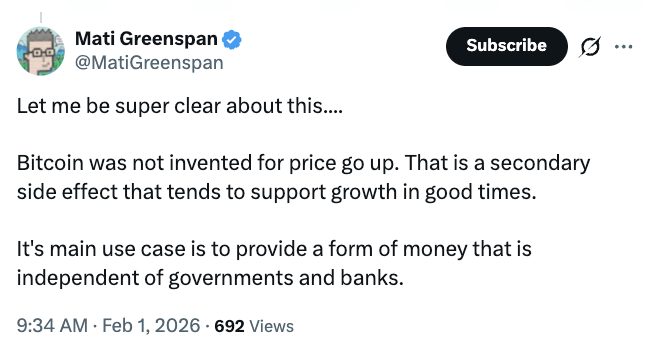
The regulatory backdrop remains a critical wild card. Polymarket, which aggregates bets on event outcomes, has faced a Nevada court order blocking its volleyball-style event contracts as unlicensed wagers, with other states, including Tennessee, pursuing enforcement actions. While these moves do not directly alter Bitcoin’s price, they influence the risk environment for crypto-related platforms and could shape how retail traders access and price in crypto-related bets going forward.
In sum, traders are parsing a mosaic of signals: a fresh round of downside bets on Polymarket, a price structure that failed to sustain a breakout above key levels, and a regulatory landscape that could restrain on-chain betting activity. The net effect is a more cautious stance among market participants, at least in the near term, even as longer-term forecasts remain cautiously constructive in the hands of large-scale investors and institutions.
What to watch next
- BTC price action around critical thresholds (65,000; 75,000) in the coming sessions and whether a new range forms.
- Regulatory developments affecting Polymarket and other prediction-market platforms in Nevada and other states.
- Monetary and liquidity signals in the U.S. that could influence risk appetite and crypto ETF flows.
- Institutional forecasts for 2026 and any shifts in long-horizon targets tied to regulatory clarity.
Sources & verification
- Polymarket odds and volume for BTC-related bets (65k, 55k, 100k scenarios) as cited in Polymarket event pages.
- Price action noting Bitcoin briefly dipped below $75,000 on Monday.
- Michael Saylor’s Strategy: coverage of price action relative to average cost.
- CryptoQuant commentary on bear-market dynamics since November 2025 and the 365-day moving average reference.
- Regulatory developments surrounding Polymarket (Nevada court order) and enforcement actions in Tennessee and other states.
Bearish turn for Bitcoin deepens as markets weigh liquidity and policy risks
Bitcoin (CRYPTO: BTC) began the week with renewed pressure as traders migrated toward downside hedges in prediction markets and real-money bets. The latest data show a notable tilt toward bets that BTC will trade under $65,000 in 2026, with odds near 72% and volumes approaching the seven-figure mark. That sentiment aligns with a broader price relief rally that stalled after momentum faded near key resistance levels, leaving a landscape where downside bets dominate in certain corners of the market.
The appetite for bearish bets is not isolated to a single instrument. A cluster of wagers on BTC slipping to sub-$55,000 and then rebounding to above $100,000 by year-end illustrates how traders are hedging across a spectrum of possible outcomes. The implied probabilities attached to these scenarios suggest that market participants are staking on both downside risk and a potential later recovery, signaling a more bifurcated outlook for the remainder of the year.
The shift in sentiment comes after a weekend sell-off that briefly knocked prices below the $75,000 threshold, erasing some of the gains that followed an improving narrative around macro drivers for crypto markets. That corrective move has fed a narrative that the market may be entering a more protracted phase of price discovery, where macro forces and liquidity dynamics take on outsized importance relative to idiosyncratic developments in the Bitcoin ecosystem.
The move has a particular resonance for major holders. The Strategy, run by Michael Saylor, the world’s largest publicly listed Bitcoin holder, has seen prices fall below its historical cost basis for the first time in months, underscoring how large inventories interact with short-term swings. Such dynamics matter because they can affect selling pressure, long-term capitulation risk, and the behavior of other holders who may be waiting for clearer catalysts before adjusting positions.
Analysts have repeatedly flagged the notion that bear markets can extend for months, cautioning against chasing bottoms after a new leg down. CryptoQuant’s research head emphasized that bottoms often form gradually, suggesting that traders should expect volatility to persist even as some on-chain metrics remain negative. The broader takeaway is that Bitcoin’s path is unlikely to be a straight line higher, with multiple waves of risk-off sentiment able to reassert themselves in a market that remains highly sensitive to macro shifts and regulatory signals.
Beyond price, sentiment has been tempered by macro considerations. Raoul Pal linked the downturn to tight U.S. liquidity rather than to sector-specific factors, highlighting the interconnectedness of crypto markets with traditional financial conditions. In this framework, policymakers and macro traders alike are watching how liquidity metrics and market structure evolve, since these factors tend to shape correlations across asset classes and the pace at which risk appetite returns to crypto assets.
On the forecasts front, several prominent firms have offered higher targets for Bitcoin over the medium term, though those projections sit alongside a revolving door of near-term caution. Grayscale has suggested Bitcoin could surpass all-time highs near $126,000 by mid-2026, while banks like Standard Chartered and Bernstein have penciled in $150,000 targets, adjusting expectations in response to ETF inflows and broader market demand. The tension between these optimistic longer-horizon views and the current drawdown underscores the ongoing debate about Bitcoin’s structural trajectory and the pace at which institutional capital will enter the space.
As the legal and regulatory landscape continues to evolve, Polymarket’s exposure to enforcement actions in Nevada and other states adds another variable for traders to weigh. The Nevada court order blocking unlicensed event contracts serves as a reminder that the growing crypto betting ecosystem faces a patchwork of regulatory regimes that can affect liquidity, product design, and user access. This backdrop matters because it can influence where risk capital concentrates and how quickly new participants enter or exit the market during times of heightened volatility.
In the near term, the key questions remain: Will Bitcoin break decisively below $65,000, or will support near that level hold and spark a renewed bid? How will regulatory actions shape the viability of on-chain betting markets, and what will institutional money do as 2026 approaches? The confluence of price momentum, macro liquidity, and policy developments ensures that traders will continue to calibrate their expectations in a market that remains both technically intricate and economically consequential.
https://platform.twitter.com/widgets.js
https://www.cryptobreaking.com/bitcoin-bets-on-polymarket-signal/?utm_source=blogger%20&utm_medium=social_auto&utm_campaign=Bitcoin%20Bets%20on%20Polymarket%20Signal%20for%202026%20Downside%20Risk%20
Comments
Post a Comment