
Key insights
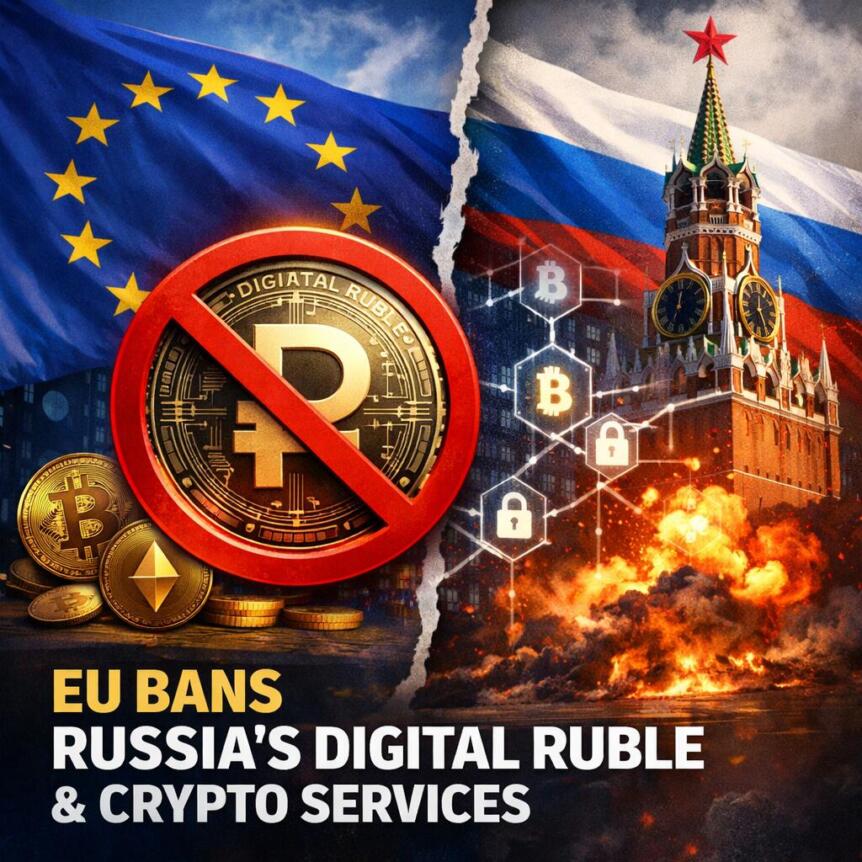
- EU blocks Russia’s digital ruble and crypto services to close alternative payment channels.
- Over 40 shadow fleet tankers targeted to enforce oil price cap and energy restrictions.
- Banks, third-country suppliers, and military contractors face expanded financial sanctions.
Why is the EU now targeting crypto and the digital ruble?
The European Union has unveiled its proposed 20th sanctions package against Russia, expanding restrictions beyond traditional finance into digital assets. The measures aim to weaken Moscow’s ability to fund its war in Ukraine by blocking new financial channels that emerged after earlier banking sanctions.
🚨 EUROPE JUST PUT CRYPTO ON THE SANCTIONS MAP
On February 6, 2026, Ursula von der Leyen announced the EU’s 20th sanctions package — and this time the focus widens to crypto assets, firms trading them, and platforms enabling those trades.
Why this matters:
The goal is simple:… pic.twitter.com/nuVfDbR7sX
— Naeem Aslam (@NaeemAslam23) February 6, 2026
Announced by EU foreign policy chief Kaja Kallas, the plan bans the use of Russia’s central bank digital currency (CBDC) — the digital ruble — inside the bloc. It also prohibits European businesses and institutions from interacting with Russian crypto-asset service providers.
Wars end when one side runs out of money.
Cutting cash flows to Moscow is essential to stop the fighting.
More banks supplying the Kremlin will face transaction bans, in Russian and in third countries. All will be cut off from SWIFT.
We will also ban Russia’s central bank…
— Kaja Kallas (@kajakallas) February 6, 2026
As Russia faced growing limits on international banking access, it increasingly turned to alternative settlement tools, including cryptocurrencies and the digital ruble, to facilitate trade and cross-border payments. The EU now intends to close what officials see as a financial workaround.
The package further proposes removing additional Russian and affiliated banks from the SWIFT messaging network and placing full transaction bans on institutions accused of providing liquidity to the Kremlin.
Could these measures actually disrupt war financing?
EU officials believe so. By cutting both traditional and digital payment rails, the bloc aims to make financing military operations significantly more costly.
The sanctions also target companies in third-party countries suspected of helping Russia obtain electronics and industrial components for weapons production. About 40 firms linked to military supply chains would face full sanctions.
New export restrictions will apply to essential industrial materials, including chemicals, rubber products, metalworking tools, and laboratory equipment — all items that can support defense manufacturing.
What about Russia’s oil trade and the “shadow fleet”?
The EU is also tightening enforcement of energy sanctions. More than 40 oil tankers believed to be part of Russia’s so-called shadow fleet — aging vessels used to sell oil above the G7 price cap — would be blacklisted.
These ships would lose access to EU ports and maritime services. The proposal also bans maintenance services for Russian LNG tankers and icebreakers.
Additionally, the bloc plans to activate its Anti-Circumvention Tool against countries suspected of acting as trade transit hubs. Companies providing insurance or technical services to sanctioned Russian oil shipments could face heavy penalties.
The sanctions list will also expand to include individuals linked to war crimes, propaganda operations, and the deportation of Ukrainian children.
https://www.cryptobreaking.com/eu-moves-to-ban-russias/?utm_source=blogger%20&utm_medium=social_auto&utm_campaign=EU%20Moves%20to%20Ban%20Russia's%20Digital%20Ruble%20and%20Crypto%20Services%20in%20New%20Sanctions%20
Comments
Post a Comment