
Opinion by: Nanak Nihal Khalsa, co-founder of Holonym Foundation
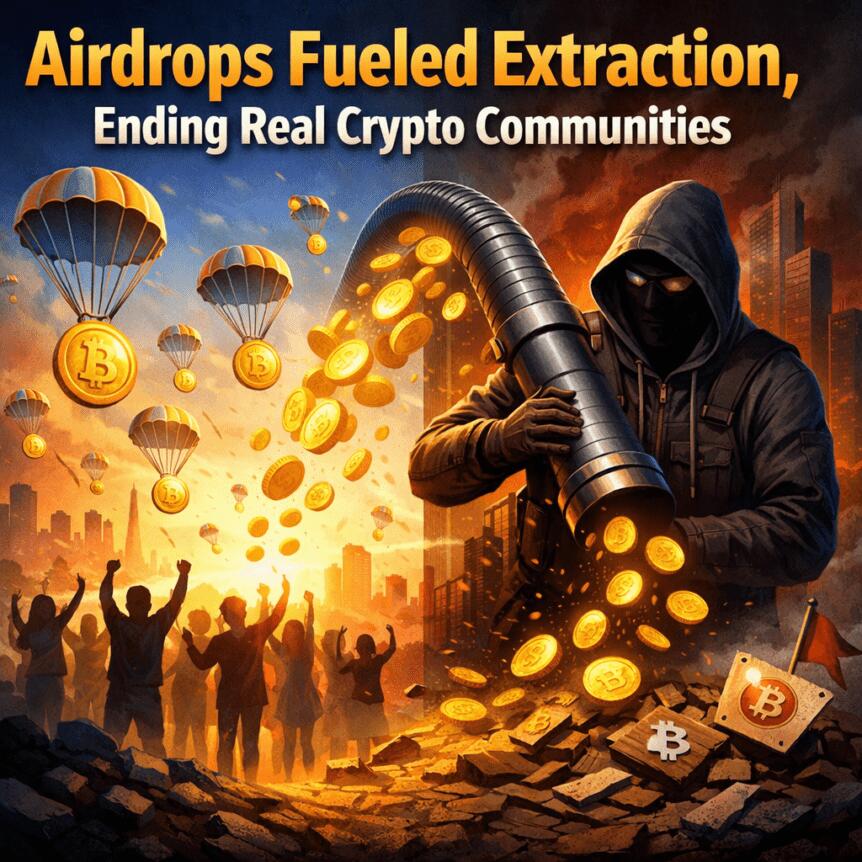
During the last crypto market cycle, airdrops were touted as a way to build community. In practice, they evolved into large-scale value-extraction schemes that rewarded automation and short-term surges over lasting commitment. The result was a structural misalignment: incentives that discouraged genuine belief and rewarded opportunistic behavior, leaving many participants feeling they were part of a competition rather than a community.
Between 2021 and 2024, token launches tended to favor low float and high fully diluted valuations, with point-based programs that rewarded activity more than intention or eligibility. The predictable outcome? Wallets multiplied, engagement was simulated, and shares of future supply were earmarked for rapid exit. Trust eroded as participation became transactional, loyalty proved transient, and governance started to feel like theater. When rewards hinge on volume rather than conviction, rare is the project that yields lasting, substantive communities.
Key takeaways
- Airdrops often functioned as extraction playbooks: low float, high fully diluted valuations, and point programs that rewarded surface-level activity over meaningful commitment.
- Points programs accelerated a race to automate and farm; real users with limited bandwidth were crowded out, undermining the integrity of early distribution.
- Token sales are re-emerging as an alternative distribution model, but with selective access, identity considerations, and allocation caps to curb dominance by automated actors.
- Privacy-preserving identity is being treated as infrastructure—needed to verify unique participation without revealing personal data, balancing openness with protection.
- Wallet design and identity are converging into a single system aimed at resisting manipulation and building longer-term relationships between users and protocols.
From open launches to curated access
The industry is increasingly approaching token launches with a fundamental shift in distribution logic. ICO-style events, once open to anyone with a wallet, exposed the ecosystem to whale dominance, regulatory blind spots, and accountability gaps. Today’s experiments introduce filters and signals designed to identify participants who are likely to stay engaged beyond a single speculative cycle. Identity signals, on-chain behavior analysis, and jurisdiction-aware participation are becoming more common, along with allocation limits intended to prevent runaway concentration.
These changes are not simply about nostalgia for the old days of broad access; they reflect a practical recognition that permissionless distribution without guardrails invites capital leaks to automation and rapid dumping. The aim is to ensure that new tokens reach users who will contribute to long-term health, governance, and stability, rather than a transient crowd animated by hype alone.
In this context, some token launches are edging toward a model where eligibility criteria and access controls are part of the fabric of the protocol, not constraints imposed after the fact. As a result, questions about what constitutes fair access, how to enforce limits, and which signals are trustworthy are moving from footnotes to central design considerations.
Identity, privacy, and the evolution of distribution
One of the most pressing tensions in crypto governance today is how to balance openness with accountability. The industry has spent years promoting permissionless participation, yet the most valuable moments increasingly depend on some form of admission control. Without it, automation can overwhelm the system; with it, there is a risk of recreating surveillance-heavy paradigms many projects sought to escape.
Privacy-preserving identity is emerging as essential infrastructure rather than a philosophical stance. If teams want to limit one person to one allocation, prevent bot-driven governance, and show basic compliance without collecting exhaustive personal dossiers, they need systems that prove properties about participants without revealing who they are. The alternative—full openness or heavy-handed KYC—either invites distortion or erodes trust. The goal is to build a framework where users can prove uniqueness across a suite of applications, maintain consistent accounts, and avoid managing fragile secrets with every new launch.
Related discussions have highlighted real-world frictions, such as Sybil attacks during presales. For example, Cointelegraph noted incidents where presales were hijacked by coordinated wallet clusters, underscoring the need for more robust identity and anti-abuse measures (reference coverage).
Beyond identity, the wallet layer itself remains a critical choke point. Fragmented accounts, recovery fragilities, and browser-based signing vulnerabilities amplify the risk of hacks, loss of access, and post-launch attrition. When distribution hinges on tools that are brittle or spoofable, the resulting ecosystem inherits those weaknesses. A more holistic design—where identity, wallets, and distribution are treated as an interconnected system—appears increasingly necessary for durable participation rather than one-off events.
Several projects are pursuing this integrated approach: a user could demonstrate uniqueness without doxing, transact across apps with a single, coherent account, and control sensitive data without exposing themselves to unnecessary risks. If these pieces lock into a coherent architecture, distribution may evolve from a single launch moment into an ongoing relationship, with participants who care enough to stay, contribute, and govern.
Ultimately, the shift is less about who gets in and more about shaping sustainable alignment. Projects that emphasize human-centric design—fewer, more engaged participants who remain for the long run—tend to show stronger retention, healthier governance participation, and more resilient markets. This is not a matter of ideology; it is observable in how users engage once incentives are aligned with genuine belief rather than short-term gain.
Looking ahead, the winners will be those that treat distribution as infrastructure rather than marketing. They will bake in defense against automation, design for provable integrity, and view identity as a tool to protect both users and ecosystems. Some friction, thoughtfully applied, can be a feature that sustains engagement rather than a barrier to entry.
Airdrops did not fail because users are inherently greedy. They failed because the system rewarded greed while penalizing commitment. If crypto wants broader, healthier adoption, it must shift incentives toward belonging and long-term value creation, not ephemeral wins. Token launches, as a visible facet of this evolution, will reveal who can translate that philosophy into durable practice.
Related context: For a contemporary look at how these dynamics play out in live launches, recent coverage highlights ongoing debates around identity, access, and control in new token distributions.
Author note: Nanak Nihal Khalsa is the co-founder of Holonym Foundation, focused on privacy-respecting, user-centric infrastructure for decentralized ecosystems.
https://www.cryptobreaking.com/airdrops-fueled-extraction-ending-real/?utm_source=blogger%20&utm_medium=social_auto&utm_campaign=Airdrops%20Fueled%20Extraction,%20Ending%20Real%20Crypto%20Communities%20
Comments
Post a Comment