
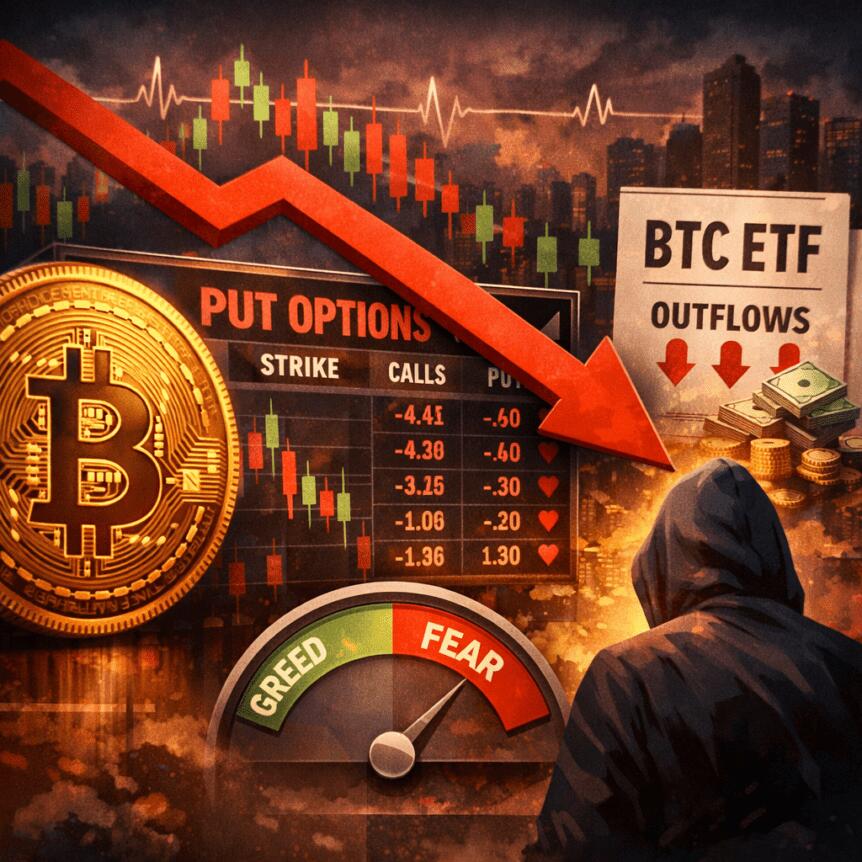
Bitcoin traded in a narrow range near $70,000 on Friday after a stumble to reclaim the $75,000 level earlier in the week. The back-to-back sessions of net outflows from U.S.-listed spot Bitcoin ETFs cooled a recent run of inflows, prompting traders to reassess whether institutions are turning more cautious in the face of a firmer inflation backdrop and renewed risk-off mood across markets.
Two days of net outflows, totaling about $254 million, were recorded in the ETF space, a magnitude not yet decisive enough to signal a wholesale shift in sentiment. Yet the move comes as macro headlines remain unhelpful to a rapid policy pivot from the Federal Reserve. Oil has remained stubbornly elevated, complicating inflation dynamics and, in turn, the Fed’s likely path for rate cuts. The broader risk-off tone was reinforced by a slide in equity markets and a softening of traditional hedges.
Key takeaways
- Bitcoin persists near $70,000 amid two days of spot ETF outflows totaling $254 million, not yet confirming a bearish regime flip.
- Options markets show elevated hedging: put options on Bitcoin are trading at roughly 2.5 times the premium of calls, with a 30-day delta skew around 16%—a sign of caution among professional traders.
- Macro pressures loom large as oil remains above $94 per barrel, complicating growth expectations and potentially delaying further rate cuts, according to Oxford Economics.
- The S&P 500 slid to its lowest level in six months, while gold fell about 10% over a multi-day stretch, underscoring a broad risk-off environment that weighs on Bitcoin beyond its own fundamentals.
Oil shock and the inflation problem
The price of West Texas Intermediate (WTI) crude has held above $94 a barrel since March 12, marking a roughly 50% move higher from a month prior. Analysts argue that supply disruptions in the Middle East—alongside ongoing energy-market volatility—boost inflationary pressures and constrain the Federal Reserve’s ability to slash rates, at least in the near term. An Oxford Economics analysis highlighted how higher energy costs could dampen consumer spending and ripple through import-dependent manufacturing, potentially fueling tangible price pressures across the economy.
Market participants are watching for how energy dynamics intersect with Fed policy and equity risk appetite. The combination of higher fuel costs and geopolitical risk tends to steer investors toward hedging strategies and safer assets, even as Bitcoin’s own fundamentals may present a different risk profile for traders long on crypto exposure.
Bitcoin derivatives signal risk-off posture among professionals
Deribit data, as tracked by Laevitas, shows a notable tilt toward protective positioning among Bitcoin options traders. The put-to-call premium on Friday was nearly 2.5 times the premium for equivalent call options, signaling a pronounced demand for downside protection. This echoes previous episodes when macro shocks or geopolitical developments prompted a similar shift in the derivatives world.
To interpret whether this hedging translates into actual downside risk coverage, traders look at the delta skew—a measure of the relative pricing of puts versus calls. The 30-day delta skew stood at about 16% on Friday, implying professional participants were skeptical that the $69,000 to $70,000 area would prove sturdy in the near term. While not at the panic levels seen in past episodes, the figure reflects a market bracing for further volatility amid a 21% slide in Bitcoin’s price over the past three months, even as gold and U.S. equities displayed more resilience.
The price action also frames a broader question: can Bitcoin hold the line above $70,000 as macro uncertainty persists? A strong rally to $75,000 earlier in the week failed to translate into a sustained shift in the options market, suggesting a continued appetite among traders for risk mitigation rather than outright exposure.
Market observers note that a sustained, meaningful divergence between spot price performance and derivatives signals could offer clues about potential future moves. In this environment, the balance between macro risk and crypto-specific catalysts will likely determine whether hedging remains dominant or if risk appetite returns to Bitcoin’s price action.
For additional context on institutional sentiment during this period, readers can consider earlier coverage noting that larger players have not necessarily abandoned risk assets—even as they pursue strategies that hedge downside risk. Earlier coverage noted that institutions aren’t waiting for the bottom, indicating a nuanced approach rather than a wholesale retreat.
What the data imply for investors and builders
First, the two-day $254 million ETF outflow does not by itself signal a decisive shift in institutional stance. Yet it sits within a broader process where macro risk and energy volatility shape risk tolerance. Investors should watch whether outflows persist or subside in coming weeks, and how that interacts with the price regime Bitcoin can sustain above key levels such as $70,000.
Second, the elevated put-to-call premium and a positive delta skew imply sophisticated market participants are prioritizing downside protection. For traders, this could translate into more pronounced hedging around macro-sensitive milestones, such as inflation readings, central-bank guidance, or geopolitical headlines. For builders and developers, the data emphasize the importance of risk modeling that accounts for regime shifts in macro conditions and derivatives positioning, beyond simply tracking spot price snapshots.
Finally, the energy and geopolitical backdrop remains a potential source of ongoing volatility. With oil hovering at elevated levels and the risk of supply disruptions persisting, policy responses and financial conditions will continue to influence crypto markets. Readers should monitor oil-price trajectories, central-bank communications, and the evolving relationship between traditional markets and digital-asset liquidity flows as the year unfolds.
Meanwhile, Bitcoin’s performance remains juxtaposed against a broader macro landscape where stocks and precious metals are reacting to the same risk-off impulses that pressure crypto markets. The coming weeks will reveal whether Bitcoin can establish a firmer floor around the $70,000 mark or if further downside protection becomes increasingly essential for market participants.
As always, readers should stay tuned to macro developments, on-chain signals, and the evolving dynamics of investor appetite. The next move—whether risk assets regain footing or volatility remains elevated—will likely hinge on how inflation, energy prices, and geopolitical tensions unfold in the near term.
https://www.cryptobreaking.com/bitcoin-options-signal-fear-amid/?utm_source=blogger%20&utm_medium=social_auto&utm_campaign=Bitcoin%20Options%20Signal%20Fear%20Amid%20Subdued%20BTC%20ETF%20Outflows%20
Comments
Post a Comment