
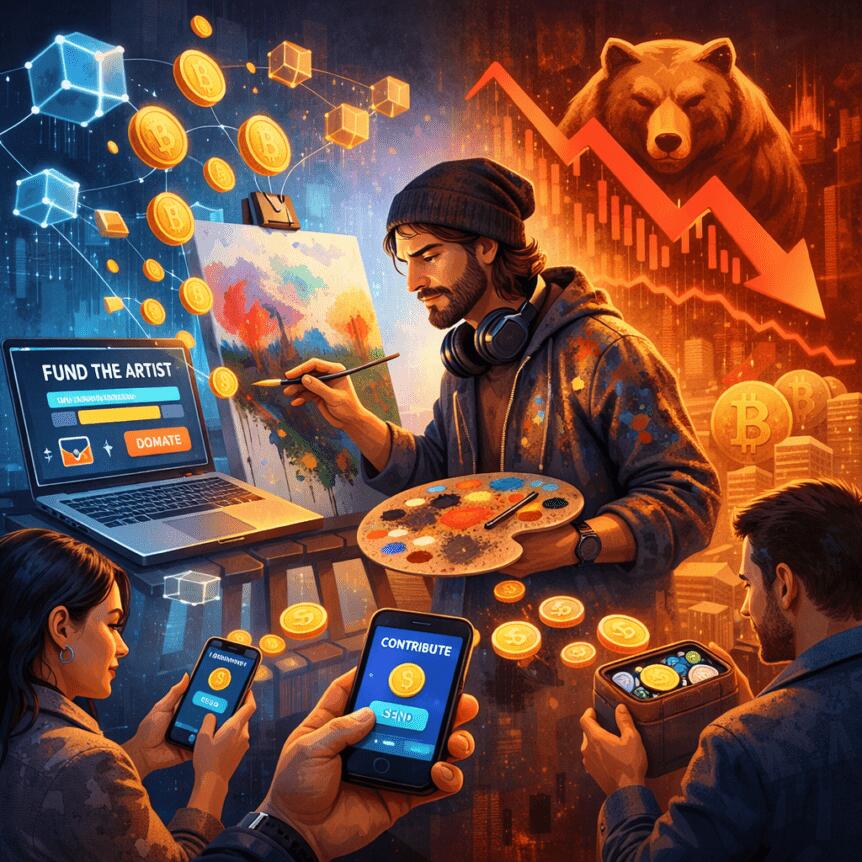
A decentralized crowdfunding approach is being pitched as a lifeline for NFT artists when market conditions turn sour and traditional middlemen tighten their hold. An on-chain experiment led by longtime collector Batsoupyum and curator Lanett Bennett Grant makes a persuasive case: commit to 1 Ether each week to fund emerging Ethereum mainnet works, share the artists’ stories, and avoid profit-driven flips. The model emphasizes direct, transparent capital flows from collectors to creators, with no centralized gatekeepers dictating who deserves attention.
Originating in an opinion piece by Joshua Kim, CEO and founder of DonaFi, the concept argues that a self-sustaining, on-chain funding pipeline can bypass the friction and fees of conventional platforms. In a bear market, when liquidity is scarce and attention concentrates elsewhere, this approach tests whether a small, committed community can keep artists productive and visible.
Key takeaways
- On-chain, platform-agnostic crowdfunding can deliver predictable funding to artists without relying on gatekeeping or monthly platform fees.
- During downturns, direct from-collector funding can supplement shrinking primary sales and help artists stay active in the ecosystem.
- The approach pairs financial support with narrative context, ensuring supporters see exactly where funds go and artists’ stories travel with each transaction.
- Early supporters demonstrated a network effect—more participants pledged, matched funds, or offered exhibitions—without permission from a central authority.
Crowdfunding without platforms or promises
Everything happens on-chain and in public, one purchase at a time. Artists receive direct payment and gain immediate visibility, while collectors know precisely how funds are allocated. The social layer—stories, context, and curation—travels alongside the transaction rather than getting filtered through a platform’s user interface.
Monthly open calls create a repeatable pipeline for discovery and support. The point isn’t a single philanthropic gesture; it’s sustained visibility and cash flow that can keep artists producing during a downturn. The model strips crowdfunding down to essentials: capital, trust and consistency.
A bear market proving ground
NFT bear markets don’t just depress floor prices; they shrink income for aspiring artists who rely on primary sales to fund new work and cover living costs. In this experiment, the community’s response was swift and tangible. Punk6529 matched the weekly ETH pledge. Sam Spratt contributed $20,000. Bob Loukas added $100,000. Galleries opened exhibitions, and platforms like Foundation pledged to feature works. Crucially, none of these contributions required permission or centralized coordination—the momentum spread through the ecosystem organically.
That rapid, permissionless response illustrates the strength of decentralized crowdfunding in downturns. It prioritizes conviction over optimism and demonstrates a pathway for artists to receive steady support even when demand in the broader market falters.
A networked approach to crowdfunding
What distinguishes this model from traditional patronage is its networked nature. Each participant amplifies the others; collectors don’t replace markets, but help stabilize them. Artists aren’t pigeonholed into charity narratives; their work is valued on its own merits. Platforms and galleries don’t compete with the effort—they extend it, enabling broader visibility and ongoing dialogue between creators and supporters.
As the original proposal notes, decentralized crowdfunding works because it aligns incentives without coercion. No one is locked in or promised upside; yet the outcome—a steady stream of support and authentic storytelling—can arrive swiftly.
Related: AI agents will have growing pains before innovation can start links to broader conversations about technology-enabled creativity and the evolving role of automation in art markets.
Why this model matters in 2026
This isn’t merely about salvaging NFTs; it’s about proving that decentralized capital can function when speculation cools. In a market where hype wanes, what endures is community, transparency and conviction—foundations that artists need to thrive. If the next phase of NFTs is to matter beyond hype cycles, it will depend on collectors showing up consistently, moving funds on-chain to creators, and telling their stories alongside the art.
Decentralized crowdfunding won’t fix every problem artists face, but in a downturn it already accomplishes something far more important: it keeps artists alive in the ecosystem when other channels go quiet.
As this model evolves, observers will want to see whether more artists participate, whether funding can scale beyond a few high-profile contributors, and how broadly the storytelling and on-chain transparency can be sustained. The coming months will indicate whether this on-chain approach becomes a durable backbone for creator ecosystems or remains a powerful, yet niche, instrument in the NFT landscape.
https://www.cryptobreaking.com/decentralized-crowdfunding-helps-artists-weather/?utm_source=blogger%20&utm_medium=social_auto&utm_campaign=Decentralized%20crowdfunding%20helps%20artists%20weather%20crypto%20bear%20markets%20
Comments
Post a Comment