
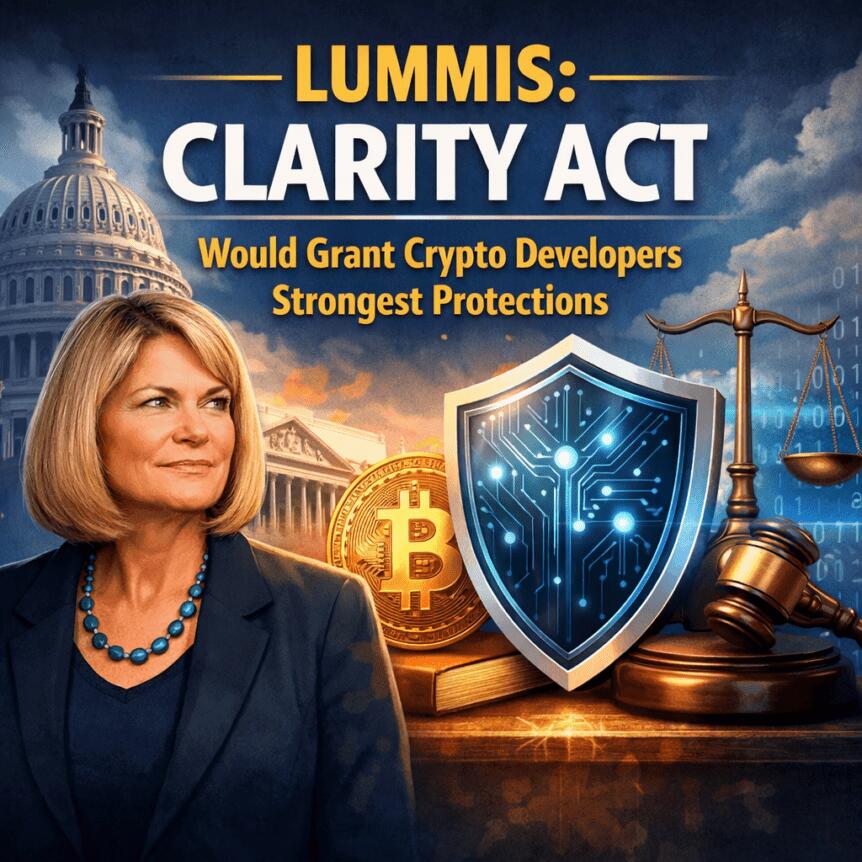
U.S. Senator Cynthia Lummis has sharpened her defense of the Digital Asset Market Clarity Act (CLARITY), arguing that Title 3 would deliver the strongest protections yet for DeFi developers and non-custodial innovators. In recent remarks, she contended that bipartisan changes to the bill would fortify safeguards for DeFi insiders and urged lawmakers to advance CLARITY in order to unlock these protections under the BRCA framework.
The comments come as crypto-savvy lawyer Jake Chervinsky challenged the bill’s current design, arguing that Title 3 could undermine protections by imposing Know-Your-Customer obligations on non-custodial software developers. Lummis responded by asserting that the ongoing revisions to Title 3 are aimed at strengthening DeFi defenses, while noting that the latest draft text has not yet been released publicly.
“Don’t believe the FUD,” Lummis wrote in a Friday posting, adding, “We have worked on a bipartisan basis for the last few weeks to make changes to Title 3 that make this bill the strongest protection for DeFi and developers ever enacted. We have to pass the Clarity Act to get these protections.”
The precise revisions to CLARITY—described by Lummis as a path to stronger, clearer protections for DeFi—have not been published, leaving observers to await the official language.
“Don’t believe the FUD. We have worked on a bipartisan basis for the last few weeks to make changes to Title 3 that make this bill the strongest protection for DeFi and developers ever enacted. We have to pass the Clarity Act to get these protections.”
Chervinsky has emphasized that DeFi protections in Title 3 have been overshadowed by attention to stablecoin-related provisions within CLARITY. His central concern is that the bill’s money transmitter definitions could still place many non-custodial DeFi builders at risk of liability, even as the BRCA’s Section 604 language clarifies that non-controlling developers and providers of non-custodial software should not be treated as financial institutions subject to Bank Secrecy Act KYC obligations.
The broader legal landscape isn’t lost on industry figures. The contrast between intent and enforcement risk is shaping the debate around what forms DeFi protection should take—whether liability shields should hinge on code architecture, custodial status, or the nature of on-chain activity.
The debate arrives amid a climate of high-profile regulatory pushback. In recent months, prosecutors have pursued crypto developers and platforms with renewed vigor, including the Tornado Cash case, where Roman Storm was convicted in August 2025 of conspiracy to operate an unlicensed money transmitting business. The outcome has underscored the urgency for clear, workable safeguards for builders who contribute to open-source or non-custodial tooling.
Legislative momentum around CLARITY appears to be advancing in tandem with broader efforts on stablecoins. U.S. lawmakers have signaled that CLARITY’s passage would be instrumental in delivering BRCA-backed protections for DeFi developers, with a Senate Banking Committee markup anticipated in April after progress on the stablecoin rewards provisions. The absence of publicly released text notwithstanding, supporters argue that the package’s architecture is designed to distinguish non-custodial code from regulated financial activity, reducing ambiguity for developers and users alike.
As the clock ticks toward committee consideration, investors and builders will be watching closely how Title 3 evolves and whether the revisions address non-custodial liability concerns without undermining legitimate regulatory aims. The next updates from Congress will determine not only the fate of CLARITY but also the practical implications for DeFi development, funding, and broader market adoption.
Readers should stay tuned for the formal release of the revised draft and subsequent committee milestones, as the balance between protection and compliance continues to shape the trajectory of DeFi regulation in the United States.
https://www.cryptobreaking.com/lummis-clarity-act-would-grant/?utm_source=blogger%20&utm_medium=social_auto&utm_campaign=Lummis:%20CLARITY%20Act%20would%20grant%20crypto%20developers%20strongest%20protections%20
Comments
Post a Comment