
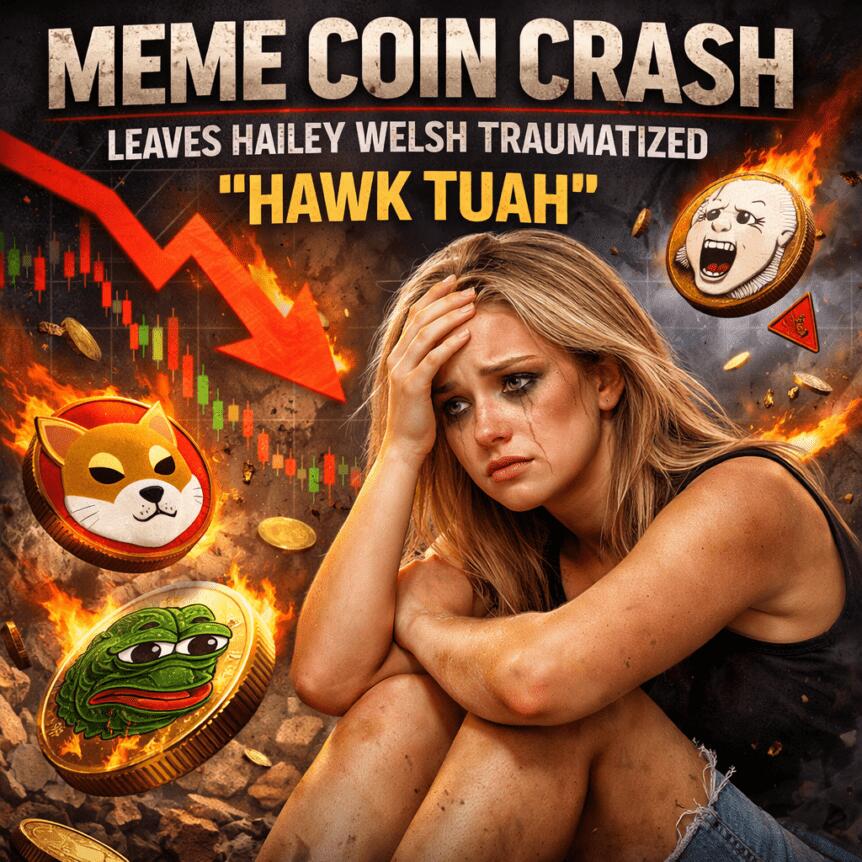
A prominent crypto influencer is speaking out about the fallout from promoting a memecoin that unraveled just days after its 2024 launch. Hailey Welch, popularly known as the Hawk Tuah girl, says the HAWK memecoin episode left lasting scars after a rapid rise and a dramatic collapse, and she stresses she did not profit from the project or help launch it.
Welch told Channel 5 in a recent interview that she fully cooperated with a Federal Bureau of Investigation (FBI) probe conducted in 2025, which she says cleared her of any wrongdoing. She also emphasized that she did not possess any of the memecoin’s funds and lacked the technical expertise to launch the coin herself. The experience, she says, took a toll on her mental health as she faced intense scrutiny and threats in the wake of the controversy.
“I was starting to get death threats and everything else. People telling me I owe them all this money, and I'm like, ‘I didn't do this.’ I'm sitting here, and I'm the one getting hit for this. It's rough. It's one of those things where if you come out of the house, you put your head down.”
Despite Welch’s portrayal of the episode as a case of mistaken involvement, not everyone in crypto’s investigative community is sympathetic. On-chain sleuth ZachXBT criticized the backlash, arguing that promoters should bear responsibility when they publicly endorse meme coins that turn out to be high-risk bets. “No one should feel bad for the ‘trauma,’” he wrote, pointing to Welch’s decision to promote the token despite warnings from crypto Twitter, and later stepping away from social media as followers lost funds.
Key takeaways
- HAWK launched in December 2024 and quickly surged to a market cap north of $490 million within hours of going live, according to market trackers.
- The following day, the project collapsed by more than 91%, bringing its market cap down to about $41 million and sparking characterizations of a rug pull.
- An investor lawsuit was filed in December 2024 against the teams behind the memecoin, alleging the sale of unregistered securities; Welch was not named in the suit.
- Welch says she cooperated with a 2025 FBI inquiry that cleared her of wrongdoing, and that she neither owned funds from the launch nor had the technical capability to create the token.
- Despite the claims of broad investor losses, Welch’s legal team characterized the total dollar losses by retail investors as around $200,000, while she described the impact as disproportionately harsh on her personally due to threats and public scrutiny.
- Crypto observers remain divided: supporters say the episode underscores risks of influencer endorsements in memecoin hype, while critics argue that promoters should be accountable for the consequences of their campaigns.
The rise, collapse, and aftermath of the HAWK meme
The HAWK memecoin’s December 2024 debut drew immediate attention, with the token vaulting to a multi-hundred-million-dollar valuation in a matter of hours. Market trackers subsequently show the project losing momentum at a breathtaking pace, delivering a dramatic fall from grace as investor confidence eroded and liquidity questions surfaced. Within 24 hours of launch, the market capitalization had receded to roughly $41 million, a drop of more than 90% from its peak. The episode has since been widely described as a rug pull by observers who tracked the token’s early performance and post-mortem discussions in the community.
The public fallout extended beyond market data. In December 2024, an investor lawsuit was filed against the entities behind the memecoin’s launch, alleging the sale of unregistered securities. Welch, who had publicly promoted the token, was not named in the suit, but the case underscored the broader regulatory and legal risks tied to promoter-backed memes amid a crowded field of similar campaigns. The case added to a growing chorus calling for greater scrutiny of token offerings that hinge on celebrity or influencer endorsements rather than foundational project fundamentals.
Context, accountability, and what to watch next
Welch’s account highlights the ethical and personal stakes around influencer involvement in meme coins. She contends that she did not profit from the project and did not facilitate its launch, while still bearing the social and mental health consequences of the episode. The FBI’s involvement—according to Welch—yielded a clearing conclusion, though the broader debate about due diligence and disclosure remains active in crypto circles.
From a market dynamics perspective, the HAWK episode illustrates several enduring tensions in the meme-coin niche: how quickly hype can translate into astronomical valuations, how swiftly sentiment can reverse, and how investor protections lag behind the speed of social media-driven campaigns. For investors, the episode reinforces the importance of scrutinizing promoters’ claims, the provenance of a token, and the clarity of regulatory disclosures before participating in a launch. For builders and platforms, it underscores the necessity of clear governance and compliance frameworks to mitigate the risk of similar episodes undermining trust in the ecosystem.
As regulators and the crypto community continue to grapple with these questions, readers should watch for developments around enforcement actions tied to promoter-led token launches, potential updates to how unregistered securities are treated in meme-powered campaigns, and whether more empirical data will emerge on the real-world losses borne by retail participants in such episodes.
Readers should stay tuned to further statements from involved parties and to updates on any legal proceedings, as the broader narrative around influencer-led memecoins continues to evolve and shape the conversation about accountability in the space.
https://www.cryptobreaking.com/meme-coin-crash-leaves-hailey/?utm_source=blogger%20&utm_medium=social_auto&utm_campaign=Meme%20Coin%20Crash%20Leaves%20Hailey%20Welsh%20Traumatized,%20'Hawk%20Tuah'%20
Comments
Post a Comment