
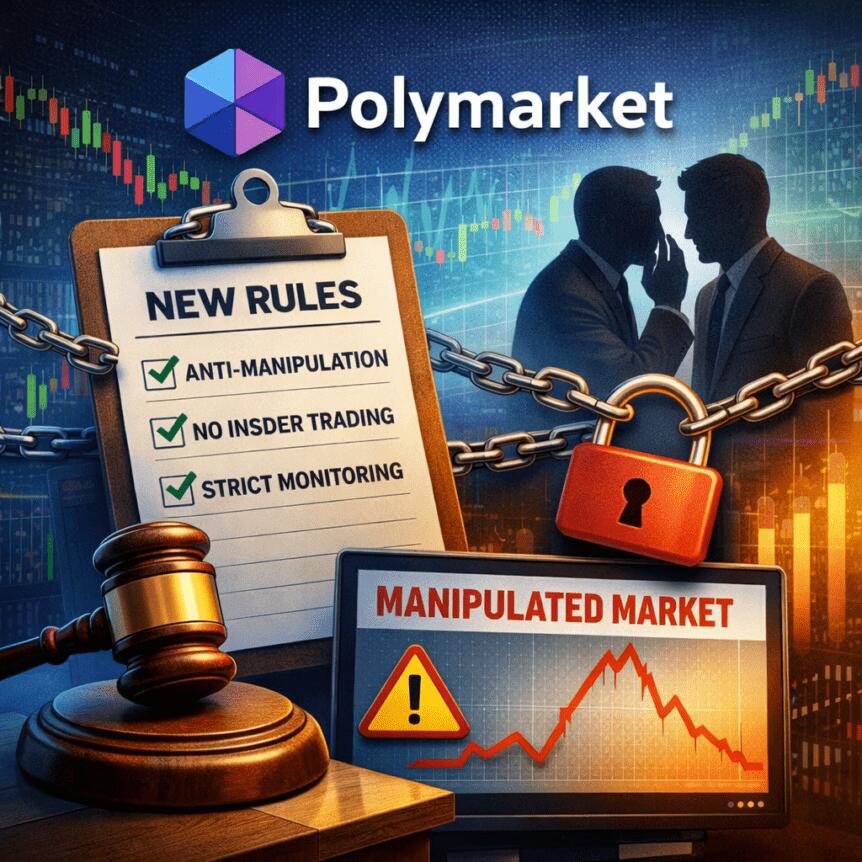
Polymarket has rolled out a refreshed set of market integrity rules for its prediction platforms, tightening standards to align with regulatory expectations and bolster its status as a regulated trading venue. The update covers both its global decentralized finance platform and its US exchange, which operates under oversight by the Commodity Futures Trading Commission (CFTC). The move comes as regulators and lawmakers intensify scrutiny over risks linked to insider trading, market manipulation, and the use of event-based contracts.
Polymarket described the overhaul as a comprehensive upgrade to market design, settlement criteria, and data sourcing, while expanding its monitoring and surveillance to detect suspicious activity. The company also signaled a pragmatic stance by curbing certain market types that it views as easier to manipulate or ethically fraught. The changes underscore an industry-wide push to improve integrity as prediction markets gain broader attention from regulators and the public.
In a separate note, Polymarket highlighted a recent internal action in which it banned and reported users who pressured an Israeli journalist to amend a news article about an Iranian missile strike, a case that drew significant attention to how trading platforms may be used to influence reporting or profit from real-world events. More on that episode is discussed below as part of the broader context for the policy shift.
Key takeaways
- Polymarket updates its market integrity rules for both its DeFi platform and US exchange, with CFTC oversight reaffirmed as a central feature.
- New measures include stricter market design, clearer outcome-resolution criteria, better-defined data sources, and enhanced surveillance to flag suspicious activity.
- The platform will limit certain markets that are deemed highly manipulable or ethically sensitive, signaling a targeted risk-management approach.
- The move arrives amid ongoing regulatory scrutiny and a series of partnerships aimed at legitimizing prediction markets, including a high-profile MLB deal and an explicit integrity framework with the CFTC.
Polymarket’s rule overhaul and regulatory alignment
Polymarket’s leadership framed the rule updates as a necessary step toward stronger compliance and greater transparency for participants. By detailing resolution criteria—how and when outcomes are settled—and tying those outcomes to verifiable data sources, the platform aims to reduce disputes and ambiguity that have historically plagued event-based markets. The enhanced monitoring and surveillance functions are designed to detect patterns indicative of manipulation or insider trading, a concern repeatedly raised by policymakers as prediction markets expand.
Crucially, the update frames Polymarket’s operations in the context of its CFTC oversight for its US-facing exchange. While the global DeFi platform operates with broader jurisdictional considerations, the company emphasizes that its compliance program is built to meet regulatory expectations across its product spectrum. The policy shift is portrayed not merely as a cosmetic update but as a foundational change intended to support sustainable growth in a space that regulators are still learning to evaluate.
In the same vein, Polymarket has signaled limits on markets that could invite manipulation or raise ethical red flags. While the specifics of restricted categories were not disclosed in comprehensive detail, the stance aligns with broader regulatory caution around high-stakes bets tied to real-world events and public interest.
Regulatory push, partnerships, and the market backdrop
The timing of Polymarket’s policy refresh sits within a broader pattern of regulatory scrutiny and industry responses. Prediction markets have surged in popularity, attracting large communities of traders betting on real-world developments. That momentum has attracted investment, with reports suggesting Polymarket raised hundreds of millions and eyed a multi-billion-dollar valuation in a recent fundraising phase. Still, the regulatory environment remains unsettled in many jurisdictions, with several US states taking action against prediction platforms accused of functioning as unlicensed gambling services.
Publicly, Polymarket has pointed to partnerships as a pathway to legitimacy. Notably, Major League Baseball (MLB) announced a deal with Polymarket, paired with a separate CFTC-focused agreement aimed at “integrity protections.” The collaboration signals regulators’ interest in embedding guardrails and oversight into prediction-market ecosystems while enabling mainstream adoption through established institutions. In parallel, coverage of the broader market has included attention to how these platforms handle ethics and fairness, especially as they scale and attract mainstream users.
As a backdrop, Polymarket also faced controversy tied to its markets. A widely reported incident involved a small cluster of accounts that reportedly generated substantial profits by timing bets related to U.S. strikes on Iran. Bloomberg’s coverage noted that the six accounts were newly created in February and had limited prior betting activity, sparking concerns about possible insider information advantages and the fairness of rapid-fire conclusions. While not a formal verdict on manipulation, the episode has intensified calls for stronger guardrails and clearer compliance standards across prediction markets. For readers tracking this thread, the Bloomberg report provides a contemporary data point illustrating the tensions between high profitability and the need for robust market integrity tools.
Last week, Polymarket also disclosed that it had banned and reported users who pressured a journalist to alter coverage about the Iran-related event that became the subject of a $17 million market.
These developments occur alongside a broader debate about the accountability of platform operators in DeFi and hybrid models. Critics argue that even well-intentioned systems can be exploited to shape outcomes or reward certain information asymmetries, while proponents contend that regulated, transparent marketplaces can outperform opaque or unregulated alternatives. The latest Polymarket update is a tangible effort to tilt the balance toward the former, with concrete reforms designed to reduce manipulation vectors and improve user confidence.
What readers should watch next
Polymarket’s integrity refresh offers a clearer blueprint for what investors and users should expect from regulated prediction markets: stronger governance around how bets are structured, settled, and monitored; explicit data provenance; and a deliberate stance on market types that pose outsized manipulation risk. The company’s ongoing partnerships with sports leagues and regulators will be critical to watch, as they may set a precedent for how other platforms negotiate the line between innovation and compliance.
Equally important is the evolving regulatory landscape in the United States and abroad. As enforcement actions and legislative proposals continue to shape the permissible scope of prediction markets, continued transparency from operators and a demonstrated commitment to preventing abuse will determine whether these platforms can sustain momentum and broader participation.
In the near term, observers will be looking for concrete outcomes from Polymarket’s enhanced compliance framework: measurable reductions in manipulation indicators, clearer settlement standards, and more robust disclosures around data sources. The next wave of updates could also reveal how the company balances market openness with risk controls—a balance that will influence investor confidence, user participation, and the overall trajectory of event-based prediction markets.
As the market evolves, readers should keep an eye on regulatory announcements, enforcement actions by state authorities, and any clarifications from the CFTC or other regulators regarding the treatment of prediction markets. The convergence of corporate partnerships, formal integrity protocols, and regulatory oversight marks a pivotal moment for the sector—one that could shape how these platforms exist within the broader crypto and financial ecosystem.
https://www.cryptobreaking.com/polymarket-tightens-rules-to-curb/?utm_source=blogger%20&utm_medium=social_auto&utm_campaign=Polymarket%20Tightens%20Rules%20to%20Curb%20Manipulation%20and%20Insider%20Trading%20
Comments
Post a Comment