
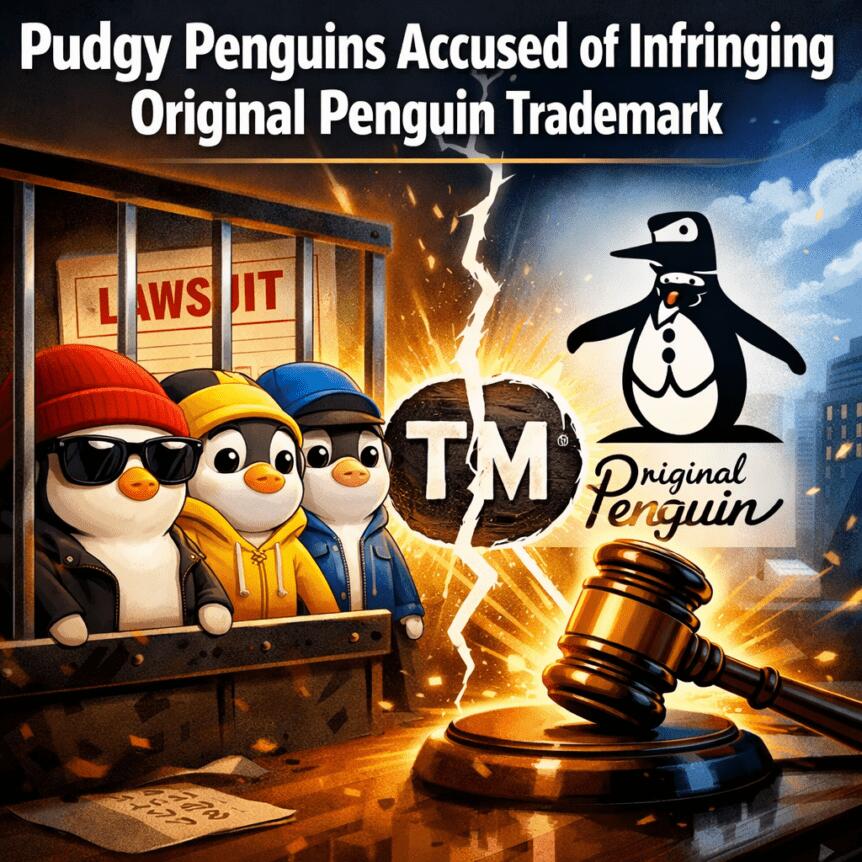
PEI Licensing, the firm behind Original Penguin, has filed a lawsuit in a Florida federal court accusing Pudgy Penguins of trademark infringement, dilution and unfair competition. The complaint argues that Pudgy Penguins’ apparel and branding employ a penguin motif and a family of marks that are confusingly similar to PEI’s federally registered PENGUIN marks. PEI points to a long history with the word mark and penguin imagery—claims the company has used since 1967 (word mark) and 1956 (penguin design on apparel)—and notes a cease-and-desist sent in October 2023 demanding Pudgy Penguins abandon USPTO registrations that resemble PEI’s marks. The dispute sits at the crossroads of traditional IP enforcement and the growing world of NFT-inspired merchandise, underscoring how digital brands are increasingly intersecting with physical goods.
Key takeaways
- PEI Licensing contends that Pudgy Penguins’ use of penguin imagery and the PENGUIN word mark in apparel constitutes infringement, dilution and unfair competition, arguing the marks are confusingly similar to PEI’s established branding.
- The lawsuit was filed in a Florida federal court and seeks sweeping relief, including actions with the USPTO to reject Pudgy Penguins’ trademark applications and to stop further infringement.
- PEI asserts decades of use for its marks, claiming the PENGUIN word mark dates to 1967 and a penguin design on clothing since 1956, bolstering its position on fame and protection against dilution.
- Pudgy Penguins has publicly contested the claims, stating that its marks are visually distinct, target a different audience, and have already received USPTO approvals for multiple applications.
- The case illustrates mounting tensions as NFT-driven communities move into physical goods, raising questions about branding, consumer perception and how the USPTO evaluates cross-domain marks.
Market context: The action sits within a broader trend of traditional IP owners vigilantly defending long-established marks against permutations created by NFT and Web3 brands. As projects push into apparel and lifestyle products, complex questions arise about how to balance protection with the creative expressions that draw communities together in the digital space.
Why it matters
For IP owners, the suit signals a willingness to apply established trademark law to a novel class of products tied to blockchain communities. If PEI succeeds in blocking Pudgy Penguins’ registrations or securing injunctive relief, it could reinforce a framework where decades-old marks are shielded not only from direct counterfeit goods but also from NFT-driven brands that attempt to translate digital identities into tangible merchandise. Such a decision would tilt the risk calculus for NFT projects considering cross-brand collaborations and licensed apparel, potentially encouraging more robust IP screening before launching physical lines.
On the other side, Pudgy Penguins argues that its branding is sufficiently distinct and that it has secured multiple USPTO approvals, which could complicate the path for PEI to demonstrate confusion. The company contends that its audience and market are different from Original Penguin’s, a distinction it believes undercuts PEI’s dilution and infringement theories. The dispute also raises practical questions about how the USPTO evaluates marks that straddle the traditional fashion sector and the evolving Web3 ecosystem, where brand narratives can be built around memes and community-driven imagery rather than conventional fashion houses.
Beyond the courtroom, the case highlights how NFT-native brands increasingly confront IP frameworks that were designed for physical goods and established consumer markets. If the court weighs in on the merits of likelihood of confusion, it could influence future decisions about how aggressively NFT projects pursue trademark protection for marks that sit at the intersection of crypto culture and lifestyle branding. For investors, the outcome may affect how brand licensing strategies are valued in NFT ecosystems—potentially shaping both the attractiveness of licensed collaborations and the perceived risk of dilution for iconic marks used in or alongside digital collectibles.
The dispute also underscores a broader strategic question for creators: when does the protection of a familiar mark justify intervention against a new brand approach that leverages similar visuals? The plaintiff-cum-brand-owner dynamic in this case could serve as a reference point for other NFT projects weighing whether to pursue formal trademark protection for family branding on apparel, or to explore alternative protection strategies that emphasize distinct, non-confusable branding elements while still capitalizing on the appeal of familiar tropes like penguin imagery.
In short, the PEI-Pudgy Penguins case is more than a single litigation. It tests the boundaries of trademark protection in an era where communities can spin up apparel lines quickly around digital assets, and it may influence how quickly regulators and courts adapt traditional IP doctrines to a rapidly evolving branding landscape within the NFT economy.
What to watch next
- Progress of the Florida court case, including any scheduling orders for pleadings or potential motions for preliminary relief.
- USPTO decisions on Pudgy Penguins’ trademark applications, including possible refusals or refusals that could shape the trajectory of the case.
- Any private settlements or public statements that signal a path toward resolution outside the courtroom.
- Subsequent branding initiatives from Pudgy Penguins or other NFT projects seeking apparel licenses might influence how the market interprets IP risk and brand strategy.
- Broader implications for how NFT-based brands structure IP portfolios, especially when expanding into physical goods and lifestyle products.
Sources & verification
- The CourtListener docket for PEI Licensing LLC v. Pudgy Penguins Inc., which outlines the complaint and related filings.
- Public statements from Pudgy Penguins leadership regarding branding and ongoing USPTO filings.
- The October 2023 cease-and-desist letter from PEI to Pudgy Penguins addressing alleged infringement.
- USPTO trademark application records for Pudgy Penguins’ marks cited in the filings.
Trademark clash reshapes NFT IP landscape
In a move that mirrors the growing convergence of fashion branding and blockchain culture, PEI Licensing has brought a formal action in a Florida federal court accusing Pudgy Penguins Inc. of infringing and diluting its long-standing PENGUIN marks. The complaint hinges on two facets: a word mark—PENGUIN—and a penguin design used on apparel. PEI contends that Pudgy Penguins’ branding, which leverages penguin imagery and similar phrasing, risks creating consumer confusion in the market for clothing and related goods. The company emphasizes that its PENGUIN word mark has a long formative history, with first use dating back to 1967 and the penguin design appearing on apparel as early as 1956, asserting that these elements have achieved a level of fame that warrants robust protection against similar use by others.
PEI’s action cites a cease-and-desist issued in October 2023, a document the company says demanded that Pudgy Penguins halt attempts to register PENGUIN marks with the USPTO. The core allegation is that Pudgy Penguins has “misappropriated valuable property rights” by pursuing registrations that could confuse consumers into associating Pudgy Penguins’ products with PEI’s established brand. PEI seeks a broad remedy: court intervention to block Pudgy Penguins’ registrations, to halt ongoing infringement, to destroy products that are likely to cause confusion, and to recover any profits tied to such items. The complaint frames the dispute within classic IP theory—trademark infringement, dilution and unfair competition—applied to a modern context where a digital-native brand seeks to translate a meme-driven identity into tangible merchandise.
Responding to the suit, Pudgy Penguins’ chief legal officer, Jennifer McGlone, told reporters that the company remained surprised by the action, noting that discussions toward a private resolution had been ongoing. She argues that Pudgy Penguins’ marks are visually distinct, target a different audience, and have already secured USPTO approvals for multiple applications, suggesting that PEI’s claims lack merit. The company further pointed to a social-media post as evidence of a clear separation from Original Penguin’s branding, attempting to frame the dispute as a misalignment of audiences rather than a direct encroachment.
The unfolding case spotlights a broader debate about how traditional IP frameworks adapt to the NFT era. As projects move from purely digital assets into physical goods—think apparel and accessories—mark owners must decide how aggressively to defend their portfolios. A ruling in PEI’s favor could reinforce protections against cross-brand apparel lines that resemble established labels, potentially slowing similar collaborations, while a decision for Pudgy Penguins might signal a degree of latitude for NFT–driven brands to leverage iconic imagery without encroaching on long-standing fashion trademarks. The CourtListener docket associated with the complaint offers a window into the procedural posture, including requests to direct the USPTO to reject registrations and to halt further use of marks likely to be confused with PEI’s branding.
Ultimately, this dispute is about more than a single brand’s legal rights. It reflects the evolving expectations of brand protection in a landscape where online communities can rapidly translate digital fame into real-world products. Outcomes could influence how NFT projects plan licensing strategies, assess IP risk, and structure their branding to preserve the trust and loyalty of their communities while navigating traditional trademark scrutiny. As the case progresses, observers will watch not only for a potential settlement but for how the court interprets the balance between protecting a venerable, historic mark and recognizing the creative expressions that drive the NFT ecosystem forward.
https://www.cryptobreaking.com/pudgy-penguins-accused-of-infringing/?utm_source=blogger%20&utm_medium=social_auto&utm_campaign=Pudgy%20Penguins%20Accused%20of%20Infringing%20Original%20Penguin%20Trademark%20
Comments
Post a Comment