
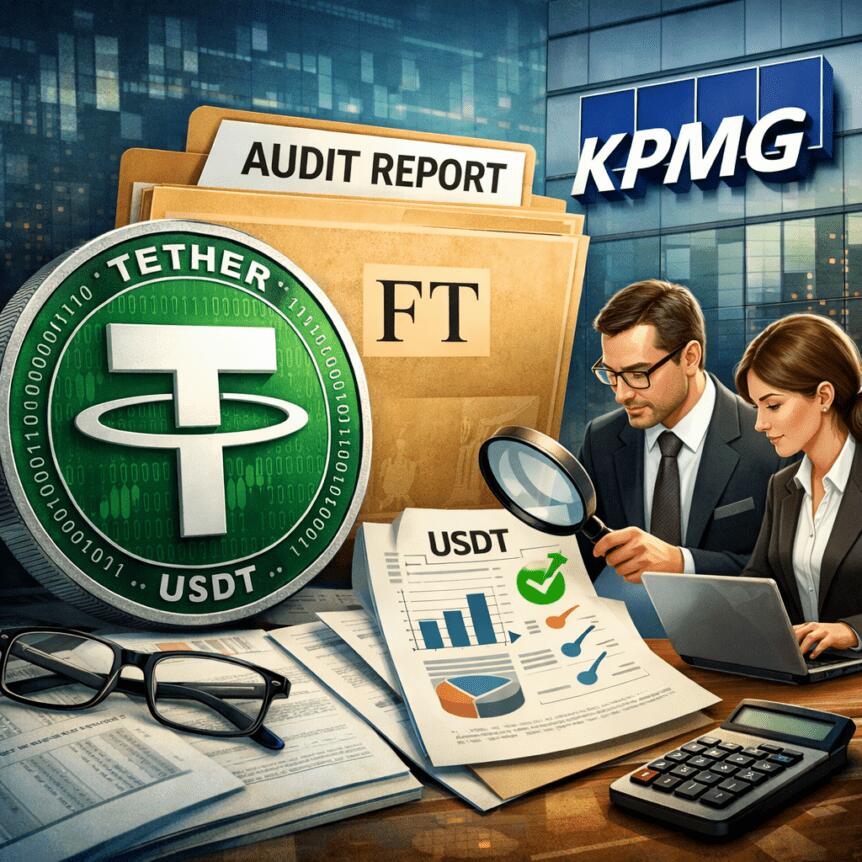
Tether is moving toward deeper financial transparency with a landmark step: hiring KPMG for its first full audit of USDT’s financial statements, while PwC assists in strengthening internal systems. The Financial Times reported the move, noting that the audit will extend beyond reserve snapshots and aim to cover the company’s assets, liabilities, and internal controls. This development follows Tether’s earlier pledge to enlist a Big Four firm for an inaugural financial statement audit, and it arrives as the company weighs broader ambitions in the US market amid evolving stablecoin regulation.
USDT remains the largest stablecoin by market capitalization, with about $185 billion in circulation. Tether disclosed in January that it held more than $122 billion in direct U.S. Treasury securities and about $141 billion in total Treasury exposure, including related instruments such as overnight reverse repurchase agreements. This backdrop helps frame why a comprehensive audit—beyond reserve attestations—could be pivotal for market confidence as the sector contends with regulatory scrutiny and evolving frameworks.
Related: Financial Times coverage highlights that Tether’s engagement with a Big Four firm for its inaugural financial statement audit marks a notable shift in its disclosure posture, following years of relying on reserve attestations from BDO Italia. Tether has publicly billed the forthcoming audit as “the biggest ever inaugural audit in the history of financial markets.”
The backdrop to the audit move includes ongoing corporate funding conversations and regulatory considerations. Reports last year suggested Tether was exploring a substantial equity raise, potentially up to $20 billion, which would imply a significant valuation. Tether’s leadership has disputed specific figures while continuing to point to a broader valuation target around $500 billion, anchored in earnings and market position. This context underscores why independent verification could be influential for both investors and regulators as the company presses ahead with its growth strategy.
Key takeaways
- First full audit under way: Tether has engaged KPMG to conduct its inaugural complete audit, with PwC assisting in enhancing internal controls and systems. The engagement follows years of reserve attestations and no disclosed audit timeline.
- Audit scope expanded beyond reserves: The KPMG engagement is expected to examine the full balance sheet—assets, liabilities, and internal controls—in addition to reserves, a move described by Tether as raising the standard for the digital-asset economy.
- Big Four selection and process: The choice of a Big Four firm came after a competitive process, and Tether notes it already operates to Big Four audit standards, though no completion date has been announced.
- Historical scrutiny and settlements: Tether has faced regulatory action in the past, including a $41 million CFTC fine and an $18.5 million settlement with the New York Attorney General, tied to reserve disclosures and investor disclosures. The NYAG agreement requires quarterly reserve reporting for two years.
- Market and regulatory context: USDT remains dominant with about $185 billion in circulation. The wider regulatory landscape, including the GENIUS Act, adds urgency to transparent, auditable reserve practices as policymakers weigh a federal framework for stablecoins.
Audit momentum and the broader implications
The decision to bring in KPMG for a full-scope audit signals a notable pivot toward verifiable governance for USDT. While previous attestations from BDO Italia provided periodic oversight of reserves, a full financial statement audit would offer a comprehensive view of Tether’s balance sheet and internal controls. By aligning with KPMG and leveraging PwC’s internal systems work, Tether appears intent on elevating both external credibility and internal risk management ahead of strategic moves in the U.S. market.
From an investor and user perspective, the audit could help address lingering questions about reserve composition, liquidity cushions, and the overall health of the issuer’s treasury management. In a market where stablecoins have become central to liquidity and trading, independent, auditable financial statements may influence counterparties’ risk pricing, collateral arrangements, and regulatory discussions. The timing also matters as stablecoin policy moves forward in Washington, with proposals like the GENIUS Act aiming to establish a clear federal framework for stablecoins and stablecoin issuers.
Beyond the audit itself, Tether’s broader financing ambitions—reported in earlier coverage as a potential equity raise—add another layer of complexity. While CEO Paulo Ardoino has pushed back on specific figures, the prospect of large-scale fundraising underscores the need for transparent financial reporting to support a higher enterprise valuation and broader investor appetite. Past enforcement actions, including a CFTC settlement and NYAG settlement, have already shaped public expectations around reserve management and disclosure discipline, making independent verification even more consequential for market trust.
Industry observers will be watching whether the audit timeline is announced and how the resulting financial statements address questions that have persisted since USDT’s early days. The intersection of rigorous audit standards with an evolving regulatory regime could set the tone for how stablecoins are funded, backed, and governed as they scale and compete for a larger share of the global payments and liquidity infrastructure.
As the process unfolds, readers should monitor the progress and the eventual release of the full audit results, alongside any updates from Tether on internal-control enhancements and related governance reforms. The coming quarters could reveal whether independent, multipoint verification translates into tangible improvements in transparency, resilience, and regulatory clarity for the stablecoin sector.
Sources consulted for context include coverage from the Financial Times detailing the audit mandate and the Big Four engagement, as well as prior Cointelegraph reporting on Tether’s audit strategy, past settlements, and the broader regulatory environment shaping stablecoins in the United States. For readers seeking deeper background, see the Financial Times article and related coverage linked above.
https://www.cryptobreaking.com/tethers-usdt-to-undergo-its/?utm_source=blogger%20&utm_medium=social_auto&utm_campaign=Tether's%20USDT%20to%20undergo%20its%20first%20full%20audit%20by%20KPMG,%20FT%20reports%20
Comments
Post a Comment