
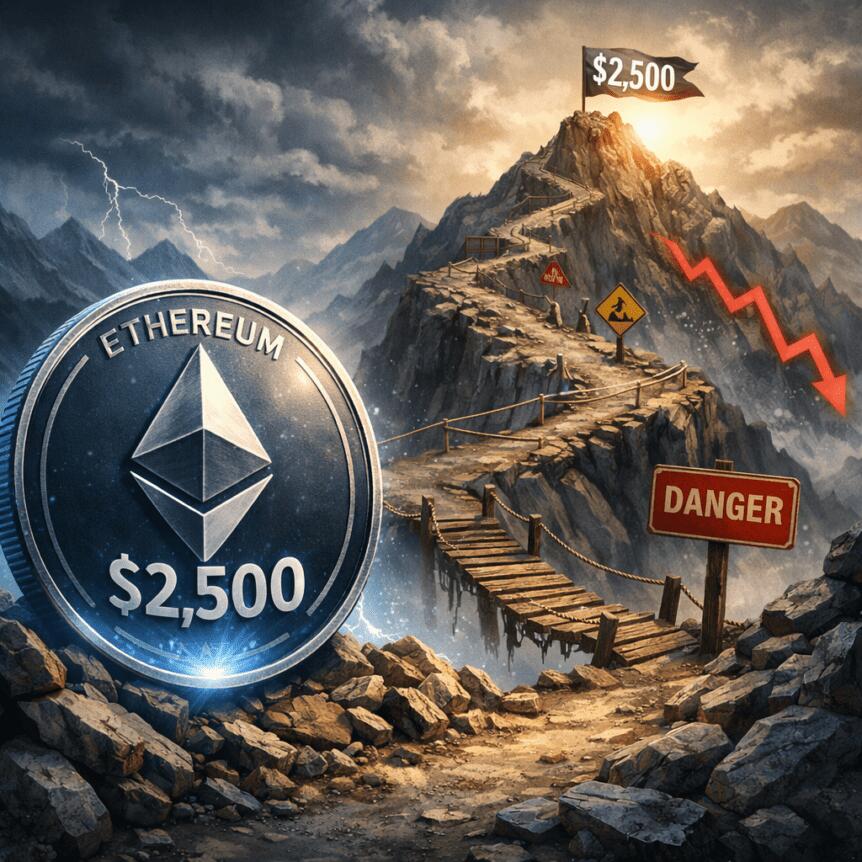
Ether faced renewed selling pressure as global markets retreated and traders priced geopolitical risk into risk assets. After a brief move up to $2,200, ETH slipped roughly 6% in the session, as US equities cooled and oil and gas shipments in the Middle East disrupted supply lines. The macro backdrop—rising concerns about global growth, tighter liquidity, and policy headlines—has kept sentiment cautious, weighing on momentum even as the asset had rebounded about 22% from a February dip near $1,800. On-chain metrics and derivatives markets alike reflect a conservative stance among professional participants, signaling a preference for risk mitigation over aggressive upside bets as the week unfolded. The situation underscores how macro shocks can suppress near-term price action for Ethereum while its longer-term fundamentals remain intact in the eyes of many investors.
Key takeaways
- ETH derivatives indicate a shift toward risk-off positioning, with traders hedging against downside rather than chasing leverage.
- The 30-day futures annualized premium for ETH sits well below the neutral threshold, suggesting subdued demand for bullish exposure despite Ethereum’s central role in DeFi.
- Professional sentiment remains cautious as the ETH options skew (put-call) shows persistent skepticism, limiting upside momentum in the near term.
- On-chain activity and DApp revenue have cooled, even as Ethereum maintains a dominant share of total value locked (TVL) when including layer-2 solutions.
- Institutional investors continue to favor decentralization, reinforcing Ethereum’s market position relative to alternative networks with lower fees and faster throughput.
Tickers mentioned: $ETH
Sentiment: Bearish
Price impact: Negative. Ether declined about 6% in the latest session as broader risk-off dynamics took hold.
Trading idea (Not Financial Advice): Hold. Given the mix of macro headwinds and cautious on-chain signals, a neutral stance is prudent until near-term catalysts emerge.
Market context: The price action comes amid a risk-off environment driven by geopolitical tensions and macro headlines, including regulatory developments and tariff-related rulings that echo through risk assets. Ether’s trajectory remains closely linked to broader market liquidity and appetite for protective hedges rather than speculative bets, underscoring the sensitivity of crypto markets to macro shocks and traditional market risk sentiment.
Why it matters
The ongoing tension between macro risk factors and the Ethereum ecosystem’s fundamentals creates a nuanced backdrop for investors. On the one hand, Ethereum continues to command dominance in the decentralized finance space, reinforced by robust liquidity measures and the active role of layer-2 scaling solutions. Combined with a vast base of decentralized applications, Ethereum’s network remains a cornerstone of the blockchain economy, even as near-term on-chain activity metrics show softness. On the other hand, derivatives markets signal caution among professional traders, which can foreclose immediate upside despite long-term potential.
From a structural perspective, Ethereum’s share of TVL remains sizable, reflecting deep institutional belief in decentralization and the value of a secure, widely supported base layer. When layer-2 solutions are included, the Ethereum ecosystem accounts for a substantial portion of total market TVL, illustrating that the chain’s multi-layer architecture still attracts substantial capital despite current headwinds in on-chain activity. This dynamic helps explain why even in a softer period for DEX volumes and DApp revenues, Ethereum’s long-run trajectory remains a focal point for investors seeking exposure to DeFi and digital asset infrastructure.
Moreover, the preference for decentralization among traditional finance participants continues to shape Ethereum’s narrative. In contrast to other networks that promise lower fees or faster transactions, institutions often weigh long-term resilience, security, and governance when allocating capital. This tilt supports Ethereum’s position even as competitors experience cycles of slower usage and shifting user activity. The outcome is a nuanced balance: a near-term malaise in price action and on-chain metrics, paired with a still-dominant role in the sector’s infrastructure and funding flows.
The broader market context matters because it frames how the next leg of any potential rally could unfold. If macro conditions improve or institutional demand for DeFi exposure strengthens, ETH could regain traction more readily on renewed liquidity and risk appetite. Conversely, further deterioration in macro indicators or a renewed spike in volatility could keep the market in a cautious mode, preventing a sustained uptrend despite Ethereum’s underlying advantages.
What to watch next
- Monitor the ETH 30-day futures market for changes in the annualized premium, particularly if liquidity conditions improve or risk appetite returns. Look for shifts back toward the 5% neutral threshold as a potential early signal of renewed demand for bullish leverage.
- Track the ETH options skew (put-call) on Deribit through Laevitas, which could reveal whether hedging demand intensifies after macro headlines or earnings-like data releases. A rising skew would indicate greater downside protection demand.
- Watch weekly on-chain activity indicators: DEX volumes and DApp revenues, which recently declined to about $12.6 billion and $14.1 million, respectively, with broader declines across competitors like Solana showing a similar pattern.
- Keep an eye on total value locked and market share data, especially Ethereum’s share when including layer-2 ecosystems, which continues to illustrate the platform’s central role in DeFi despite near-term softness.
Sources & verification
- ETH 30-day futures annualized premium data and discussion of neutral threshold (Laevitas.ch).
- ETH options skew (put-call) level analysis and routing to Deribit via Laevitas.
- Weekly DEX volumes and DApp revenues (DefiLlama).
- TVL figures by network including layer-2 integrations (DefiLlama).
Market dynamics: Ethereum leadership tested by macro headwinds and thinning on-chain activity
Ether’s latest action sits squarely at the intersection of macro risk and on-chain dynamics. After trading near a brief peak around $2,200, the asset retraced as global markets absorbed geopolitical risk and policy developments. The episode underscores a broader theme: even as Ethereum remains the backbone of DeFi and a leader in blockchain infrastructure, near-term price action is highly susceptible to liquidity shifts and risk sentiment. The pricing environment suggests that investors are prioritizing risk controls, with hedges and protective positions rising as macro headlines intensify.
Derivatives data paints a complementary picture. The ETH 30-day futures annualized premium is depressed, well below a canonical neutral threshold, signaling that institutions are not aggressively financing bullish leverage. In parallel, the options market has turned modestly bearish, with the put-call skew hovering around single-digit territory but persistent enough to encourage hedging activity. Taken together, these signals imply that while the fundamental proposition for Ethereum remains intact, there is limited conviction for a rapid, sustained upside breakout in the near term.
On-chain metrics corroborate this cautious stance. Weekly DEX volumes on the Ethereum network have slipped to about $12.6 billion, down from $20.2 billion a month earlier, while seven-day DApp revenues declined to roughly $14.1 million, representing a substantial drop from the prior period. The broader trend mirrors a dip in activity across competing chains as well, such as Solana, which also saw a 50% decline in DEX volumes over the same 30-day window. These numbers suggest a temporary cooling of utilization, even as several developers and users remain engaged with Ethereum’s ecosystem.
Nevertheless, Ethereum’s structural advantages persist. Including layer-2 scaling solutions, the platform continues to account for a dominant share of the total value locked (TVL) in the sector. The base layer alone holds tens of billions in TVL, while Solana and other networks trail far behind in absolute numbers. This gap underscores a fundamental preference among institutional investors for decentralization, governance, and robust security—qualities that are strongly associated with Ethereum’s ecosystem. The combination of a large, active community, ongoing development in withdrawal and rollup technologies, and a proven track record of security contribute to a resilient long-term narrative, even as near-term momentum remains fragile.
Looking ahead, a reclaim of key price levels—such as the roughly $2,400 mark—could recalibrate momentum, but the current environment suggests that a sustained upside requires a confluence of favorable macro conditions and renewed on-chain activity. For now, ETH remains a core bet on the decentralized finance arc and the broader evolution of scalable, secure blockchain infrastructure, even as traders navigate the headwinds that define today’s market dynamics.
https://www.cryptobreaking.com/why-ethereums-path-to-2/?utm_source=blogger%20&utm_medium=social_auto&utm_campaign=Why%20Ethereum's%20Path%20to%20$2.5K%20Could%20Be%20Tougher—Here's%20Why%20
Comments
Post a Comment