
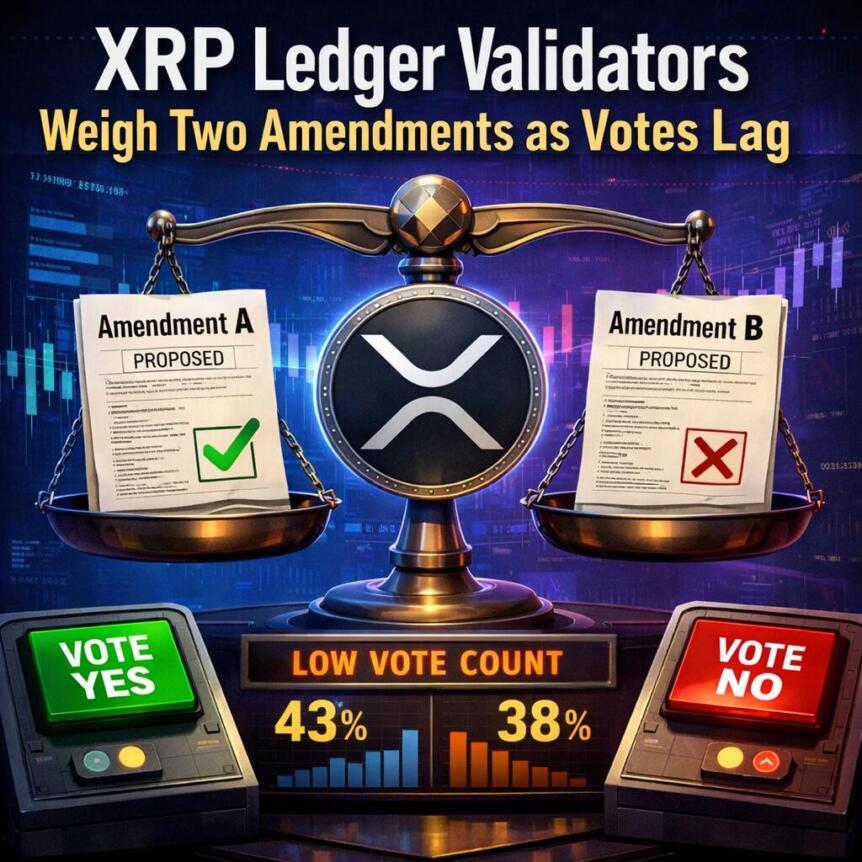
The XRP Ledger is reviewing two proposed amendments that could expand lending functions and strengthen vault infrastructure. Validators have begun voting, yet early participation remains limited. Current results suggest the proposals still face significant hurdles before reaching activation requirements.
Data from XRPScan shows that validators have submitted only a small portion of the required votes. The network requires a strong consensus before any protocol change becomes active. Consequently, both amendments remain far from the necessary approval threshold.
The proposed changes target deeper financial functionality across the XRP ecosystem. Developers designed them to enhance lending capabilities and asset management tools. However, the current voting pace indicates that activation may take longer than expected.
SingleAssetVault Amendment
Validators are currently assessing the v3.1.0 SingleAssetVault amendment across the network. The proposal introduces vault mechanisms designed for single asset management within decentralized environments. As a result, developers expect stronger custody options for on-chain financial applications.
So far, only eight validators have recorded votes supporting the proposal. This number remains well below the required activation threshold. Therefore, the amendment currently shows limited progress toward implementation.
The XRP Ledger requires at least 28 validator approvals to activate protocol changes. This requirement represents roughly 80 percent of the network’s validator set. Without that support, the activation process automatically resets after the voting period ends.
Lending Protocol Amendment
Validators are also reviewing the v3.1.0 Lending Protocol amendment during the same voting cycle. This proposal introduces infrastructure for native lending services within the XRP Ledger ecosystem. Consequently, developers aim to expand decentralized finance capabilities directly on the network.
The amendment has gathered only six validator votes so far. That participation rate equals about 17% of the total validator pool. Therefore, the proposal remains far below the required approval threshold.
If voting participation does not accelerate, the activation timer will expire. When that happens, the amendment returns to a pending state. Validators may then reconsider the proposal during a future voting round.
Amendment Oversight and Security Context
Protocol amendments carry major consequences because they directly modify core blockchain functionality. Developers, therefore, apply strict governance rules before enabling any change. The XRP Ledger uses extended validator voting periods to confirm broad consensus.
A recent example demonstrated why careful review remains essential. Security researchers discovered a vulnerability in the proposed Batch amendment, known as XLS-56. That issue appeared during its voting phase and never reached activation.
The flaw could have allowed attackers to withdraw funds from user wallets. Notably, the exploit did not require access to private keys. Early detection prevented potential damage and reinforced the network’s review process.
Such events highlight the importance of gradual amendment adoption. Validators must carefully examine technical risks before approving protocol upgrades. Consequently, the slow progress of current proposals reflects the network’s cautious governance approach.
https://www.cryptobreaking.com/xrp-ledger-validators-weigh-two/?utm_source=blogger%20&utm_medium=social_auto&utm_campaign=XRP%20Ledger%20Validators%20Weigh%20Two%20Amendments%20as%20Votes%20Lag%20
Comments
Post a Comment