
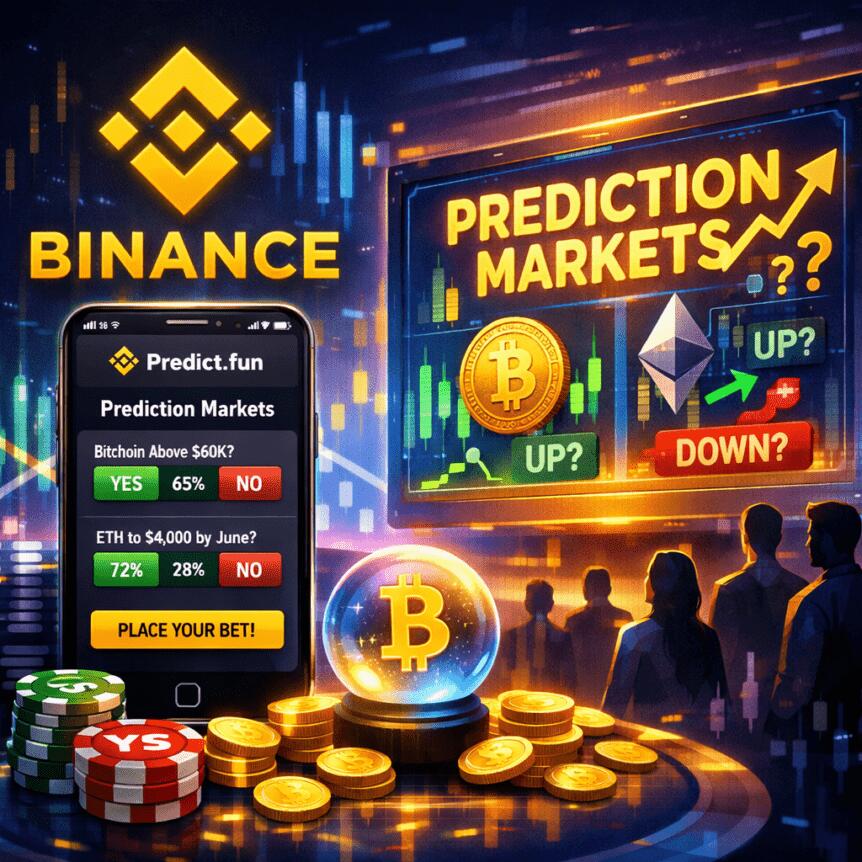
Binance Wallet is embracing the prediction-market craze, announcing that it will bring probability-based markets to its app through an integration with Predict.fun. The exchange said it will cover all trading and settlement fees for users, making the experience effectively gasless on the BNB Smart Chain. The move signals Binance’s intent to capture a share of a rapidly expanding segment that the market data suggests is moving billions of dollars in volume each month.
In a notice issued this week, Binance said the new feature will be delivered via a third-party integration with Predict.fun, with the initial rollout focusing on probability-based markets. By underwriting the costs of trades and settlements, the company frames the service as a frictionless entry point for users seeking to speculate on outcomes in politics, sports, and other topics—without the typical gas fees that can erode returns on decentralized networks.
Key takeaways
- Binance Wallet will offer probability-based markets via Predict.fun, with gasless trading and Binance-funded fees on the BNB Smart Chain.
- The development reflects growing appetite for prediction markets, which have surged in activity and user interest over the past year.
- Industry momentum comes with regulatory headwinds: US agencies have pursued actions against prediction-market platforms over alleged gaming-law violations, even as the CFTC contends it has exclusive jurisdiction over such markets.
- TRM Labs data point to a broader market expansion, with a January estimate of around $20 billion in monthly volume across prediction markets—a sharp rise from early 2025 levels.
Binance’s foray into prediction markets
The Binance announcement frames the integration as a way to widen access to prediction markets for everyday users. By partnering with Predict.fun, Binance is tapping a platform that offers contracts tied to event outcomes—ranging from political developments to other real-world occurrences—while removing traditional cost barriers through sponsor-funded trading and settlement fees on the BNB Smart Chain.
The “gasless” headline is central to the offer. If trades are executed and settled on the BSC network, Binance says it will cover the associated costs, effectively lowering the user’s friction to engage with probability-based bets. While the initial phase centers on Predict.fun, the arrangement positions Binance as a gateway for a broader audience to participate in market-based sentiment around events beyond standard crypto trading.
Beyond the technical convenience, the move signals a broader strategic push by major crypto platforms to explore more specialized markets. Prediction markets, which allow participants to place bets on the probability of future events, have grown in popularity as a way to hedge information or express views on uncertain outcomes. The Binance integration comes amid a broader industry trend of large exchanges taking a more active role in prediction-market ecosystems, sometimes inviting scrutiny from regulators and lawmakers alike.
Momentum, scale, and the regulatory backdrop
Industry data illustrate a market that has accelerated rapidly. According to TRM Labs, monthly transaction activity across prediction-market platforms reached about $20 billion in January, representing roughly a twentyfold increase versus early 2025. The rebound underscores growing user interest in event-based contracts and the potential for new participants to experiment with these markets through mainstream platforms.
However, the regulatory environment remains complex and unsettled. The US Commodity Futures Trading Commission has argued it holds exclusive jurisdiction over prediction markets, even as several state-level authorities have pursued enforcement actions against platforms offering such bets, particularly in the sports betting domain. The legal tension reflects broader questions about whether and how prediction markets fit inside traditional gambling frameworks and financial regulation.
Within this context, Kalshi and Polymarket—two notable players in the space—have faced ongoing legal scrutiny and regulatory maneuvering. Kalshi, which has repeatedly argued for a clear regulatory pathway, has encountered actions from state gaming authorities while federal regulators push back on some state-level actions. The CFTC’s stance on jurisdiction has been a recurring theme in industry discussions about what governance looks like for prediction-market ecosystems in the United States.
Amid these dynamics, industry leaders have weighed in on relationships with policymakers and the potential for perceived conflicts of interest. In an Axios interview published this week, Kalshi executives Tarek Mansour and Luana Lopes Lara addressed questions about ties to political figures and potential regulatory leverage. Lara stated that Kalshi has not solicited favors and that leadership has not sought regulatory changes in exchange for advantages, while noting that claims of influence over policy are not part of the company’s operating reality. The interview highlighted the broader industry sensitivity around connections in Washington and the importance of maintaining a clear separation between business activity and regulatory advocacy.
Why this matters for investors, users, and builders
For investors, Binance’s entry into prediction markets could unlock new liquidity channels and user engagement metrics. A gasless, fee-subsidized model lowers the barrier to experimentation with event-based contracts, potentially drawing in traders who might not participate in more traditional crypto derivatives. If the model proves sustainable, it could create a competitive dynamic among exchanges to offer similar prediction-market access, reinforcing network effects in user acquisition and retention.
For builders and developers, the Binance-Predict.fun collaboration demonstrates how major platforms are willing to strand- test cross-domain integrations—combining on-chain infrastructure, third-party markets, and user-friendly interfaces. The approach could spur further partnerships, more standardized interfaces for event-based contracts, and clearer product roadmaps that marry traditional finance-style clarity with crypto-native flexibility.
From a risk perspective, the ongoing regulatory scrutiny around prediction markets means participants should remain mindful of jurisdictional differences and potential policy shifts. While the CFTC has asserted its jurisdiction in this space, state actions and evolving enforcement priorities could shape the available landscape for US users. As more platforms experiment with prediction-based products, market participants should watch for changes in compliance requirements, licensing, and potential restrictions on specific contract topics or venues.
Ultimately, Binance’s move to integrate probability-based markets with gasless trading marks another step in the sector’s maturation. It highlights both the appetite for accessible, event-driven financial instruments and the friction points that come with regulatory complexity. As the year unfolds, observers will be watching not only user adoption and volume but also how regulators, platform operators, and industry groups negotiate a path forward for prediction markets within the broader crypto economy.
Readers should keep an eye on how the integration with Predict.fun performs in practice, what contract types gain traction, and whether other major players accelerate similar offerings. The coming quarters could define whether prediction markets become a standard feature in mainstream crypto wallets or remain a niche segment with uneven regulatory clearance.
https://www.cryptobreaking.com/binance-integrates-prediction-markets-into/?utm_source=blogger%20&utm_medium=social_auto&utm_campaign=Binance%20Integrates%20Prediction%20Markets%20Into%20App%20via%20Predict.fun%20
Comments
Post a Comment