
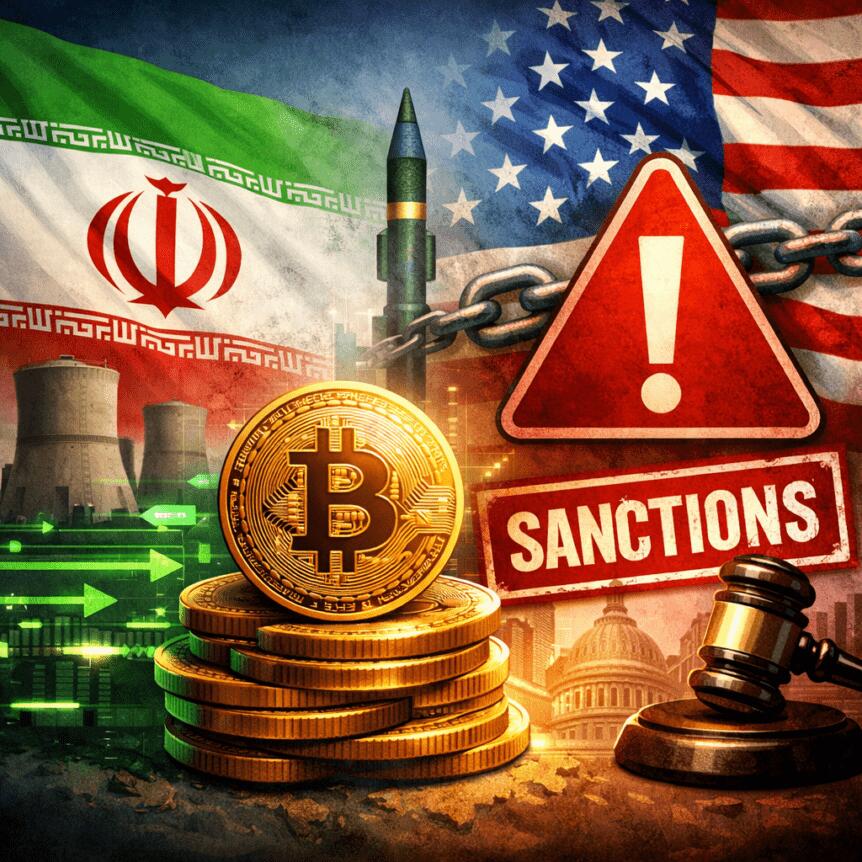
Shipping firms weighing cryptocurrency payments to cover potential transit fees through Iran face substantial sanctions risk, according to Kaitlin Martin, a senior intelligence analyst at Chainalysis. Under current sanctions frameworks, payments linked to the Iranian regime or other sanctioned actors can be interpreted as material support, exposing companies to both U.S. and international restrictions.
The alert comes as reports circulate that Tehran could seek to collect transit fees via crypto for passage through strategic waterways. While U.S. President Donald Trump has signaled he would not tolerate tolls on the Strait of Hormuz, the broader question remains whether crypto could serve as a workaround for sanctions—an idea that experts say is unlikely to escape scrutiny and enforcement actions.
Key takeaways
- Payments to the Iranian regime or sanctioned entities tied to transit routes can be treated as material support, creating meaningful sanctions exposure for shippers and financiers.
- Iran has expanded its use of digital assets, especially stablecoins, to facilitate trade in oil, weapons, and other commodities, but blockchain transparency does not guarantee a bypass of sanctions.
- Cryptocurrency transactions leave a traceable record, which investigators can leverage to freeze or seize assets at cash-out points, complicating evasion efforts.
- Besides Iran, other sanctioned states have explored crypto-enabled trade. Russia, for example, has used digital tokens to support cross-border commerce in the face of sanctions.
- Iran’s Bitcoin mining activity has declined markedly, while the global Bitcoin network remains robust; the disruption appears concentrated within Iran and does not appear to destabilize neighboring markets.
Crypto use and sanctions: what changes, and what remains uncertain
In a field where financial channels are traditionally governed by a dense matrix of controls, the idea that cryptocurrency can neatly sidestep sanctions is met with caution by investigators. Martin notes that while digital assets enable cross-border transfers outside conventional rails, they come with inherent visibility. “In many ways, cryptocurrency is actually easier to trace than traditional methods of sanctions evasion,” she said, highlighting the ability to track funds to eventual cash-out points where authorities can intervene or seize assets.
Public data suggests Tehran is pushing forward with crypto-enabled trade, leveraging digital assets to move value for oil, commodities, and related goods. The trend underscores a broader strategic pivot: sanctioned economies are exploring crypto as a tool to preserve some level of cross-border activity amid pressure from Western jurisdictions. Yet the traceability of blockchain transactions means that these efforts remain exposed to enforcement actions and risk mitigation strategies by banks, exchanges, and other counterparties.
There is a precedent for state actors adopting crypto as a supplementary mechanism for trade under sanctions. For instance, Russia has experimented with digital tokens to facilitate cross-border transactions after international restrictions intensified in 2022. Such moves illustrate the dual nature of crypto in geopolitics: it can expand access to value transfer, but it also amplifies the footprint of regulatory scrutiny and potential sanctions enforcement.
Iranian mining and the global network outlook
The same period that highlights Tehran’s interest in crypto-enabled trade also intersects with a broader crypto mining landscape. Iran’s Bitcoin hashrate has fallen sharply, dropping by about 7 exahashes per second and sliding to roughly 2 exahashes per second, amid ongoing geopolitical tensions and domestic pressures. While this represents a substantial local shift, the global Bitcoin network remains broadly stable, with total hashrate hovering near 1,000 exahashes per second. The decline appears concentrated within Iran, with neighboring Gulf states such as the United Arab Emirates and Oman showing little impact so far.
These dynamics matter for investors and builders in several ways. First, the concentration of mining power in a single region can affect energy markets and grid stress in that area, potentially influencing local policy and energy incentives. Second, the resilience of the global network despite regional disruptions reinforces Bitcoin’s core property as a globally distributed system. And third, the shift in Iran’s mining activity could influence the country’s capacity to monetize energy assets through crypto, a factor worth watching as sanctions and regional risk evolve.
What to watch next
Several developments bear watching in the near term. First, how strictly authorities pursue alleged crypto-enabled sanctions evasion in shipping lanes and whether there are new enforcement actions against companies facilitating such flows. Second, any shifts in Tehran’s crypto and stablecoin usage for trade, including potential policy signals from Iranian authorities. Third, the interplay between regional mining activity and energy policy, particularly in Iran and neighboring states, as sanctions and geopolitical tensions continue to reshape incentives for miners and exporters alike.
https://www.cryptobreaking.com/chainalysis-warns-crypto-payments-to/?utm_source=blogger%20&utm_medium=social_auto&utm_campaign=Chainalysis%20Warns%20Crypto%20Payments%20to%20Iran%20Could%20Trigger%20Sanctions%20Risk%20
Comments
Post a Comment