
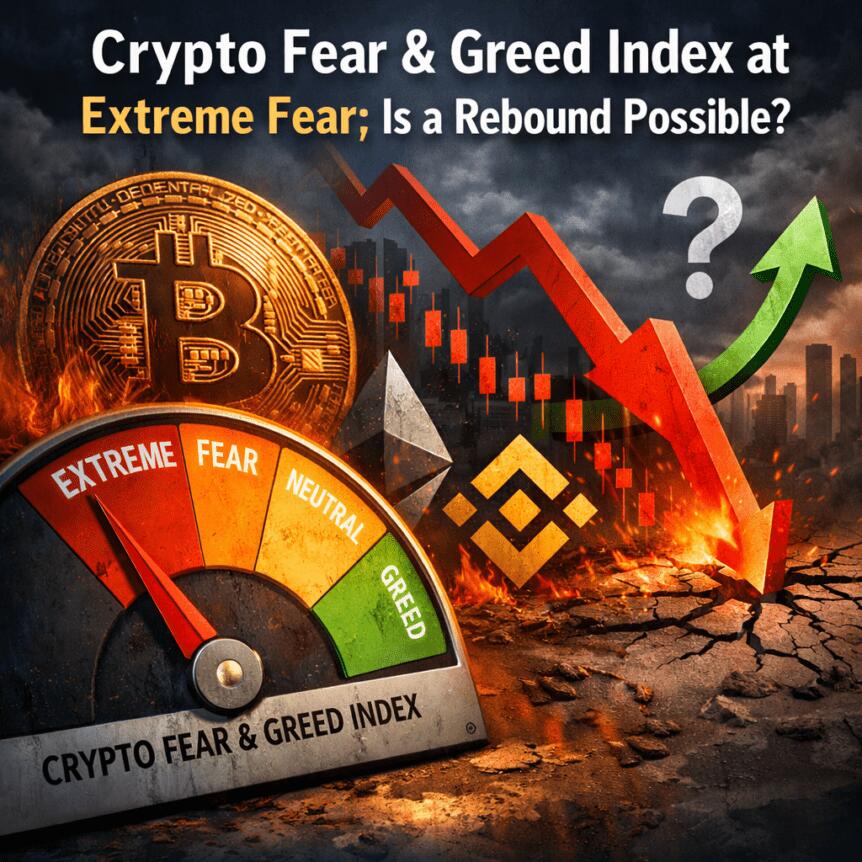
Bitcoin and the wider crypto market continue to grapple with a mood of extreme caution as the Crypto Fear and Greed Index sits at a reading of 11. The measure, which blends volatility, trading volume, social momentum and market momentum, has kept investors in a state of “extreme fear” for 12 consecutive days, with only a brief, short-lived uptick around March 17–18. This persistent fear comes at a time when headline risk in traditional markets remains elevated, complicating the usual contrarian playbooks that historically accompanied such sentiment extremes.
Analysts point to a disconnect between investor mood and price action. Rand Group, a crypto commentator who shares market observations on X, highlighted that fear remains elevated even as Bitcoin’s price has not mirrored the downbeat sentiment. The post notes that headlines around U.S. and Israel-Iran tensions, plus rising concerns about rate hikes, keep fear elevated; yet, Bitcoin selling pressure has not intensified, offering a nuanced view of the current risk environment.
Key takeaways
- The Crypto Fear and Greed Index sits at 11, signaling extreme fear for a 12th straight day, with only a brief bounce in mid-March.
- On-chain data suggests a shift toward accumulation, as short-term holders (holding between a week and a month) fall to about 3.98%, a level historically associated with nearing bottom formation.
- Bitcoin’s on-chain dominance by whales remains strong, with the BTC exchange whale ratio exceeding 60%—the highest in a decade—while retail participation remains at multi-year lows.
- Despite a late-March rally to roughly $76,000, Bitcoin’s price failed to sustain a new uptrend, and its correlation with equities has weakened, signaling a complex risk backdrop for BTC as bulls and bears recalibrate expectations.
On-chain signals point to accumulation, not capitulation
Across on-chain metrics, evidence has begun to tilt away from broad-based selling pressure and toward accumulation by longer-term holders. A CryptoQuant analysis described by market observers shows the share of short-term holders—those who move assets within a narrow window of roughly one week to one month—has declined to about 3.98%. Historically, readings near or under 4% have accompanied periods when the market was near a bottom, suggesting fewer impulsive trades and a shift in control away from short-term traders toward longer-term investors.
Concurrently, the structure of Bitcoin ownership remains skewed toward longer time horizons. Long-term holders now command a larger slice of the circulating supply, reinforcing the narrative that accumulation could be underpinning recent price action rather than speculative outflows. In this context, the absence of rising selling pressure during negative macro events can be interpreted as a quiet, patient buildup rather than a panic retreat.
Whales dominate flows as retail presence thins out
Analysts have drawn attention to another stark dynamic: the balance of market participants. CryptoQuant data cited by observers show the Bitcoin exchange whale ratio climbing above 60%, marking the highest level in ten years. At the same time, retail participation has receded to its lowest share in that period, suggesting that fewer small traders are contributing to price swings while large holders—often considered more capital-efficient and long-term oriented—are driving the bulk of supply-side decisions.
“In general, the bottom appears when the whale ratio is at its highest. We are currently at the point where the ratio of retail investors is at its lowest in the last 10 years.”
That perspective underscores a tension in the market: the same data that hints at a possible bottom—heavy whale concentration and thin retail participation—also sits against an overarching backdrop of extreme fear. For traders, this combination can be a double-edged sword: while a capitulation narrative may be less visible, the absence of broad-based selling could point to a patient accumulation phase setting the stage for a potential sustained reset higher.
Bitcoin’s relationship with equities: a weakening link
Beyond on-chain dynamics, researchers have noted a notable change in Bitcoin’s interaction with traditional risk assets. Axel Adler Jr., a Bitcoin researcher, pointed out that the short-term correlation between BTC and the S&P 500 has weakened, dipping below zero on a 13-week window. The BTC/S&P ratio has trended lower in 2026, suggesting that Bitcoin has not kept pace with equities and, in some periods, has traded as a higher-risk asset relative to standard benchmarks.
The chart narrative around Bitcoin’s price action reinforced this view: the March rally that pushed BTC toward $76,000 did not translate into a durable uptrend. Market participation from smaller investors appeared tepid, while whales continued to steer the narrative. The takeaway is not a guaranteed breakout, but a market where BTC’s price behavior diverges from traditional equities—a condition that could reflect a different risk calculus among investors or a market still in the process of re-pricing risk in crypto versus legacy markets.
In this setting, the disconnect may carry dual implications. On one hand, a lack of synchronized downside with equities could indicate that Bitcoin is maturing as a distinct asset class, capable of withstanding macro shocks without spiraling in tandem with stock indices. On the other hand, the subdued participation from the broader base of retail traders means the market could be more sensitive to large-holder moves, potentially magnifying sharp pockets of volatility should sentiment shift.
What to watch next for BTC and the broader market
While the data points paint a picture of a cautious but potentially constructive phase beneath the surface, several developments bear watching. First, on-chain signals—particularly the behavior of short-term holders and the relative strength of whale activity—will be a critical early read on whether accumulation persists or accelerates. Second, sentiment indicators like the Fear and Greed Index should be viewed in the context of macro headlines, as investors weigh geopolitical risk and monetary policy expectations against a quieting of selling pressure.
Finally, the evolving relationship between Bitcoin and equities will matter for risk appetite across portfolios. If BTC continues to decouple from traditional markets, investors may interpret that as a sign of crypto maturing into a distinct risk-reward proposition. Conversely, a renewed correlation with stocks could signal renewed demand for hedges or speculative trades during risk-off environments.
Notably, market observers pointed to a related line of analysis that has occasionally foreshadowed more decisive moves in BTC: the balance of demand and supply in the hands of different investor cohorts. As long-term holders accumulate and whale activity remains robust, the door remains open for a future price re-rating should macro conditions improve and sentiment begin to shift from extreme fear toward cautious optimism.
For readers seeking context beyond this week’s data, prior commentary from Cointelegraph highlighted that traders sometimes anticipate near-term downside even as Bitcoin price activity chases higher levels, underscoring the ongoing tension between momentum signals and the macro backdrop.
The coming weeks will be telling as new data flow in from on-chain analytics suites and sentiment trackers. If accumulation strengthens and wholesale flows continue to dominate, the narrative could tilt from a fear-driven, risk-averse stance toward a more deliberate positioning by long-term holders—the kind of setup that has historically preceded more stable basing and, eventually, a renewed uptrend.
Readers should stay attentive to shifts in the whale-to-retail balance, changes in the short-term holder share, and any broadening in participation from retail traders. These signals, combined with macro headlines, will shape the next leg of Bitcoin’s path in a market that remains fundamentally split between fear-driven caution and the quiet certainty of accumulation.
https://www.cryptobreaking.com/crypto-fear-greed-index-at/?utm_source=blogger%20&utm_medium=social_auto&utm_campaign=Crypto%20Fear%20&%20Greed%20Index%20at%20Extreme%20Fear;%20Is%20a%20Rebound%20Possible?%20
Comments
Post a Comment