
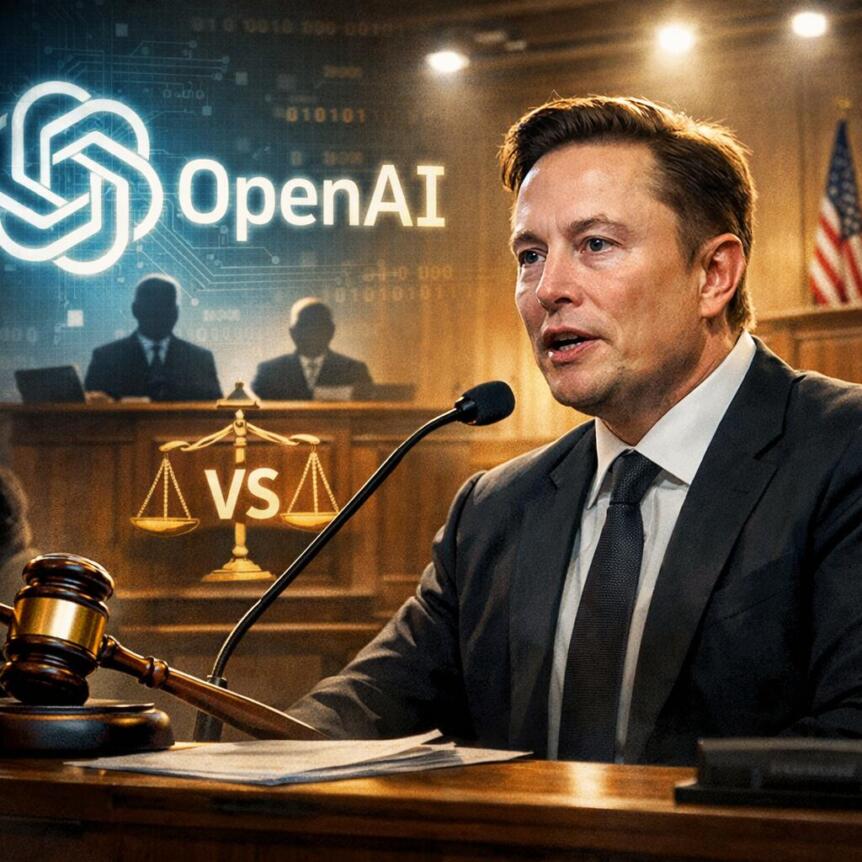
Musk Testifies in OpenAI Court Fight
Elon Musk appeared in federal court in Oakland as testimony began in his lawsuit against OpenAI and its leadership team. Musk told jurors that the case extends beyond a business dispute and focuses on how artificial intelligence companies should operate. He said advanced AI could create economic benefits while also bringing risks if companies fail to follow their original goals.
Musk accused OpenAI CEO Sam Altman and president Greg Brockman of moving away from the company’s nonprofit mission. He argued that OpenAI changed direction after introducing a profit-focused structure supported by outside investment. Additionally, Musk claimed the company benefited from resources that he helped provide during its early years.
Key Insights
- Musk testified that OpenAI moved away from its nonprofit purpose after leadership expanded commercial deals and investor-focused growth strategies.
- OpenAI argued Musk left after leadership disagreements and now challenges the company while building a competing artificial intelligence business.
- Court evidence including emails and call records may influence decisions about OpenAI’s structure, governance, and long-term leadership direction.
OpenAI Rejects Musk’s Claims
OpenAI denied the allegations and argued that Musk filed the lawsuit because he now competes in the same industry. Company attorney Bill Savitt told jurors that Musk supported discussions about a for-profit model before leaving the company. However, OpenAI said disagreements over leadership control led to Musk’s departure in 2018.
The lawsuit asks the court to award about $130 billion in damages and restore OpenAI to nonprofit status. Musk also wants Altman and Brockman removed from the company’s board. Consequently, the case could affect OpenAI’s long-term business plans as the company prepares for a possible public offering.
Judge Yvonne Gonzalez Rogers warned Musk about comments he posted on social media before the trial. She said public statements about the case could complicate the legal process. Hence, Musk agreed to reduce online discussion about the lawsuit, while Altman and Brockman accepted similar limits.
Emails and Records Become Key Evidence
Lawyers plan to present emails, text messages, and internal records collected from OpenAI’s early years. These documents may show how company leaders discussed funding, structure, and governance during major decisions. Moreover, the evidence could explain how internal disagreements developed before Musk separated from the company.
Musk cofounded OpenAI in 2015 and said he contributed at least $44 million to support the nonprofit. A year after his departure, OpenAI created a for-profit arm to secure additional funding. Significantly, the company later adopted a public benefit structure under its nonprofit foundation.
Attorneys representing Microsoft also entered the case after Musk named the company as a co-defendant. Microsoft rejected Musk’s claims and argued that the lawsuit lacked detailed factual support. Besides, court filings show both sides plan to rely heavily on private communications to support their arguments.
Elon Musk arrived at Oakland Federal Court today for opening statements in his $150B+ lawsuit against OpenAI, accusing it of betraying its nonprofit mission by going for-profit pic.twitter.com/letOpsWSAh
— Dima Zeniuk (@DimaZeniuk) April 28, 2026
https://www.cryptobreaking.com/elon-musk-testifies-in-openai/?utm_source=blogger%20&utm_medium=social_auto&utm_campaign=Elon%20Musk%20Testifies%20in%20OpenAI%20Trial%20over%20Nonprofit%20Mission%20Dispute%20
Comments
Post a Comment