
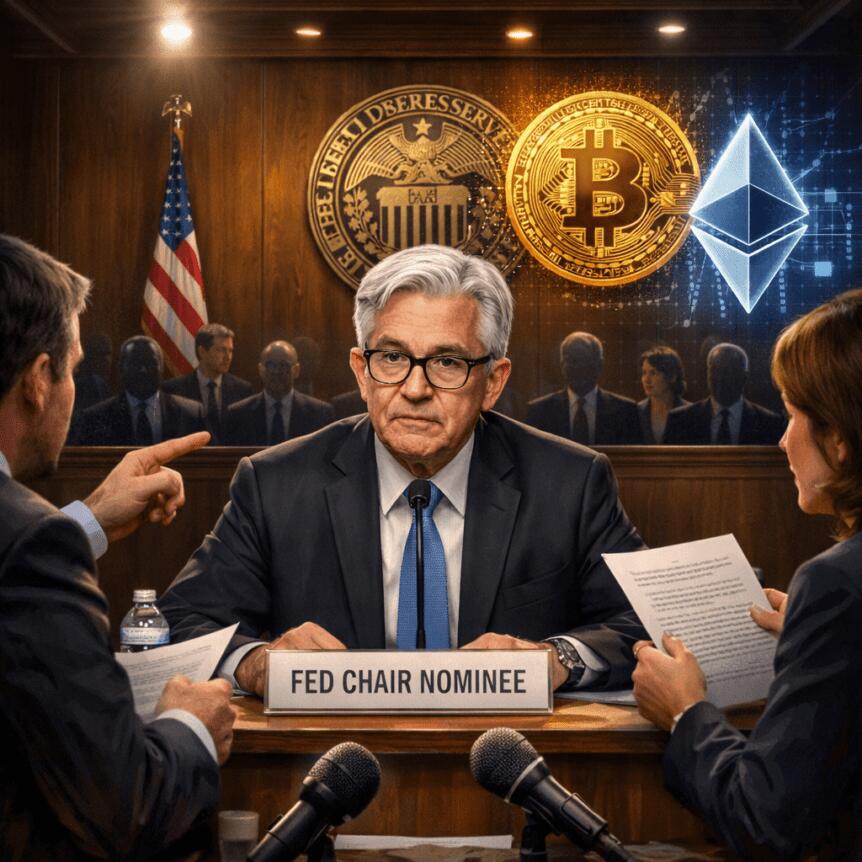
The nomination of Kevin Warsh to head the U.S. Federal Reserve intensified a long-running debate over central-bank independence as lawmakers grilled him about his financial disclosures and potential conflicts of interest. With Jerome Powell’s term as chair nearing its end, the confirmation hearing before the Senate Banking Committee became a focal point for questions about political influence, transparency, and how a future Fed chief would navigate a charged policy environment.
Warsh, a former Federal Reserve governor, faced pointed scrutiny from Democrats who argued that his financial holdings and ties could color monetary policy and risk management. The proceedings highlighted the broader challenge of balancing independence with accountability in a political era where presidential influence over the Fed remains a live concern for lawmakers and market participants alike.
Key takeaways
- Democrats pressed Warsh on his financial disclosures and potential conflicts of interest, raising concerns about the Fed’s insulation from political pressure.
- Warsh pledged to divest from personal holdings, including crypto and AI investments, before taking the oath if confirmed, signaling an attempt to address perceived conflicts.
- Crypto was explicitly discussed: Wyoming Senator Cynthia Lummis asked for clarity on digital assets, and Warsh described crypto as part of the U.S. financial services landscape.
- Republican and Democratic lines of questioning underscored disagreement over the Fed’s future policy stance, including the prospect of rate cuts urged by the president, though Warsh denied committing to any specific rate path.
Independence under scrutiny: the political dynamic of a Warsh nomination
As Powell’s term approaches its expiry next month, the Senate Banking Committee is tasked with evaluating whether Warsh can lead the U.S. central bank with sufficient autonomy. The exchange revealed a fundamental tension at the heart of the nomination: how to preserve the Fed’s dual mandate—maximum employment and stable prices—while acknowledging the political realities of the executive branch’s influence over presidential policy priorities.
Committee Chair Tim Scott acknowledged the need for a balance between independence and collaboration among the administration, Congress, and the Fed. In a CNBC interview cited by lawmakers, Scott stressed that independence means the Fed must perform its duties without being swayed by political pressures, particularly regarding the institution’s mandate. The debate thus shifted from personal biography to institutional trust: could Warsh be trusted to chart a prudent course even if the White House’s policy preferences diverge from market expectations?
Massachusetts Senator Elizabeth Warren, the committee’s ranking member, did not mince words. She labeled Warsh a potential “sock puppet” for the president’s policies, arguing that confirmation could pave the way for controversial arrangements or preferential treatment in the financial system. Warren warned that such a scenario might include “special accounts” or targeted supports that would undermine the Fed’s credibility. The tenor of her questions underscored a broader concern among lawmakers: that central-bank independence must be safeguarded to avoid entanglements with political favoritism or industry bailouts.
Warsh acknowledged the gravity of the independence issue but avoided direct answers about hypothetical policy outcomes tied to political pressure. When pressed about whether Trump’s influence could shape rate decisions, Warsh told Republican Senator John Kennedy that the president had never asked him to commit to a specific interest rate and that he would not have agreed to do so if asked—though he also noted that the question of influence remains more about guarding against perceived bias than about any single exchange. The exchange reflected the delicate calibration required of a Fed chair who may operate in a politically charged environment while maintaining a clear-eyed focus on monetary stability.
Crypto, conflicts of interest, and the broader policy backdrop
Crypto surfaced as a concrete touchstone in the hearing. Wyoming Senator Cynthia Lummis asked Warsh for his view on digital assets, and he responded that digital assets are “part of the fabric of our financial services industry in the United States.” The moment underscored the gravity of crypto’s regulatory and financial integration, and how a new Fed chair might weigh macro policy considerations alongside evolving digital-asset dynamics.
Warsh has pledged to divest from his personal financial holdings, including stakes in crypto and AI-related companies, before taking the oath if confirmed. Supporters argue that divestiture would reduce potential conflicts and bolster confidence in the Fed’s impartiality. Critics, however, point out that even divestment does not fully erase the perception of influence, especially given the scale and variety of assets that a policymaker may encounter in a complex financial system.
The hearing also touched on the broader political atmosphere surrounding the Fed. Trump’s repeated calls for rate cuts and leadership changes have kept the independence debate in the public eye. The Hill has reported that Trump signaled a preference for a rate-cutting stance, which intensifies the relevance of the next chair’s approach to policy. Warsh’s insistence on not tying policy to presidential expectations framed him as a candidate who could, in theory, maintain a degree of policy insulation—if confirmed.
What the markets are pricing in—and what comes next
Powell’s chair term concludes on May 15, leaving a short window for confirmation. If Warsh is not confirmed promptly, Powell might continue temporarily, while Warsh would assume a seat on the Fed’s Board of Governors through 2028 regardless of the outcome. The timing matters not just for policy direction but for the consistency and credibility of the Fed’s forward guidance during a period of elevated market scrutiny over inflation and growth trajectories.
Investors and traders are watching the process closely. Prediction markets have reflected a split in expectations about when a confirmation will occur. On Polymarket, a notable portion of positions bet that Warsh would be confirmed by May 15, but the majority anticipate that a decision may slip beyond June 30. The contrast between these views highlights the variance in perceptions about Senate pace, the likelihood of bipartisan support, and the political sensitivity surrounding a central-bank chair appointment in an election-year environment.
Beyond the chair itself, the dynamic surrounding the Fed’s independence could ripple through markets. A confirmed Warsh might be seen as signaling a commitment to a data-driven, financially prudent approach that could influence risk pricing, quantitative easing expectations, and balance-sheet normalization—especially if his prior records and forthcoming disclosures are interpreted as indicating a measured stance on inflation and growth. By contrast, a protracted confirmation or a transition that keeps Powell in a caretaker role could prolong uncertainty about the Fed’s leadership and its policy trajectory during a volatile macro period.
Next steps and what to watch
As the confirmation process unfolds, the central questions remain: Will Warsh successfully divest from his holdings in time to eliminate real or perceived conflicts? Can the Senate forge a path to confirm a candidate whose independence is under active scrutiny, while ensuring that the Fed remains aligned with its statutory mandate? And how will the markets interpret any shift in the Fed’s leadership, especially if market expectations about rate adjustments or balance-sheet policy diverge from the new chair’s stance?
In the near term, investors should monitor the timeline for the confirmation vote, any additional disclosures from Warsh, and further congressional remarks that clarify how the next Fed chair would balance independence with accountability. The outcome will shape how the Fed communicates its policy outlook, how it manages potential political pressures, and how it integrates the fast-evolving landscape of digital assets into its regulatory and monetary framework.
Readers should stay alert for updates on the confirmation vote schedule, new testimony or filing disclosures, and any shifts in the Fed’s messaging that could signal a new steadiness—or renewed tension—in U.S. monetary policy during a period of macro volatility.
https://www.cryptobreaking.com/fed-chair-nominee-grilled-on/?utm_source=blogger%20&utm_medium=social_auto&utm_campaign=Fed%20Chair%20Nominee%20Grilled%20on%20Independence,%20Impact%20on%20Crypto%20Policy%20
Comments
Post a Comment