
Bitcoin Toll Scam Targets Shipping Operations
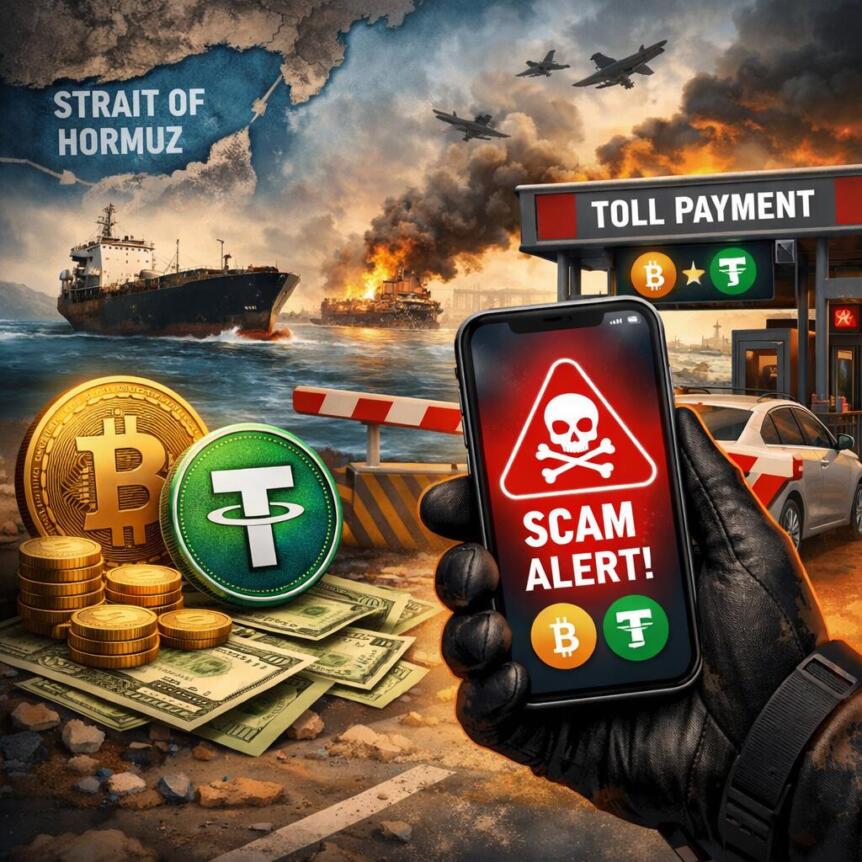
Fraudsters have designed messages that imitate official Iranian communication channels and demand Bitcoin payments from ship operators. These messages claim vessels must complete verification before authorities approve transit through the Strait of Hormuz. However, security analysts have confirmed that no Iranian authority issued such instructions.
Moreover, the scam exploits confusion caused by reported plans to introduce maritime tolls during heightened regional tensions. Hackers have used this uncertainty to pressure companies into making urgent crypto payments. As a result, several shipping operators have received deceptive notices that appear structured and credible.
Meanwhile, maritime security firm MARISKS has flagged the campaign as highly coordinated and misleading. The firm identified patterns showing repeated targeting of commercial fleets operating near restricted waters. It also indicated that at least one vessel may have engaged with the fraudulent communication.
USDT Payment Requests Mirror Bitcoin Fraud Pattern
Similarly, attackers have expanded the scheme by requesting payments in USDT alongside Bitcoin to increase compliance chances. The use of stablecoins allows scammers to present a more flexible payment option to targeted shipping firms. Consequently, the fraud appears more convincing to operators familiar with digital transactions.
In addition, the fraudulent messages outline staged procedures that mimic official maritime clearance systems. These include document submission, eligibility checks, and final toll calculation before granting passage approval. Such structured messaging increases the likelihood of deception among stressed vessel operators.
At the same time, reports indicate that vessels navigating the region have faced both security threats and digital fraud attempts. Two ships encountered gunfire incidents while attempting to exit the Strait under tense conditions. One of these vessels reportedly interacted with the crypto scam before facing physical threats.
Background Hormuz Disruption Fuels Exploitation Risks
The Strait of Hormuz remains one of the world’s most critical energy transit routes, handling a significant portion of global oil shipments. However, ongoing tensions involving the United States, Iran, and regional allies have disrupted normal shipping operations. This disruption has created operational uncertainty and increased vulnerability to cyber threats.
Furthermore, discussions around implementing transit tolls have added complexity to the situation for shipping companies. Authorities have considered such measures as an alternative to a complete blockade of the waterway. Even so, the lack of clear enforcement mechanisms has opened space for fraudulent actors.
Currently, more than 20,000 vessels remain delayed or stranded near the strategic corridor due to security risks. This backlog has intensified pressure on operators seeking safe and timely passage through the region. As a result, scammers continue to exploit urgency and confusion to extract cryptocurrency payments.
MARISKS and other security groups have urged shipping firms to verify all communications through official diplomatic or maritime channels. They have emphasized that no legitimate authority has authorized crypto toll payments for transit. Therefore, companies must apply strict verification procedures before responding to any payment requests.
The situation highlights the growing intersection between geopolitical conflict and digital financial crime. As tensions persist, cybercriminals continue adapting tactics to exploit global trade vulnerabilities. This trend underscores the need for stronger coordination between maritime security and cybersecurity frameworks.
https://www.cryptobreaking.com/hormuz-crypto-scam-targets-bitcoin/?utm_source=blogger%20&utm_medium=social_auto&utm_campaign=Hormuz%20Crypto%20Scam%20Targets%20Bitcoin,%20USDT%20Toll%20Payments%20Amid%20Chaos%20Risk%20
Comments
Post a Comment