
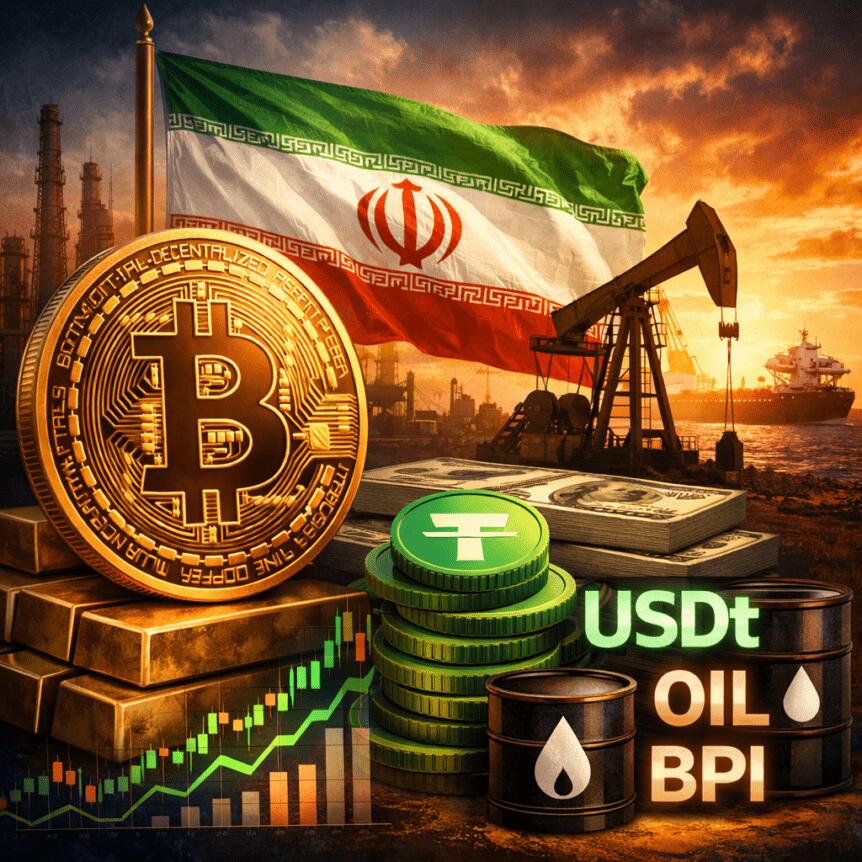
Iran’s government has named Bitcoin (BTC) as one of the payment options for tolls on oil shipments passing through the Strait of Hormuz, a move highlighted by observers as a clear signal of Bitcoin’s role as a neutral and strategic asset in a sanctions-driven economy. Sam Lyman, head of research at the Bitcoin Policy Institute (BPI), described the development as a notable instance where Bitcoin’s censorship-resistant properties are front and center in state-level financial decisions.
According to Lyman, the Iranian authorities chose BTC for its resilience to external interference—“No one can freeze Bitcoin. No one can shut down the Bitcoin network.” Yet he cautions that, at present, there is no on-chain evidence of BTC toll payments being executed, and Iran’s payments ecosystem remains diversified across multiple instruments, including Chinese yuan and US dollar-pegged stablecoins.
Iran’s payment mix for tolls now includes yuan, USD-pegged stablecoins, and BTC, a combination that reflects a broader push to sidestep traditional financial channels amid international sanctions. However, Lyman notes that the bulk of Iran’s crypto activity to date has been denominated in USD-backed stablecoins, underscoring how dollar-mapped liquidity remains a core part of the regime’s on-chain strategy.
In framing this development, Lyman emphasizes a broader point about how policymakers should view Bitcoin. The move illustrates why some lawmakers advocate considering Bitcoin as a strategic asset, rather than pursuing a blanket hostility toward digital assets or a dismissive stance on their utility in national finance. As the discussion around crypto and national security evolves, this incident provides a real-world data point on how a state actor contemplates the potential of censorship-resistant settlement rails.
Key takeaways
- Iran publicly designates Bitcoin as a payment option for oil tolls crossing the Strait of Hormuz, signaling a strategic use of BTC beyond speculative trading.
- Bitcoin’s censorship-resistant properties are cited as the primary rationale for its use in sovereign-level payments, according to Sam Lyman of the Bitcoin Policy Institute.
- As of now, there is no on-chain evidence confirming BTC toll payments; Iran’s crypto activity remains dominated by USD-backed stablecoins, notably USDt.
- Iran has shifted roughly $3 billion in cryptocurrencies since 2022, with the majority in stablecoins; U.S. authorities report a smaller portion of frozen assets relative to total movement, suggesting ongoing liquidity despite sanctions.
- The episode feeds into a broader policy debate about whether Bitcoin should be treated as a strategic asset by Western lawmakers and regulators, rather than being treated solely as a fringe or risk-prone technology.
Bitcoin as a strategic asset in Iran’s trade payments
Iran’s government has long pursued a formal digital asset strategy, a stance that has evolved since at least 2018. In the Hormuz toll context, Bitcoin has been positioned as a possible backbone for cross-border settlement where conventional financial channels are constrained by sanctions and geopolitical pressures. Lyman pointed out that the government’s willingness to accept BTC alongside yuan and USD-pegged stablecoins reflects a deliberate hedging of liquidity channels in a restrictive environment.
In the eye of observers, the assertion that BTC serves as a strategic asset hinges on two factors: censorship resistance and reliability under pressure. Bitcoin’s network-persistence means it cannot be unilaterally shut down by a single authority, a feature that can be appealing when traditional rails are subject to sanctions or asset freezes. Lyman underscored this logic in his discussion with Cointelegraph, framing BTC as part of a broader toolkit rather than a quick fix for all payment frictions.
Still, the practical reality remains nuanced. The Iranian government has not publicly disclosed confirmed on-chain BTC toll payments for Hormuz tolls to date. Lyman notes that while BTC is listed among accepted instruments, on-chain activity in this specific payment channel has not been evidenced publicly. This gap between the stated policy and observable transaction data highlights a common challenge in assessing the real-world use of crypto in state finance: official statements can outpace, or partially obscure, on-chain signals.
As part of the same ecosystem, the government’s stance toward stablecoins continues to be influential. USDt, a dollar-pegged stablecoin issued by Tether, has long been a dominant instrument in Iran’s on-chain activity. Lyman pointed out that the majority of crypto interactions in Iran are denominated in USDT, underscoring how dollar-denominated liquidity remains a central pillar of the regime’s digital asset operations.
“This is one of the most significant situations where Bitcoin is very clearly a strategic asset. The reason why Iran wants to use Bitcoin for these transactions is that no one can freeze Bitcoin. No one can shut down the Bitcoin network.”
The comment, attributed to Lyman, captures the core tension: Bitcoin’s perceived resilience against external controls sits alongside the practical reality that stablecoins and other instruments still dominate domestic crypto flows. BPI’s analysis, including its coverage of the Hormuz episode, also notes that a substantial portion of Iran’s on-chain activity has historically moved through USDt rather than BTC, reflecting both liquidity preferences and the regulatory environments surrounding stablecoins.
In a broader sense, the Hormuz toll framework can be read as part of a longer arc in which Iran has experimented with digital assets to bypass restrictions and diversify its financial channels. The government’s approach aligns with a multi-asset strategy rather than a single-asset solution, suggesting that BTC’s strategic prominence may emerge more from its stability of long-term censorship resistance than from its immediate transactional footprint.
Stablecoins and on-chain realities
The USDt dynamic is central to Iran’s crypto activity narrative. Lyman notes that the regime has used stablecoins extensively in its digital asset operations since the early days of the country’s crypto exploration. This preference persists despite publicized episodes in which stablecoin issuers and custodians faced enforcement actions or wallet freezes elsewhere in the ecosystem. Lyman frames this as a calculated risk, describing it as “rolling the dice” in the sense that stablecoins provide a familiar dollar proxy while carrying counterparty risk from issuers and custodians.
On the macro scale, Lyman estimates that Iran has managed to move roughly $3 billion in cryptocurrencies since 2022, with the majority denominated in stablecoins. Meanwhile, U.S. authorities have reported that only a fraction of those assets has been frozen—about $600 million—leaving a substantial portion still accessible for movement. The discrepancy between total crypto activity and frozen assets underscores how the regime has relied on the speed and flexibility of on-chain funds, particularly stablecoins, to navigate sanctions and maintain some degree of financial continuity.
These dynamics matter for policymakers and market participants alike. The use of stablecoins in sanctioned environments raises questions about enforcement reach, liquidity, and the substitution effects between different digital assets. It also highlights the ongoing importance of stablecoins in offshore and state-affiliated crypto activity, even as Bitcoin is increasingly framed as a strategic tool in high-stakes financial calculations.
For readers tracking market implications, the Hormuz development adds another layer to the evolving relationship between geopolitics and crypto liquidity. While Bitcoin’s censorship-resistant property is appealing in theory, the actual balance of assets and the on-chain evidence of toll payments remain under close watch. The Iranian case also illustrates how state actors may leverage a portfolio of instruments—BTC, yuan, and stablecoins—to preserve monetary sovereignty in a constrained environment.
More broadly, the Hormuz case invites a closer look at how Western policymakers might treat Bitcoin in national-security terms. If Bitcoin is recognized as a strategic asset, it could influence future regulatory debates and sanctions policy, potentially encouraging or discouraging certain kinds of on-chain transactions depending on their perceived strategic value and accessibility to sanctioned networks.
What to watch next
The next phase will likely hinge on whether any verifiable on-chain BTC toll transactions materialize and how policymakers and regulators adjust their framing of Bitcoin within national-security and sanctions regimes. Observers will also monitor whether Iran expands or shifts its mix of currencies for tolls and cross-border trade, and how stablecoin governance and custodial practices evolve in constrained markets. The Hormuz episode remains a critical, real-world flashpoint for understanding Bitcoin’s evolving role in geopolitical finance.
For researchers and investors, the key takeaway is that Bitcoin’s strategic value is being evaluated in state contexts, even as practical adoption and verification lag behind rhetoric. The balance between censorship resistance and regulatory risk will continue to shape how institutions, custodians, and markets perceive Bitcoin’s place in sanctioned economies.
Source note: These observations and figures are based on recent remarks from Sam Lyman, head of research at the Bitcoin Policy Institute. The Institute’s related analysis on the state of play around Bitcoin, the Strait of Hormuz, and the situation in Iran is available here: Bitcoin Policy Institute — State of Play.
https://www.cryptobreaking.com/iran-sees-bitcoin-as-strategic/?utm_source=blogger%20&utm_medium=social_auto&utm_campaign=Iran%20Sees%20Bitcoin%20as%20Strategic%20Asset;%20USDt%20Dominates%20Oil%20Tolls,%20BPI%20
Comments
Post a Comment