
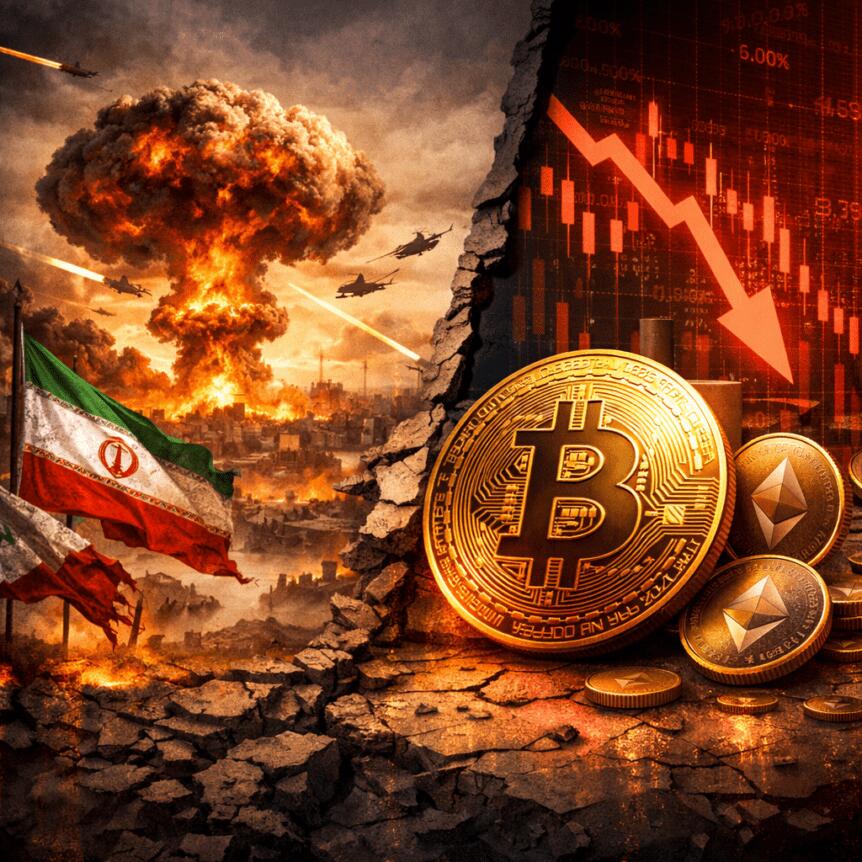
Bitcoin’s recent rally has proven fragile as a confluence of geopolitical tensions and macro headwinds weighs on sentiment. About a week into its rebound, BTC was hovering near the $71,000 level, with traders watching for signs of sustained strength in the face of ongoing Middle East conflict and uncertain policy signals. Data from TradingView put the spot around $71,276 as of the latest sessions, underscoring the challenge of building a durable upside from here.
“Even if the war ends now, its repercussions will likely define the story for 2026 and, at minimum, dominate the narrative through Q2,” said Nic Puckrin, a crypto market analyst and founder of Coin Bureau. In an interview with Cointelegraph, Puckrin framed the current setup as fragile, arguing that a sustained push higher would depend on a confluence of favorable developments beyond the immediate conflict.
For a push toward $90,000, we would need to see a combination of a ceasefire that ends geopolitical tensions, a sustained drop in oil prices toward $80, and ideally also softer-than-expected economic data that calms stagflation fears.
Beyond the headline risk, price action remains tethered to macro dynamics. If Bitcoin closes the week above the $71,000 mark, Puckrin suggested the next leg higher could unfold toward the $74,000 zone, though the path remains contingent on a broader risk-on environment and how geopolitical headlines evolve.
Key takeaways
- Bitcoin trades near $71,000, with resistance eyed around $74,000; a weekly close above $71,000 could signal more upside.
- The market currently faces an inflationary impulse linked to ongoing conflict, a factor that dampens expectations for near-term rate cuts in 2026.
- A sustained rally toward $90,000 would require a ceasefire, oil around $80, and softer-than-expected economic data, according to Nic Puckrin.
- Macro policy remains uncertain: the Fed’s stance on rate cuts in 2026 is still debated in light of inflation pressures and war-related risks.
- Near-term price action has shown volatility: BTC briefly crossed above $73,000 in early April before retreating toward $71,000 as headlines from the Middle East and policy signals evolved.
Bitcoin’s price action in the shadow of geopolitics and policy
The latest price movement reflects a delicate balance between risk appetite and safety-driven demand. After a surge to just over $73,000 in early April—driven by a broader risk-on tone—the market retraced as news of stalled negotiations between the U.S. and Iran fed into risk-off sentiment. The Kobeissi Letter captured the tone, describing the peace talks as “arguably the worst-case scenario” when they appeared to falter, a sentiment that rippled through markets as traders recalibrated expectations for geopolitical risk premiums embedded in crypto prices.
In a separate development, former U.S. President Donald Trump stated on Truth Social that he had directed the U.S. Navy to form a naval blockade around the Strait of Hormuz and to interdict vessels that paid tolls to Iran. While such statements escalate geopolitical risk discourse, traders often weigh them against the practical likelihood and timing of policy changes that would meaningfully shift Bitcoin’s trajectory.
The ongoing macro backdrop is reinforced by inflation data, with the U.S. Bureau of Labor Statistics’ CPI report highlighting an inflationary spike tied to the war. The CPI release cooled hopes for rapid further rate cuts in 2026 and reinforced the narrative that monetary policy will remain restrictive while inflation remains elevated.
Policy signals, market expectations, and what comes next
The policy landscape remains a crucial driver for crypto risk assets. Minutes from the March FOMC meeting underscored ongoing debate among policymakers about the path of rate cuts in 2026, influenced by inflation concerns tied to wartime dynamics. The market’s expectations around the federal funds rate have shifted in response to these tensions.
According to CME Group’s FedWatch tool, the probabilities indicate a very high likelihood—over 98%—that the FOMC will keep the current target range of 3.50%–3.75% at the next two meetings (April 29 and June 17). The probability of a rate cut by the July 29 meeting sits at roughly one-third, with about a 33.6% chance of a 25 basis point cut. This landscape suggests a prolonged period where policy remains restrictive until inflation shows clearer signs of easing.
For Bitcoin traders, the combination of policy certainty on hold with a potential future rate cut remains a central tension. The market is watching whether softer data emerges to push expectations for easing, or whether inflationary momentum persists in the face of geopolitical shocks. Meanwhile, BTC’s technical backdrop—trading below the 200-day exponential moving average, as reflected in traders’ charts—adds another layer of caution for near-term bets.
Beyond the immediate price dynamics, the broader crypto narrative continues to hinge on how investors interpret risk, and whether a stabilizing ceasefire and lower oil prices could unlock a more durable risk-on environment. While the path to $90,000 remains a conditional and uncertain proposition, the scenario Puckrin outlines—courtesy of a ceasefire, oil around $80, and a favorable macro backdrop—provides a benchmark against which market moves will be measured in the coming weeks and months.
As the market absorbs mixed signals from geopolitics and policy, traders will be watching several indicators: a potential shift in oil prices that alleviates energy-driven inflation, a softer-than-expected economic data flow that could prompt earlier policy loosening, and, importantly, any development toward de-escalation of regional tensions that might remove some of the near-term risk premium baked into crypto assets.
Reading the tea leaves for Bitcoin now means focusing on the confluence of headlines and data: price action around $71,000, an upcoming test of resistance near $74,000, and the evolving expectations for 2026 policy moves. The coming weeks could reveal whether the current recovery gains traction or whether the market reverts to a more cautious posture as macro and geopolitical risks persist.
Readers should remain attentive to how geopolitical developments unfold, how oil prices respond to those dynamics, and how inflation and policy guidance shape risk appetite across crypto markets. The next movements in these areas will likely define whether Bitcoin’s recovery gains durability or remains a fragile bounce in uncertain times.
https://www.cryptobreaking.com/iran-war-fallout-could-dominate/?utm_source=blogger%20&utm_medium=social_auto&utm_campaign=Iran%20War%20Fallout%20Could%20Dominate%20Crypto%20Markets%20in%202026,%20Analyst%20Says%20
Comments
Post a Comment