
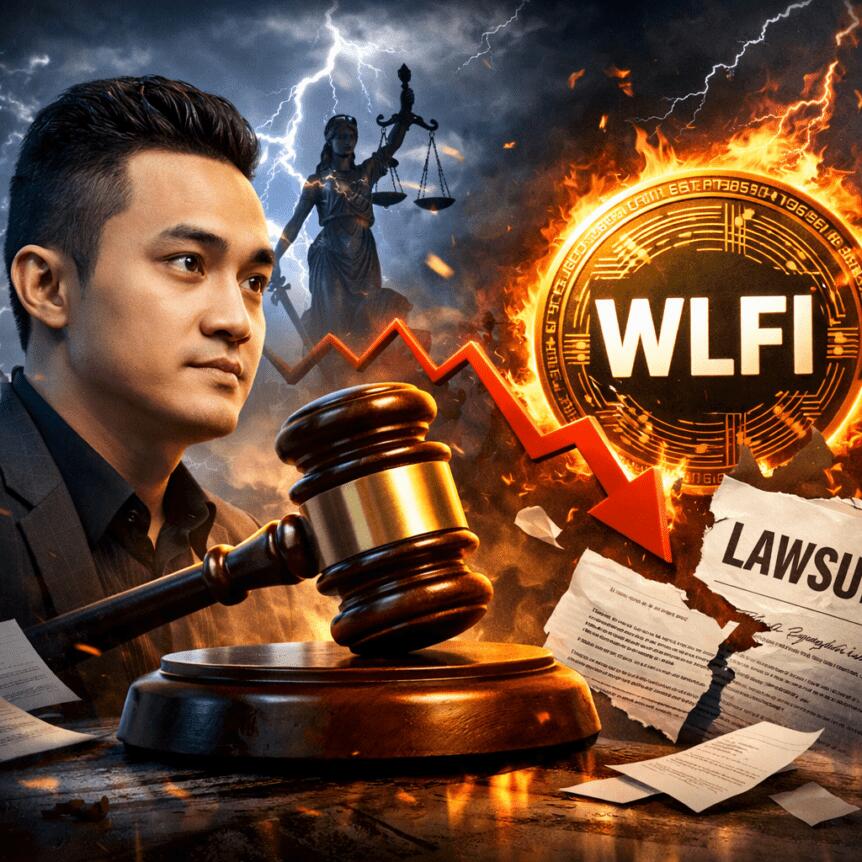
Justin Sun, the founder of the Tron ecosystem, has publicly criticized World Liberty Financial (WLFI), a decentralized finance project co-founded by Donald Trump’s sons, over what he describes as opaque and rushed governance processes tied to WLFI’s governance token lock-up. Sun, who says he invested “significant capital” in WLFI as an early backer, pointed to a March governance proposal that would determine how long token holders must stake their voting power, arguing that the move was not conducted with transparency.
“The governance votes cited to justify the above actions were not conducted through fair or transparent procedures. Key information was withheld from voters, meaningful participation was restricted, and outcomes were predetermined.”
In a Sunday post on X, Sun criticized the process and argued that it failed to deliver fair governance for the WLFI community. World Liberty Financial (WLFI) countered by accusing Sun of playing the victim and making baseless claims, saying it would pursue legal action if necessary to defend its position.
The dispute comes as WLFI faces broader community pushback and scrutiny after confirming that its own governance tokens were used as loan collateral. The move coincided with a rapid decline in WLFI’s token price and renewed attention on Trump-linked crypto ventures amid concerns about governance, transparency, and risk management.
Cointelegraph reached out to World Liberty Financial for comment but did not receive a response by publication time.
Related: World Liberty signals phased WLFI unlock vote after early holder backlash
Key takeaways
- Governance under scrutiny: A March WLFI proposal to set token lock-up periods drew questions after more than 76% of voting tokens were found to originate from 10 wallets, raising transparency concerns about how governance outcomes are determined.
- Token as collateral, price pressure: WLFI disclosed that its token was used as collateral on Dolomite, a DeFi platform, to borrow stablecoins, a move that contributed to the token’s decline to an all-time low near $0.07 and heightened scrutiny of token-backed lending practices.
- Anchor role and ecosystem dynamics: WLFI described itself as an anchor borrower and lender within its own ecosystem, a stance that critics say could create incentive misalignment between token holders and platform governance.
- Public confrontation and risk of legal action: Sun’s criticism hinges on governance transparency, while WLFI has denied the allegations and signaled potential legal action against Sun to defend its position.
- Broader implications for governance in Trump-linked crypto ventures: The episode adds to ongoing debates about governance fairness, disclosure, and risk in projects tied to prominent political figures.
Sun’s critique highlights governance transparency questions
Sun’s public critique centers on a March WLFI governance proposal that intended to set the parameters for lock-up durations of WLFI’s voting tokens. He argues that the voting process did not meet basic standards of transparency or fairness. In his post on X, Sun asserted that the votes cited to justify the action were made under conditions where critical information was withheld, voter participation was constrained, and outcomes appeared predetermined before ballots were cast.
The concern, as Sun framed it, is not merely a procedural quibble but a signal about the broader governance integrity of WLFI. If true, such practices could undermine investor confidence, especially in a project intertwined with high-profile political figures and rapid token-driven voting mechanics. The episode dovetails with prior discussions in the ecosystem about how token-based governance should operate when decision rights directly affect token holders and the value of the treasury or collateral pools.
WLFI’s response to Sun’s comments, however, framed the dispute as a political attack rather than a governance critique. The project’s team described Sun’s allegations as an attempt to deflect attention from his own conduct and declined to engage on the specifics beyond asserting their stance. The exchange underscores a broader risk: when governance is tied to popular personalities or high-visibility founders, accountability mechanisms must be transparent, verifiable, and resilient to reputational cycles that can influence investor behavior.
Token-backed lending, collateral use, and market reaction
The controversy intensified after WLFI confirmed that it used WLFI tokens as collateral in DeFi lending arrangements to generate yields for the platform and its holders. Dolomite, the DeFi protocol involved, has been associated with WLFI’s operational team, including its chief technology officer, Corey Caplan. The arrangement, described by WLFI as part of its broader lending and earning strategy, contributed to a sharp sell-off as market participants weighed the implications of token-backed collateral in a mixed risk environment.
The practical consequence for investors was immediate: the WLFI token slid to an all-time low, with prices hovering around $0.07 at one point amid concerns about token-backed loans and the stability of the underlying collateral framework. The dynamic illustrates a broader tension in crypto markets where token utility and collateralizing power can influence both liquidity and price discipline, particularly when governance overlays are perceived as opaque or compromised.
WLFI has positioned itself as a major supplier and borrower within its own ecosystem, suggesting that its token serves multiple roles — including providing yield, enabling liquidity, and supporting the platform’s financial equilibrium. Critics caution that such centrality could create conflicts of interest between governance priorities and the financial incentives of the token’s largest holders.
The episode also fuels broader public and media scrutiny around Trump-linked crypto ventures, reinforcing existing debates about regulatory exposure and the alignment of incentives in politically connected blockchain projects. While supporters argue that these projects push innovation and capital formation, detractors warn of misaligned incentives, potential conflicts of interest, and governance fragility in high-profile launches.
Cointelegraph has documented prior coverage of WLFI and related backlash, including discussions about token unlocks and investor backlash from early holders. Readers can explore those pieces for context on how community sentiment has evolved as governance-related decisions intersect with market dynamics.
What this means for investors and builders
From an investment perspective, the WLFI episode underscores the importance of governance transparency, robust disclosure, and clear stake-lock mechanisms that are not easily gamed by coordinated groups of token holders. For builders and protocols, the incident highlights the need for open auditability of governance proposal sources, independent verification of vote origins, and explicit, auditable procedures for how voting outcomes are determined. In a field where leverage and collateral practices can directly affect token value, ensuring that governance can withstand scrutiny is essential to sustaining long-term trust.
For observers tracking Trump-linked crypto ventures, the WLFI case adds a concrete data point about governance fragility and reputational risk. It suggests that while political association can attract attention and capital, it also places a premium on transparent governance practices and risk controls that stand up to public debate.
Looking ahead, market watchers will want to monitor whether WLFI clarifies its governance process, offers third-party verification of token-holder participation, and demonstrates that its use of token-backed collateral adheres to transparent risk management standards. The trajectory of WLFI’s token price will likely reflect not only the platform’s technical decisions but the perceived legitimacy of its governance framework and the broader willingness of the market to engage with politically connected crypto projects.
Readers should watch for any formal governance updates, new disclosures from WLFI, and potential regulatory statements that might address governance and collateral practices in tokenized ecosystems. The next moves will reveal whether WLFI can restore trust and stabilize its token, or if the episode marks a turning point in how investors evaluate governance risk in high-profile crypto ventures.
In the near term, the key question remains: will WLFI provide verifiable transparency around its governance voting and token-locked mechanisms, or will the controversy linger as a systemic cautionary tale about governance complexity in tokenized finance?
https://www.cryptobreaking.com/legal-risk-looms-as-justin/?utm_source=blogger%20&utm_medium=social_auto&utm_campaign=Legal%20risk%20looms%20as%20Justin%20Sun%20targets%20WLFI%20after%20threat%20of%20suit%20
Comments
Post a Comment