
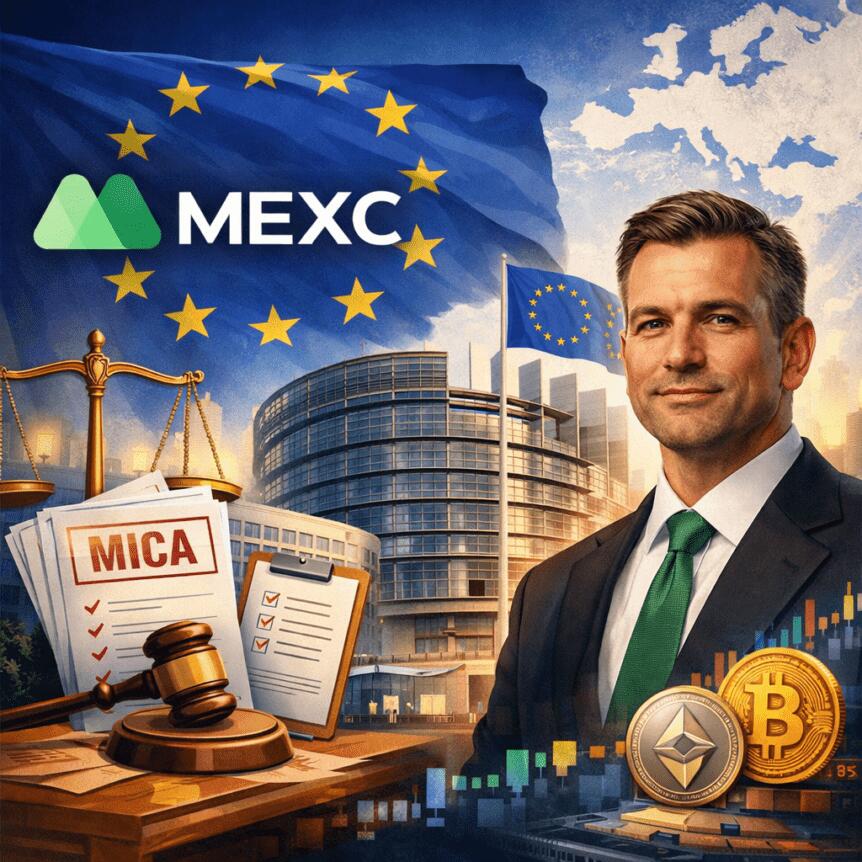
MEXC has named Vugar Usi as its new chief executive, signaling a sharpened push for global licensing as the exchange pursues a MiCA authorization in the European Union. The leadership shift appears to be part of a broader brand refresh and a strategic pivot toward an “everything exchange” model in a competitive landscape that spans centralized venues and decentralized rivals.
Usi joined MEXC as chief operating officer in late 2025 after previously serving in the same role at rival Bitget. In a conversation with Cointelegraph, he outlined plans to preserve the exchange’s low-fee trading ethos while expanding multi-asset access and reinforcing regulatory compliance across jurisdictions. “The MiCA license application is a top strategic priority for the company,” he said, adding that MEXC is actively preparing to establish a fully compliant business entity within the EU.
Key takeaways
- MEXC elevates COO Vugar Usi to CEO, aligning leadership with a concerted push for global licensing, including MiCA in the EU.
- MiCA licensing is described by Usi as a top strategic priority, with proactive steps under way to build an EU-compliant entity.
- Regulatory headwinds persist: Dutch authorities flagged MEXC in September 2025 for offering crypto services without a licensed footprint in the Netherlands.
- Market position and growth: CoinGecko places MEXC among fast-rising exchanges with reported daily volumes around $2.2 billion, while CryptoQuant counts it in the top tier of growth alongside peers like Gate and Coinbase.
- Strategic partnerships and ventures: MEXC has collaborated with Hacken for monthly proof-of-reserves audits and has ties to The Open Network (TON) via MEXC Ventures, dating back to late 2023.
A strategic leadership move amid a global licensing push
The leadership transition signals MEXC’s intent to accelerate its evolution from a high-velocity trading venue into a regulated, compliant platform with broader access to assets and markets. In speaking with Cointelegraph, Usi reframed the move as part of a long-term effort to balance growth with responsible oversight, especially as the industry faces intensified scrutiny in Europe and beyond.
Beyond the EU, Usi indicated that MEXC monitors regulatory developments worldwide, aiming to position the exchange to operate under a mosaic of license regimes rather than rely on a single jurisdiction. This approach aligns with the company’s public emphasis on expanding regulatory compatibility while maintaining cost-efficient trading for users.
EU licensing path and regulatory background
The EU’s Markets in Crypto-Assets Regulation (MiCA) represents a comprehensive licensing framework for crypto-asset service providers. MEXC’s leadership frames MiCA enrollment as a strategic necessity to unlock ongoing access to European users, though the company has not disclosed granular timelines or the exact structure of its EU entity. In recent conversations, Usi affirmed that MiCA licensing remains a top priority and that MEXC is actively preparing to operate as a compliant EU entity when the process unfolds.
Contextually, the EU licensing race is already crowded. Binance, the largest global exchange by reported volume, applied for a MiCA license in Greece in January as part of the broader regulatory push across member states. The landscape is politically sensitive and highly competitive, with exchanges weighing compliance costs and the potential benefits of a formal green light to operate across multiple EU jurisdictions.
However, EU regulators have not granted blanket approval to all applicants. MEXC has been labeled non-compliant by European authorities after the Dutch Authority for the Financial Markets (AFM) flagged the platform in September 2025 for offering crypto services without the required license in the Netherlands. The regulatory status highlights the ongoing friction between rapid global expansion and the compliance moat that MiCA seeks to establish.
As part of the broader regulatory narrative, industry coverage has underscored tensions around centralized exchanges, licensing, and cross-border operations. A related discussion in crypto policy circles has examined how jurisdictions like Malta interact with ESMA oversight, illustrating the broader geopolitical dynamics shaping the licensing race.
Related reading: Centralizing crypto: Why Malta’s clash with ESMA is about more than one small state.
MEXC's growth trajectory and partnerships
Even as regulatory questions flow, MEXC has demonstrated rapid growth and expanding partnerships. CoinGecko tracks daily trading volumes for MEXC at approximately $2.2 billion, underscoring the exchange’s scale in active crypto markets. CryptoQuant places MEXC among the top three exchanges in its Exchange Leader Index, alongside Binance and Gate, and notes strong growth trajectories for MEXC and its peers.
The exchange has also pursued strategic collaborations to bolster transparency and governance. Notably, MEXC partnered with the blockchain security firm Hacken for monthly proof-of-reserves audits to enhance transparency for users. On the venture side, MEXC Ventures has supported The Open Network (TON), with TON securing funding in late 2023 as part of the broader push to align traditional exchanges with Web3 ecosystems.
Brand evolution in a crowded market
The leadership transition accompanies a broader brand reset that mirrors an industry-wide shift toward “everything exchange” models. As competitors accelerate diversification—spanning spot, derivatives, staking, and decentralized alternatives—the market is watching how operators balance nimble execution with rigorous compliance. Coverage of industry moves, including the Arkham Exchange pivot toward a decentralized model, illustrates the tension between centralized platforms and decentralized alternatives in shaping future user experiences.
Looking ahead, the path to MiCA approval will be a pivotal determinant of MEXC’s EU footprint. The ongoing regulatory dialogue in Europe will influence not only licensing timelines but also how exchanges design governance, compliance programs, and cross-border operations. For investors and users, the unfolding strategy offers a lens into how fast-growing exchanges navigate a more consolidated and regulated crypto landscape.
Readers should watch how MEXC negotiates MiCA readiness—whether an EU entity is established, how licensing milestones progress, and what this means for offerings across Europe. The regulatory climate remains fluid, and the ultimate outcome will shape competitive dynamics across global crypto markets in the months ahead.
https://www.cryptobreaking.com/mexc-pursues-eu-mica-compliance/?utm_source=blogger%20&utm_medium=social_auto&utm_campaign=MEXC%20Pursues%20EU%20MiCA%20Compliance%20Amid%20New%20CEO%20Leadership%20
Comments
Post a Comment