
Artificial intelligence is already reshaping industries such as finance, software, design, education and media. Music is now rapidly joining that list, as AI-assisted tools make it possible to move from concept to release in a fraction of the time and cost required by traditional production models.
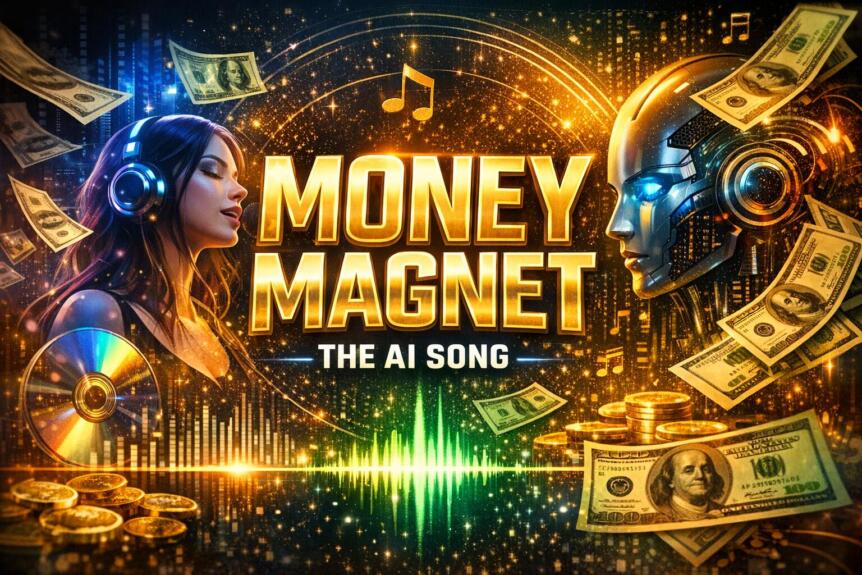
A new independent experiment is now testing exactly that. The project centers on Lunayah, a virtual artist created as part of a real-world music test, and its debut single “Money Magnet”, a pop-dance track designed to blend catchy, repeatable music with mindset-driven lyrical themes.
The experiment was initiated by Vincenzo Stefanini, entrepreneur, investor and founder of Web3 Digital, a Dubai-based agency operating across digital, AI and Web3-related sectors. While Stefanini does not come from a traditional music production background, he saw AI-assisted music creation as an opportunity to test a broader idea: whether music can evolve from pure entertainment into a practical tool for repetition, emotional conditioning and affirmation-driven listening.
From Affirmations to Music
The concept behind “Money Magnet” is simple but notable. Traditional affirmations are often spoken, repeated or written as part of personal development practices. This project takes a different route by turning those repetitive positive messages into a melodic, commercial pop-dance format that is easier to replay, remember and internalize.
Instead of asking listeners to read affirmations daily, the experiment asks a different question: what happens when those same ideas are embedded into a song structure with rhythm, melody and emotional energy?
That is the central thesis behind “Money Magnet,” which explores themes of abundance, financial well-being and positive mental reinforcement without positioning itself as financial advice or a literal promise. The aim is to create music that is enjoyable first, but also intentionally structured to stay in the mind.
AI as Accelerator, Not Replacement
One of the strongest takeaways from the project is not just the song itself, but the production model behind it. What would previously have required a studio, vocalists, producers, engineers and a significantly longer timeline was instead prototyped, refined and prepared for release in just a few days with the support of AI-assisted creative tools.
That does not mean the process was fully automated or idea-free. The original concept, direction, lyrical intent, stylistic choices, branding, launch strategy and final selection decisions remained human-led. AI functioned as an accelerator, helping translate creative direction into a finished musical product far more quickly than in a conventional setup.
For founders, creators, agencies and independent brands, this may be the more important story. The barrier to producing high-quality commercial music is falling. That opens the door not only to new artists, but to a wider range of experiments, formats and business models.
A New Creative Format
While “Money Magnet” is the first release, the project is being treated as a repeatable framework rather than a one-off track. Future songs may expand beyond financial themes into other areas commonly associated with personal development and emotional focus, including health, self-confidence, love, peace of mind and motivation.
That makes the release relevant beyond the music industry itself. It also points to the growing convergence of AI, branding, audio content, personal development and direct-to-consumer digital products.
In practical terms, the same underlying workflow could be adapted for artists, creators, events, milestone celebrations, personalized songs, branded campaigns and other custom audio experiences. That alone makes the launch of “Money Magnet” more than just another independent release.
Built in Dubai, Released Worldwide
The project was developed from Dubai, a city increasingly associated with entrepreneurship, speed, experimentation and digital-first business models. In a broader environment marked by global uncertainty and rapid technological change, the release reflects a different response: building, testing and shipping rather than waiting for ideal conditions.
“Money Magnet” is being distributed across more than 25 streaming platforms, including Spotify, Apple Music, YouTube Music, Amazon Music and other major services via its global release infrastructure.
The track and project hub are available at lunayah.com, while the direct release page can be accessed at this link.
Why It Matters
AI-generated content is no longer a niche topic. The real question is not whether it can be used, but how it should be used and what kinds of new formats it can unlock. “Money Magnet” may not answer all of those questions, but it offers a practical and public example of what the next phase of music creation could look like: faster, leaner, more experimental and increasingly accessible to non-traditional creators.
Whether this evolves into a larger music brand, a new category of personalized songs, or a service model for creators and businesses, the release marks a notable shift. It shows that music creation is no longer limited to those already inside the music industry.
Listen to the track and follow the project at https://lunayah.com/.
https://www.cryptobreaking.com/money-magnet-the-ai-song/?utm_source=blogger%20&utm_medium=social_auto&utm_campaign="Money%20Magnet":%20The%20AI%20Song%20That%20Turns%20Affirmations%20Into%20Music%20
Comments
Post a Comment