
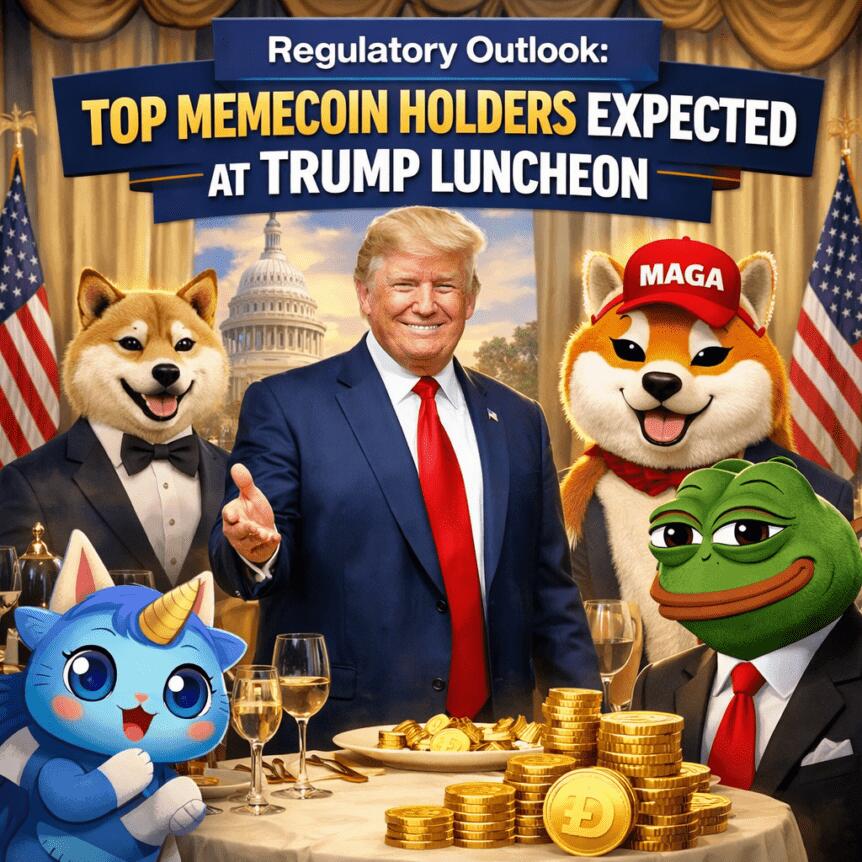
According to Cointelegraph, a private luncheon for holders of the TRUMP memecoin is planned at Mar-a-Lago, Florida, marking a second such gathering tied to the token. The event is described by its organizers as a closed meeting with the former president, but it has drawn scrutiny from lawmakers and policy observers concerned about political access linked to crypto fundraising and token ecosystems.
On Saturday, Trump and up to 297 memecoin holders are expected to convene at the Mar-a-Lago estate. The attendee roster, published by the TRUMP project, includes Paolo Ardoino, CEO of Tether; ChiHyung Song, founder and CEO of Upbit; Anthony Pompliano, a prominent Bitcoin advocate; and Nathan McCauley, co-founder and CEO of Anchorage Digital, among others associated with financial institutions, crypto firms, and blockchain ventures. The list is attributed to GetTrumpMemes.com. Notably, there was no public confirmation of Tron founder Justin Sun’s attendance, despite his visible support for Trump and his involvement in related ventures with the Trump family ecosystem.
Cointelegraph reached out to a spokesperson for Justin Sun seeking comment on potential attendance, but did not receive an immediate response. Sun has been in the headlines this week after announcing a lawsuit against World Liberty Financial, alleging that the platform froze his tokens and threatened to burn them “without any proper justification.” Sun described himself as an “ardent supporter” of Trump, while suggesting that certain World Liberty team members were acting in ways that conflict with the president’s values.
Sun’s public profile within the crypto space includes past high-profile appearances, including a May 2025 dinner for TRUMP memecoin holders that featured figures such as Synthetix founder Kain Warwick and Kronos Research chief investment officer Vincent Liu. A separate report noted markets participants who attended last year’s gathering paid around $1,200 for a seat and later secured a spot for this weekend’s event for roughly $500. The broader context underscores continued interest from sector participants in the token’s ecosystem, even as sentiment surrounding the project has shifted.
Bloomberg described a cooling sentiment toward Trump within crypto circles, noting that the combination of regulatory pressures and tariffs has contributed to a more cautious stance among crypto participants. One observer cited by Bloomberg suggested that Trump’s standing in the crypto community has weakened, reflecting the broader regulatory and market environment facing memecoins tied to political branding.
Key takeaways
- Private Mar-a-Lago luncheon will bring together up to 297 TRUMP token holders with notable crypto industry figures, intensifying scrutiny of political access linked to memecoin ecosystems.
- Justin Sun’s attendance remains unconfirmed; Sun is involved in a separate litigation matter against World Liberty Financial over token handling allegations.
- TRUMP token has fallen more than 93% from its all-time high, raising questions about the economics and demand for politically connected memecoins.
- Lawmakers and watchdog groups have criticized the event as potentially creating conflicts of interest and reducing transparency in fundraising-related crypto activity.
- The episode highlights broader regulatory questions, including token classification, AML/KYC compliance, and cross-border oversight under frameworks such as MiCA and U.S. enforcement regimes.
Event scope, attendees, and regulatory optics
The luncheon is described as a private gathering, with the former president hosting and up to 297 memecoin holders in attendance. The attendee roster includes senior figures from the crypto and fintech sectors, underscoring ongoing interest from institutional actors in political-linked token ecosystems. The project’s promoters have circulated the list, with GetTrumpMemes.com cited as the source. Public confirmation of Justin Sun’s presence has not been issued, despite his role as a high-profile backer of Trump and involvement in related initiatives with the Trump family network.
Commentary from lawmakers and examination groups has focused on transparency and governance risks. The Citizens for Responsibility and Ethics in Washington (CREW) argued that crypto wallets tied to the TRUMP token could obscure profit flows and beneficiary metrics, complicating efforts to assess potential personal gain from trading activity. The group emphasized that while token prices may rise on speculation, the real concern centers on accountability and the ability to trace financial outcomes linked to political fundraising.
The TRUMP token’s price trajectory since launch has been steeply negative, with declines from an all-time high near $45 to under $3 at the time of reporting. This backdrop informs the regulatory conversation about whether memecoins tied to political figures represent securities, how they should be classified, and what disclosures are required for participants and platforms facilitating their trading.
Sun, World Liberty, and broader policy considerations
In parallel to the luncheon discourse, Justin Sun’s legal action against World Liberty Financial has drawn attention to governance and token-management practices within Trump-affiliated ventures. Sun asserted that World Liberty’s actions—such as token freezes and potential attempts to burn tokens—were unjustified, while reaffirming his status as a Trump supporter. This dispute reinforces concerns about project governance, investor protection, and the risk of conflict between promotional activity and corporate decision-making within politically affiliated crypto projects.
These dynamics occur amid ongoing regulatory dialogue surrounding memecoins and politically linked tokens. Analysts note the need for clear frameworks governing token offerings, KYC/AML controls for trading venues, and licensing considerations for entities operating in cross-border environments. While MiCA governs European markets, U.S. enforcement actions by the SEC, CFTC, and DOJ continue to shape how such assets are monitored, classified, and potentially regulated, with cross-border differences complicating compliance for global participants.
From a policy perspective, the Mar-a-Lago gathering underscores the tension between political expression, fundraising mechanisms, and regulatory safeguards. For institutions, exchanges, and banks that engage with memecoins or tokenized assets tied to political figures, the case highlights the importance of robust disclosure, transaction-tracing capabilities, and rigorous AML/KYC programs to manage risk and ensure oversight aligns with evolving legal standards.
Looking ahead, observers will monitor how regulatory authorities respond to high-profile gatherings that mingle politics with token-based fundraising, how enforcement actions might unfold around token governance and market manipulation concerns, and how international policy harmonization—such as MiCA’s regime and U.S. regulatory approaches—will influence future conduct and licensing requirements in the memecoin space.
In sum, the Mar-a-Lago luncheon exemplifies the growing convergence of politics, finance, and crypto. As regulators sharpen their lens on token offerings, governance, and cross-border activity, institutions will need to adapt with enhanced compliance controls and transparent governance structures to navigate the evolving landscape.
https://www.cryptobreaking.com/regulatory-outlook-top-memecoin-holders/?utm_source=blogger%20&utm_medium=social_auto&utm_campaign=Regulatory%20Outlook:%20Top%20Memecoin%20Holders%20Expected%20at%20Trump%20Luncheon%20
Comments
Post a Comment