
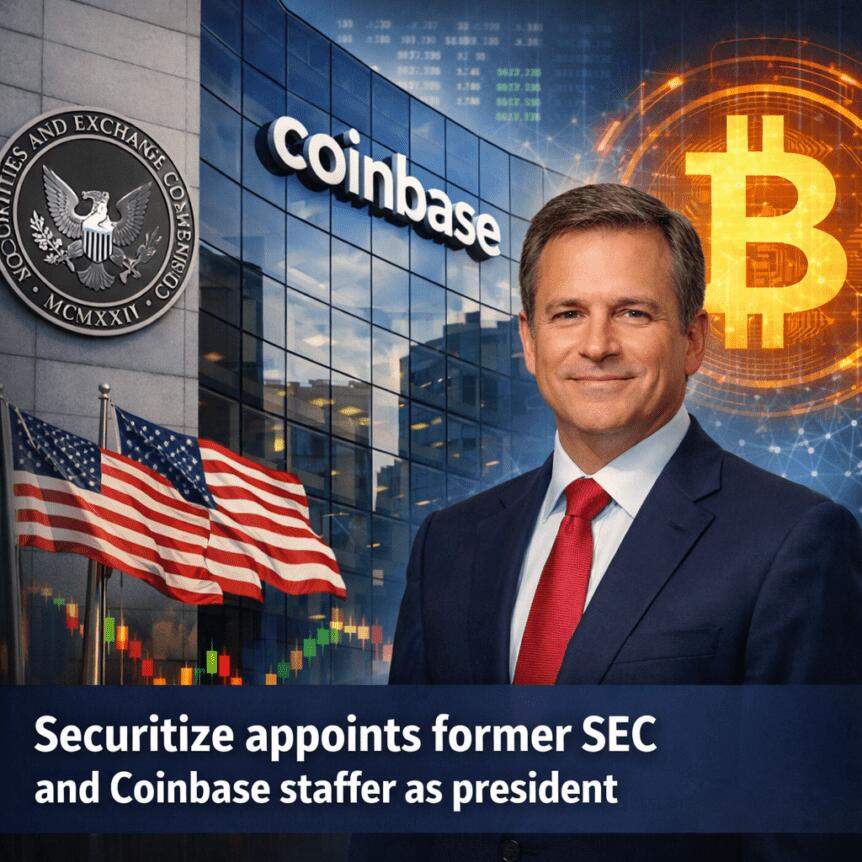
Securitize has appointed Brett Redfearn as its president and as a member of the tokenization platform’s board of directors, underscoring the crypto industry’s growing pull for former regulators and established market veterans. Redfearn, who previously led the U.S. Securities and Exchange Commission’s Division of Trading and Markets, spent over a decade at JPMorgan and later served as Coinbase’s head of capital markets. He has also been a member of Securitize’s advisory board, and the company’s Thursday notice confirmed the leadership change as it continues to push real-world asset tokenization into the crypto mainstream.
The move arrives as tokenization of real-world assets (RWA) gains momentum across crypto markets. Securitize’s boardroom shake-up comes amid a broader surge in on-chain assetization activity, with data from analytics platform RWA.xyz showing $3.85 billion in distributed asset value across platforms in March and tokenized stocks on-chain surpassing $1 billion in total value. The numbers highlight a material shift toward regulated, tokenized exposure to traditional assets within the crypto ecosystem.
Key takeaways
- Brett Redfearn is named president and board member of Securitize, bringing SEC leadership experience, Coinbase capital markets background, and JPMorgan tenure to the tokenization platform.
- Market momentum for tokenized assets remains robust, with March data placing distributed asset value at about $3.85 billion on RWA platforms and tokenized stocks crossing $1 billion in on-chain value.
- The SEC is recalibrating its enforcement leadership, naming David Woodcock as director of the Division of Enforcement, a role that will shape crypto oversight as the space expands.
- Lawmakers are scrutinizing regulator departures, including the exit of former enforcement head Margaret Ryan, amid ongoing questions about crypto enforcement actions and dropped cases.
- The broader trend of ex-government officials entering crypto continues, signaling a convergence of traditional financial governance experience with digital asset markets.
Strategic pivot at Securitize
In its official announcement, Securitize confirmed Brett Redfearn’s elevation to president and a seat on the company’s board. The former SEC official led the agency’s Division of Trading and Markets, a portfolio overseeing market structure and regulatory compliance, before moving to Coinbase as head of capital markets. He also accumulated frontline experience at JPMorgan spanning various roles across a decade. By bringing Redfearn onto the executive team, Securitize signals a continued emphasis on robust compliance, market governance, and scalable tokenization of real-world assets—areas where regulatory familiarity and traditional market discipline can be advantageous for accelerating institutional-grade adoption.
Redfearn’s growing role at Securitize also reflects a broader industry trend: attracting senior figures with public-sector credibility to help bridge crypto innovation with established financial norms. The executive’s transition from public service to private sector leadership dovetails with ongoing investor appetite for regulated pathways to tokenized exposure, especially in tokenized securities, asset-backed tokens, and other RWAs that promise enhanced liquidity and efficiency for traditional instruments.
RWAs and tokenization momentum
The market context for Redfearn’s appointment is favorable to Securitize’s business model. Data from RWA.xyz indicate a sustained surge in tokenized assets, with March totaling roughly $3.85 billion in distributed asset value across platforms. In parallel, tokenized stocks have crossed a notable threshold, with on-chain value exceeding $1 billion. These figures illustrate not only growing demand for tokenized access to mainstream assets but also the viability of regulated tokenization rails that can support larger, more diverse pools of capital.
For investors, the implication is twofold: first, tokenized RWAs offer a potential pathway to diversification and liquidity in traditional asset classes; second, the involvement of experienced financial-services executives in tokenization ventures could help drive scalable governance, risk controls, and compliance frameworks that appeal to institutions wary of regulatory uncertainty. Securitize’s leadership move aligns with a market that increasingly prioritizes both innovation and credible oversight as use cases expand beyond crypto-native tokens.
Regulatory backdrop and leadership reshuffle
Beyond Securitize’s leadership update, the regulatory environment is experiencing a notable transition. The SEC announced that David Woodcock would become director of the Division of Enforcement, with the appointment set to take effect on May 4. The change comes as the agency continues to navigate a contentious policy landscape for crypto-related enforcement, and as lawmakers press for clarity on how the SEC will approach recent crypto cases and policy shifts.
Interest among lawmakers centers on the departure of former enforcement head Margaret Ryan and questions about the SEC’s crypto crackdown strategy, including whether certain cases have been dropped or recalibrated. While authorities have pursued various actions against crypto firms and projects in recent years, the timing and rationale behind high-profile moves have drawn scrutiny from Capitol Hill. The broader takeaway for market participants is a heightened focus on how enforcement direction and regulatory priorities will shape project roadmaps, exchange behavior, and the permitting environment for tokenized assets.
In parallel, industry observers note how the movement of former regulators into crypto companies—such as Caroline Pham’s shift from the Commodity Futures Trading Commission to MoonPay—illustrates a broader willingness among policy veterans to contribute to, and influence, the sector’s development. This trend does not guarantee favorable policy outcomes, but it does signal a convergence of traditional financial governance with crypto innovation, potentially accelerating the adoption of clearer compliance standards and governance practices.
What this means for investors, builders and users
The confluence of leadership experience and tangible market momentum in RWAs points to a maturing segment of the crypto economy. For investors, the combination of seasoned governance acumen and regulatory-aware product design could translate into more credible access points to real-world assets, with improved risk management and reporting. For builders, Redfearn’s appointment may encourage the creation of more transparent issuance and custody solutions, along with stronger tokenization infrastructure that stands up to regulatory scrutiny. For users, the trend could translate into broader ranges of tokenized securities and asset-backed tokens that operate on trusted rails, delivering greater liquidity and on-chain settlement efficiencies.
That said, uncertainties remain. The regulatory posture toward crypto enforcement and the specifics of how RWAs will be treated under securities or commodities regimes will continue to influence product design, listing standards, and cross-border considerations. Market watchers should monitor how Woodcock’s leadership style translates into enforcement priorities and whether the SEC’s approach to complex asset-backed tokens evolves in a direction that reduces friction for compliant projects while preserving investor protections.
As the sector evolves, the next few quarters will reveal how these leadership movements translate into tangible policy signals, partnerships, and capital flows. Expect further commentary from industry participants on how tokenization platforms align with evolving regulatory expectations, and watch for any new data points that illuminate the pace of adoption among institutional participants seeking regulated exposure to tokenized real-world assets.
Readers should keep an eye on Securitize’s strategic execution under Redfearn’s presidency—especially initiatives around onboarding institutions, expanding the RWA toolkit, and advancing governance standards. Concurrently, any developments from the SEC’s enforcement division and congressional inquiries into crypto cases will help frame the risk and opportunity landscape for tokenized assets in the near term.
https://www.cryptobreaking.com/securitize-appoints-former-sec-and/?utm_source=blogger%20&utm_medium=social_auto&utm_campaign=Securitize%20appoints%20former%20SEC%20and%20Coinbase%20staffer%20as%20president%20
Comments
Post a Comment