
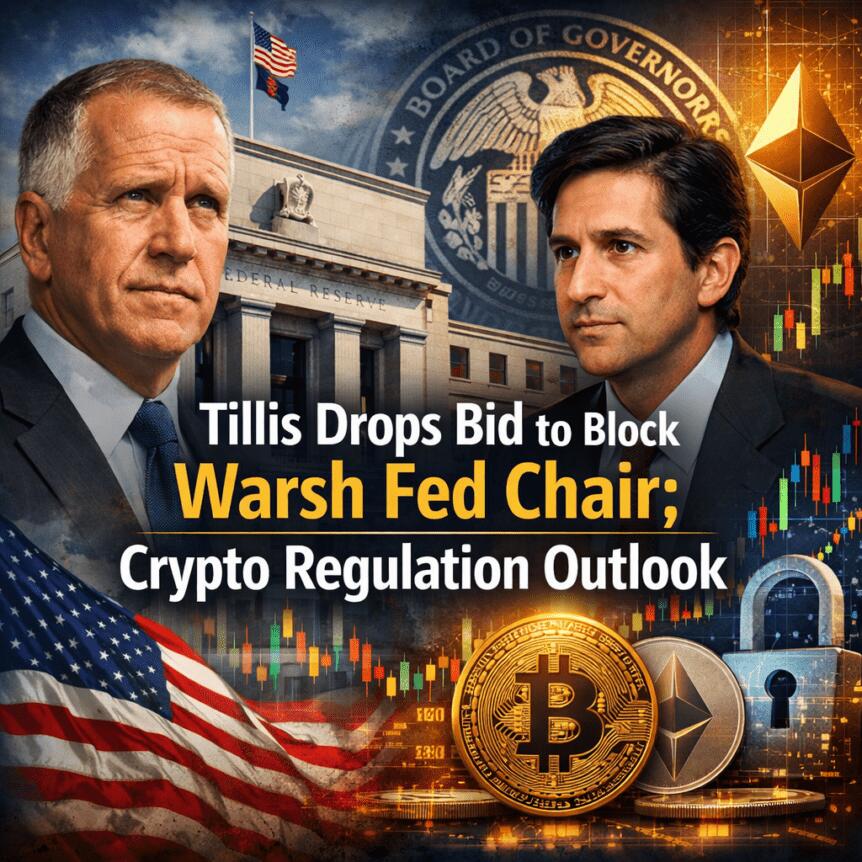
Republican Senator Thom Tillis signaled on Sunday that he will no longer block Kevin Warsh’s bid to become Federal Reserve chair, following the conclusion of a Department of Justice probe into Jerome Powell related to the Fed’s headquarters renovation. In a post on X, Tillis said the three-month DOJ inquiry has closed and that he is “looking forward” supporting Warsh’s confirmation.
“I have been clear from the start: the U.S. Attorney's Office criminal investigation into Chair Powell was a serious threat to the Fed's independence, and it needed to end before I could support Kevin Warsh's confirmation,” Tillis wrote, adding that he welcomes the inspector general’s investigation as a necessary and appropriate measure, and that he expects it to be conducted thoroughly and professionally.
Tillis, a Republican on the Senate Banking Committee, held significant leverage to slow or block Warsh’s appointment by employing a procedural hold or withholding his vote to prevent advancement to a full Senate floor vote. The development aligns with a broader regulatory and policy environment as the Fed prepares for a leadership transition.
Powell’s tenure is scheduled to end May 15, with Warsh anticipated to assume the role in the days that follow once confirmed by the full Senate. The Senate Banking Committee has set its vote for April 29, while the timing of the full Senate confirmation remains unsettled and could occur during the week of May 11.
Related reporting notes broader policy momentum surrounding crypto regulation and central bank policy debates in the United States. The discussion comes as lawmakers weigh how a new Fed chair might influence rates and financial stability, with potential indirect implications for digital assets and crypto market structure.
There has been ongoing debate about how Warsh’s leadership at the Federal Reserve could affect the crypto market. Warsh, a former Fed governor, has been characterized in coverage as hawkish on some fiscal policy questions and skeptical about aggressive easing, a stance that could influence risk appetite for higher-beta assets, including cryptocurrencies. Yet, observers note that policy independence remains a core premise of the Fed, and Warsh has said that decisions will be made independently of political pressure.
Warsh is also regarded as crypto-friendly relative to some peers. His public disclosures show exposure to more than 30 crypto projects, including assets such as Solana and decentralized exchanges like dYdX. This background has been cited by observers as potentially shaping his approach to crypto policy and industry engagement, though no policy positions have been formally announced beyond adherence to Fed independence and regulatory rigor.
Source data and coverage indicate that the nomination process is proceeding under standard Senate oversight, with a clear path toward a formal vote by the Banking Committee and a subsequent floor vote. As reported, the transition timeline remains contingent on committee outcomes and Senate scheduling, with a federal leadership handover anticipated in mid-May if confirmations proceed smoothly.
According to Cointelegraph, the broader regulatory discourse continues to intersect with crypto-market participants, institutional investors, and financial institutions seeking clarity on policy direction, licensing expectations, and cross-border oversight. The unfolding confirmation process thus sits at the nexus of monetary policy, financial regulation, and crypto market structure considerations.
https://www.cryptobreaking.com/tillis-drops-bid-to-block/?utm_source=blogger%20&utm_medium=social_auto&utm_campaign=Tillis%20Drops%20Bid%20to%20Block%20Warsh%20Fed%20Chair;%20Crypto%20Regulation%20Outlook%20
Comments
Post a Comment