
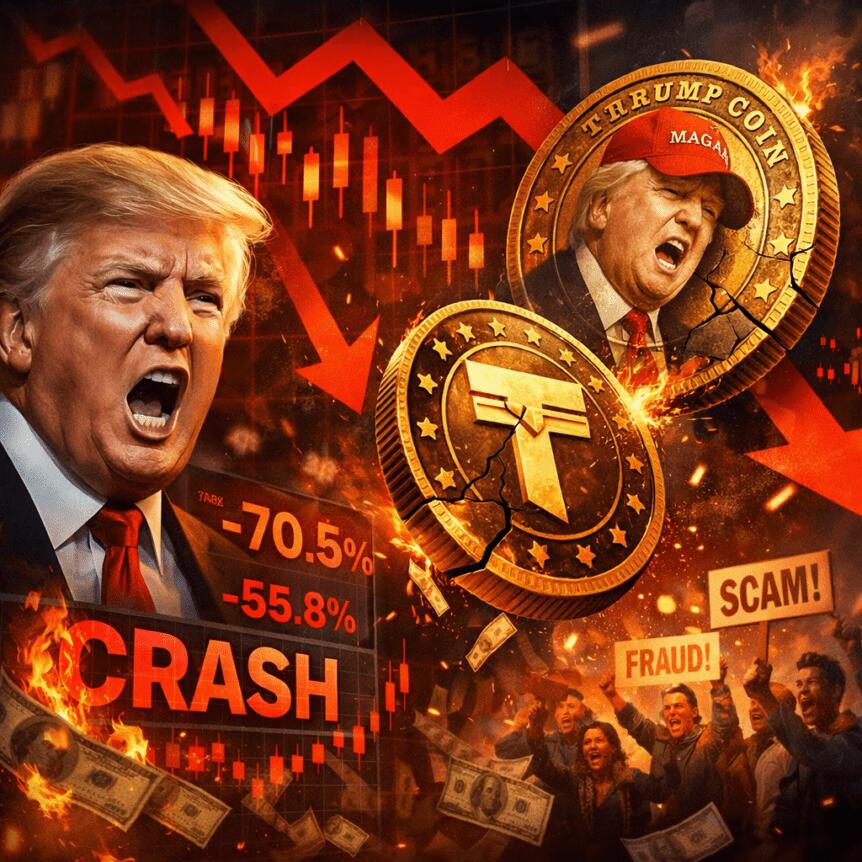
Trump-associated memecoins have entered a volatile stretch, with both the Official Trump token (TRUMP) and the World Liberty Financial (WLFI) governance token sliding toward new lows as regulatory scrutiny and questions about tokenomics weigh on market sentiment. Data show the TRUMP token trading in the low double digits of dollars and WLFI hovering near single-centre cents, underscoring the fragility of celebrity-backed crypto ventures in a tightening regulatory climate.
According to market data, the TRUMP memecoin fell to an all-time low near $2.73 in March 2026 and was trading around $2.86 at the time of reporting, per CoinGecko. The WLFI token, promoted as a DeFi governance token associated with a Trump-linked project co-founded by the former president’s sons, tumbled to about $0.07, a drop of roughly 75% from its all-time high near $0.31 reached in September 2025. The TRUMP token had previously peaked above $73 in January 2025, illustrating the dramatic reversal from fevered debut to current caution.
Key takeaways
- TRUMP token prices reached an all-time high above $73 in January 2025, but by March 2026 had fallen to about $2.73, trading near $2.86.
- WLFI, the governance token tied to a Trump-linked DeFi project, hit an all-time low of about $0.07, after peaking around $0.31 in September 2025—roughly a 75% decline.
- The collapse in these meme coins underscores the volatility of celebrity-backed crypto projects and the risks of token economics that depend on ongoing hype rather than durable use cases.
- U.S. lawmakers intensified scrutiny of memecoin events tied to public figures, with a letter demanding details on an upcoming Trump-era gala and concerns about access arrangements that could benefit token holders and promoters.
- Analysts and academics cited the broader risk factors in meme-coin markets, including governance structure, conflicts of interest, and potential regulatory actions as pivotal in shaping near-term momentum.
Prices, hype, and a changed meme-coin landscape
The TRUMP memecoin, launched in January 2025 amid a wave of celebrity-backed tokens, rapidly drew attention from traders and media. Its price trajectory—soaring to multi-dollar levels before retreating—captured a classic meme-coin arc: rapid inflows driven by social media attention, followed by a sharp correction as liquidity and speculative interest waned. By March 2026, CoinGecko records show the token at roughly $2.73, with a marginal recovery to around $2.86, signaling that gains since the peak have largely eroded.
WLFI’s story runs parallel in the world of DeFi governance tokens tied to high-profile endorsements. The token’s decline from its all-time high near $0.31 in September 2025 to about $0.07 reflects a broader pattern where governance models backed by glamour rather than proven utility struggle to sustain value. CoinMarketCap tracking shows the pullback was steep but not isolated to a single project, highlighting the risk profile unique to memecoin ecosystems and their often uncertain long-term viability.
Professor Tonya Evans, a noted scholar in crypto policy, voiced a pointed critique of the broader dynamics around celebrity-driven ventures. “We thought Sam Bankman-Fried or Gary Gensler were the worst things to happen to the crypto industry, and they were horrible,” she said. “But, turns out, it was the guy who surrounds himself with sycophants, siphons every bit of value he can for himself, and then expeditiously bankrupts companies and casinos without consequence.”
Regulatory and political scrutiny tightens the heat
The political timeline around Trump-linked tokens has grown more complicated as lawmakers attempt to map governance, access, and potential conflicts of interest. Senators Elizabeth Warren, Richard Blumenthal and Adam Schiff recently sent a letter to Bill Zanker—the promoter behind the Trump memecoin—seeking clarity on the April gala announced for token holders. The lawmakers argued the event could function as a vehicle for influence peddling, noting that access to the former president would be tied to holding TRUMP tokens, a structure that could tip economic incentives in favor of promoters and organizers.
Politico, which obtained a copy of the letter, reported that the organizers were “dangling access” to Trump in exchange for participation, raising questions about governance, transparency, and the ethics of fundraising through memecoins. The April 25 gala, already drawing attention for its potential optics, sits at the center of a broader debate about how public figures’ crypto ventures intersect with campaign-era fundraising norms and regulatory oversight.
For investors and builders in the memecoin space, the unfolding questions are not merely about price. They signal a shift in how regulators and lawmakers may treat celebrity-endorsed crypto projects, particularly those that tie token access to real-world events or interactions with public figures. The tension between hype-driven launches and the need for robust disclosures, clear tokenomics, and independent governance remains a defining fault line for the sector.
Earlier coverage from Cointelegraph highlighted the wider scrutiny around Trump-linked crypto projects, including concerns about conflicts of interest and potential insider dynamics. The current developments reinforce the need for heightened transparency and better alignment between token functionality and long-term value creation rather than purely promotional appeal.
The landscape for meme coins linked to high-profile figures thus sits at a crossroads: the immediate price signals remain volatile, while the regulatory and ethical questions could shape the rules and norms that govern this corner of the market going forward.
What matters next is how regulators and market participants respond to these tensions. Watch for any official statements on memecoin governance norms, disclosures around event-driven access schemes, and potential Congressional or administrative actions that could recalibrate the incentives driving celebrity-backed crypto projects.
https://www.cryptobreaking.com/trump-linked-crypto-tokens-plunge/?utm_source=blogger%20&utm_medium=social_auto&utm_campaign=Trump-Linked%20Crypto%20Tokens%20Plunge,%20Renewed%20Backlash%20Erupts%20
Comments
Post a Comment