
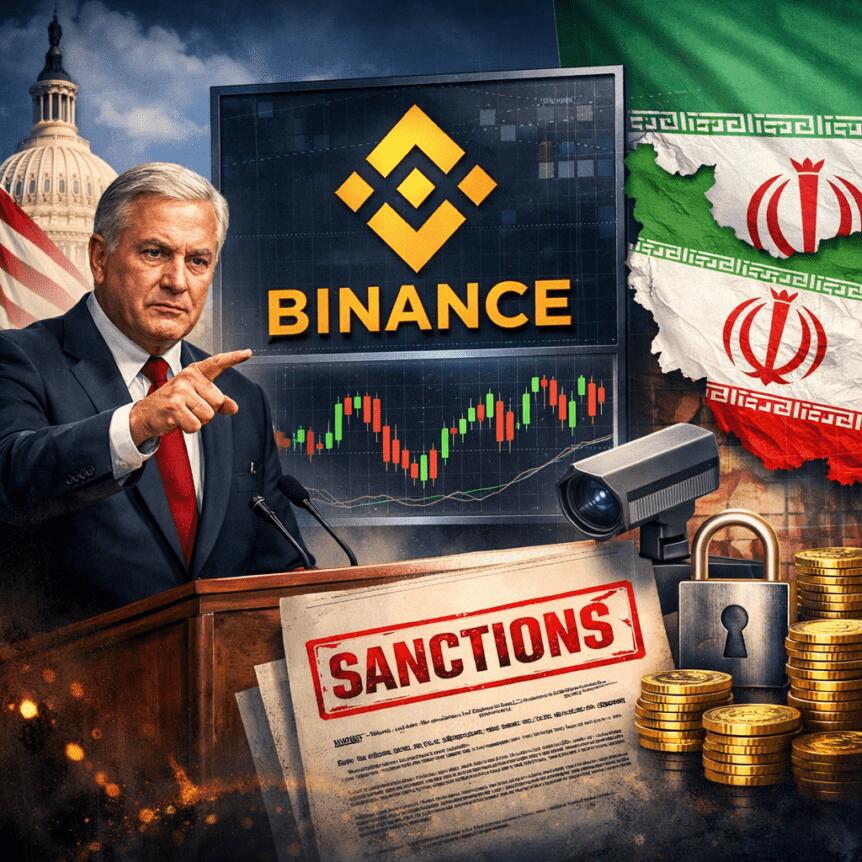
Connecticut Senator Richard Blumenthal has intensified congressional oversight of Binance, asking the Justice Department and FinCEN for detailed updates on whether the exchange is meeting anti-money-laundering and sanctions obligations embedded in its 2023 monitoring regime. A Fortune report on Friday describes Blumenthal’s letters as requesting a current assessment of Binance’s compliance with the agreement.
The 2023 settlement required Binance to pay $4.3 billion in civil penalties and to fall under ongoing U.S. monitoring and reporting by regulators. Changpeng “CZ” Zhao, Binance’s founder, agreed to plead guilty to one felony as part of the resolution. DOJ and FinCEN officials responsible for overseeing the monitoring reportedly did not comment when approached by Fortune.
Blumenthal’s correspondence reportedly highlighted “mounting allegations of dangerously lax anti-money laundering prevention by Binance,” underscoring ongoing questions about the effectiveness of post‑settlement oversight and the sufficiency of the program’s controls.
Fortune also notes that the case has broader sanctions implications, including Iran-related scrutiny. The outlet reports that Binance had been accused of sanction evasion and that employees who flagged potential violations were reportedly dismissed; a Binance spokesperson denied the specific claims.
Separately, a bipartisan group of lawmakers pressed for action earlier this year. In February, Senator Chris Van Hollen and 10 colleagues urged Treasury Secretary Scott Bessent and former Attorney General Pamela Bondi to complete a “prompt, comprehensive review” of Binance’s compliance controls. The letter, circulated by Van Hollen’s office, signals continued bipartisan concern over how Binance’s regulatory posture is being assessed and enforced. Source: Van Hollen’s office.
Key takeaways
- A sitting U.S. senator asks DOJ and FinCEN for a current update on Binance’s compliance with AML and sanctions monitoring, citing a Fortune report on the matter.
- The 2023 settlement’s monitoring regime remains under scrutiny, with regulators yet to publicly detail its effectiveness or any gaps.
- Iran sanctions-related inquiries and related staffing changes at Binance are part of the ongoing oversight narrative, though Binance denies the specific allegations.
- Lawmakers have pressed for a rapid, comprehensive review of Binance’s controls, illustrating sustained bipartisan concern about crypto exchanges’ regulatory compliance.
- Questions about Binance’s political associations and external partnerships continue to surface, adding a political dimension to regulatory risk for the sector.
Regulatory monitoring under the 2023 settlement
The 2023 settlement placed Binance under an active regime of monitoring and reporting to U.S. authorities. As part of the deal, the exchange faced a substantial civil penalty and agreed to ongoing regulatory scrutiny designed to police anti-money-laundering controls and sanctions compliance. The latest inquiries focus on whether those measures are functioning as intended and how regulators verify ongoing adherence. Fortune’s reporting emphasizes that lawmakers want a transparent, current account of the program’s status, including any identified shortcomings and planned fixes.
Sanctions scrutiny and Iran-related dynamics
Iran sanctions have repeatedly surfaced in discussions around Binance. Reports cited by Fortune suggest that concerns about evasion tactics prompted internal reviews and staff changes, with claims that one billion dollars’ worth of activity may have moved toward Iran-linked entities. Binance has publicly denied these allegations through a spokesperson, underscoring the ongoing dispute over what actually occurred and how it should be interpreted within the monitoring framework.
Political entanglements and ongoing oversight tensions
The regulatory conversation around Binance is taking place against a backdrop of broader political considerations. In March 2025, a UAE-based entity reportedly acquired a $2 billion stake in Binance using a USD1 stablecoin issued by World Liberty Financial, a company associated with Donald Trump. In a separate development, Trump pardoned CZ in October 2025 after a four‑month prison stint tied to the 2023 settlement. While these items are part of public discourse around Binance, they contribute to a broader risk perception for investors and users who weigh regulatory certainty against political influence in the crypto space.
For readers tracking the regulatory arc, these disclosures reinforce why a formal, auditable update from U.S. authorities and Binance remains pivotal. The evolving status of the monitoring program, forthcoming agency statements, and any new enforcement steps will be essential to watch in the coming months.
Readers should keep an eye on forthcoming confirmations from the DOJ, FinCEN, and Binance about any adjustments to the monitoring regime, as well as any legislative or administrative signals that could reshape how large crypto platforms are governed in the United States.
https://www.cryptobreaking.com/us-senator-urges-binance-monitor/?utm_source=blogger%20&utm_medium=social_auto&utm_campaign=US%20Senator%20Urges%20Binance%20Monitor%20Update%20Amid%20Iran%20Sanctions%20Scrutiny%20
Comments
Post a Comment