
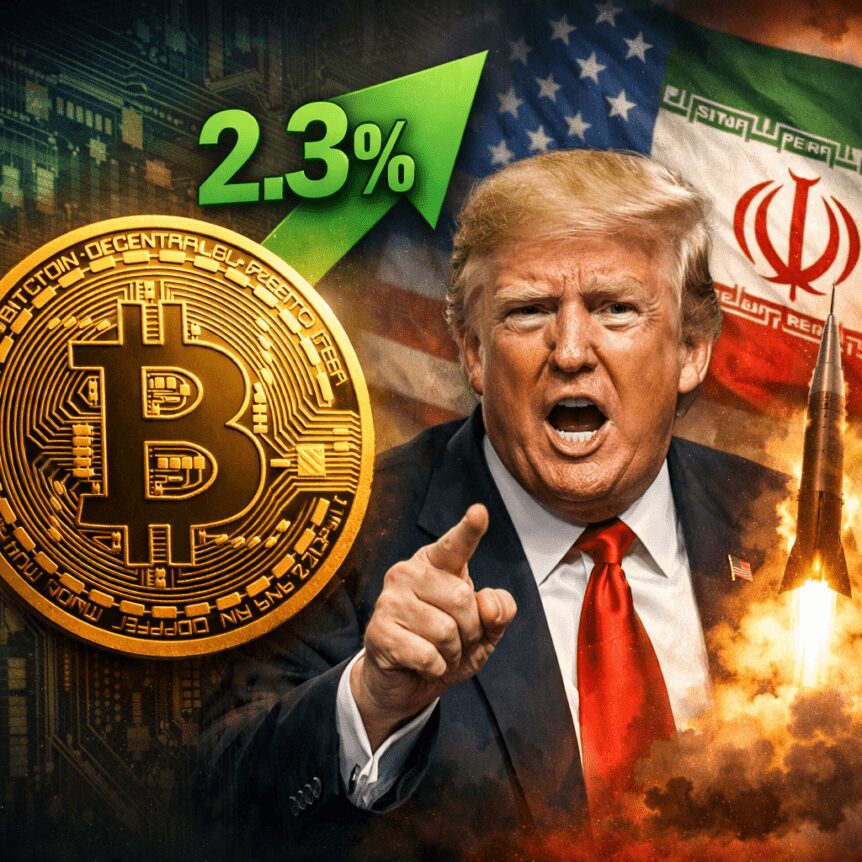
Bitcoin traded in a choppy session as geopolitical headlines dominated sentiment, with a dramatic swing after President Donald Trump rejected Iran’s counteroffer to a peace deal. The cryptocurrency briefly dipped below the 81,000 level before reclaiming ground and punching above 82,000 in a matter of hours.
Price data from CoinGecko show BTC slipping from around 81,430 to about 80,520 within 45 minutes, then rallying to a high near 82,347 less than three hours later. Derivatives data from Coinglass indicated roughly $64 million worth of short positions were liquidated in the four-hour window surrounding the move, underscoring the speed and sensitivity of markets to headlines. The broader backdrop remains a tense US-Iran dynamic, with oil prices advancing and U.S. stock futures nudging higher as the day progressed. Trump characterized Iran’s proposal as “totally unacceptable” in a Truth Social post addressing the offer.
The political flare-up sits atop a longer-running narrative around Middle East risk, the Strait of Hormuz, and the way macro forces translate into crypto and conventional assets. Oil prices rose about 4.6% to roughly $98.7 per barrel after Trump’s comments, while the S&P 500 futures index edged higher by about 0.13% in early trading. The headlines also intersect with regional instability and its potential to influence global risk sentiment, complicating an already nuanced environment for investors and traders in digital assets.
Key takeaways
- Bitcoin briefly dipped to around 80.5k and rebounded to about 82.3k within hours following Trump’s rejection of Iran’s counteroffer, showcasing BTC’s sensitivity to geopolitical headlines.
- About $64 million worth of short positions were wiped out in a four-hour window as the price moved higher, according to Coinglass data.
- Oil rose roughly 4.6% to near $98.7 per barrel, while U.S. equity futures showed modest gains, illustrating a broader risk-off/risk-on dynamic around the same headlines.
- Two potential catalysts in the U.S. Senate this week could inject regulatory clarity into the crypto sector: the confirmation vote for Kevin Warsh as Federal Reserve chair and the CLARITY Act markup.
- Bitcoin has climbed about 29.7% since the US-Iran conflict began on Feb. 28, outperforming the S&P 500 and gold over the same period, according to available market tallies.
Market pulse after headlines
The price action around BTC underscores how sensitive digital assets remain to real-time geopolitical developments. After a sharp downward move on the initial volley of headlines, Bitcoin’s bounce back above 82,000 signals persistent demand at the higher end of the trading range, even as risk sentiment flickers between caution and appetite for allocation in non-traditional assets. While some traders have continued to ride the volatility, others have used the volatility as an opportunity to adjust hedges or recalibrate risk exposure.
From a liquidity perspective, the short-covering burst highlighted in Coinglass’ data is notable: liquidations can amplify near-term moves as market participants recalibrate positions in response to headlines and evolving risk signals. In the same moment, the oil market’s reaction—the 4.6% jump to around $98.7 per barrel—reflects how macro shocks and geopolitical risk translate into both commodity and crypto markets, underscoring the interconnectedness of energy, equities, and digital assets.
Regulatory momentum could shape the Bitcoin roadmap
Beyond the immediate headlines, market observers say this week could mark an inflection point for regulatory clarity around digital assets in the United States. Markus Thielen, CEO of 10x Research, highlighted two upcoming Senate actions as potential catalysts that could “lean bullish” for Bitcoin by reducing institutional friction and smoothing the path for policy transitions.
“Two catalysts stand out this week: a Senate vote on Monday for Kevin Warsh’s confirmation as Federal Reserve chair and the Senate Banking Committee’s markup on the CLARITY Act on Thursday. Warsh is widely regarded as more hawkish on inflation than the current chair, Jerome Powell, but his confirmation could remove an overhang of uncertainty. The CLARITY Act represents what many in the industry view as the most significant crypto-legislation in years, potentially paving a clearer regulatory path for digital assets.”
Thielen’s view points to a broader narrative: regulatory clarity can lower the friction for institutional participation and foster a more predictable operating environment for crypto markets. In this framing, the two events could complement monetary policy dynamics, reducing policy uncertainty that often weighs on risk assets during leadership transitions and major legislative reviews.
Bitcoin’s resilience through the US-Iran conflict
Since the onset of the crisis — marked by events in late February that intensified after a U.S. airstrike targeted Iranian leadership figures — Bitcoin has advanced roughly 29.7%. That recovery places BTC ahead of the S&P 500 and gold over this span, suggesting that investors view digital assets as a potential hedge or diversification instrument even as traditional markets wrestle with geopolitical risk. The price trajectory adds a layer to a longer-running debate about Bitcoin’s role in macro risk-off or risk-on environments, and whether the asset can sustain a narrative of resilience during heightened tensions.
Looking back, Bitcoin’s volatility in response to geopolitical headlines is not a new phenomenon, but the current episode reinforces how macro shocks can intersect with sector-specific narratives around custody, liquidity, and regulatory clarity. If the regulatory tailwinds materialize in the coming weeks, the market could see a more stable path for institutional flows, potentially supporting a broader adoption arc for digital assets beyond a purely risk-on or speculative cycle.
As markets digest both diplomacy-focused headlines and policy signals, investors will be watching how the central bank’s leadership transition unfolds and what lawmakers deliver on crypto legislation. The coming days may reveal whether the combination of macro resilience and regulatory certainty can sustain Bitcoin’s momentum or whether volatility will reassert itself as geopolitical headlines evolve.
Readers should stay tuned for the next wave of regulatory updates and any fresh color on Fed leadership’s approach to inflation and market stability, as these factors will likely shape crypto volatility and institutional participation in the weeks ahead.
https://www.cryptobreaking.com/bitcoin-rises-2-3-as/?utm_source=blogger%20&utm_medium=social_auto&utm_campaign=Bitcoin%20rises%202.3%%20as%20Trump%20calls%20Iran%20peace%20proposal%20unacceptable%20
Comments
Post a Comment