
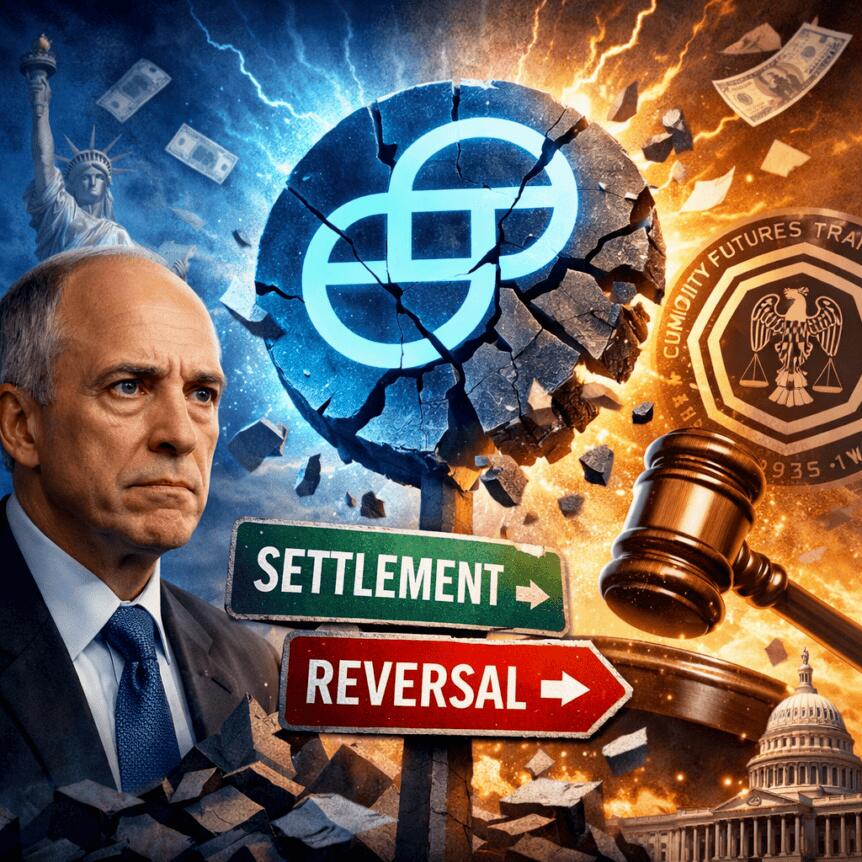
A high-stakes procedural reversal is reshaping the Gemini settlement narrative. The U.S. Commodity Futures Trading Commission (CFTC) has filed an amended motion in the Southern District of New York seeking relief from a $5 million settlement the agency reached with Gemini Trust Company in January 2025, while President Joe Biden was in office. The move, which reverses course from a settled case, has drew immediate attention from former regulators and crypto industry observers who view it as highly unusual and potentially consequential for how the CFTC handles enforcement settlements going forward.
In its amended filing, the CFTC argues that the agency should be relieved from the judgment in Gemini’s favor, pointing to claims that a whistleblower—identified in the document as Gemini’s former chief operating officer—was found to be not credible, and that evidence had been concealed by the commission’s prior leadership. The filing also asserts that the whistleblower made false statements connected to Gemini’s Bitcoin futures pre-certification review and that the agency’s complaint contained deficiencies related to inflated trading activity, volumes, and misrepresented user demand.
Key takeaways
- The CFTC is seeking to vacate or set aside the January 2025 $5 million settlement with Gemini, in a move described by observers as highly unusual.
- The amended motion contends that a whistleblower’s credibility was compromised and that key evidence was concealed by earlier agency leadership, calling into question the original basis of the complaint.
- Former CFTC chair Tim Massad characterized the reversal as extraordinary, suggesting the staff’s analysis was flawed rather than the law being unclear.
- Gemini’s founders are connected to political events, having donated to Donald Trump’s 2024 campaign and engaged with the White House during a period of intensified regulatory scrutiny around crypto.
- Public docket activity in Gemini’s case has paused since January 6, 2025, raising questions about the next steps and potential implications for enforcement norms.
The reversal that few expected
The heart of the update is not merely procedural nuance but a potential recalibration of how the CFTC handles settled enforcement actions. The amended motion—submitted to the SDNY and linked to the agency’s press materials—frames the move as a corrective measure, arguing that a settled outcome should not stand when the agency’s staff now concludes there were “significant deficiencies” in the Division of Enforcement’s evidence. In practical terms, the CFTC asserts that the complaint against Gemini should not have been filed in the first place, given new findings about credibility and evidentiary support.
“The CFTC’s action in reversing itself on a settled case is extraordinarily unusual. The explanation seems to be that the staff got it wrong, not that the law was unclear,” former CFTC chair Tim Massad told Cointelegraph in reference to the development.
The CFTC’s filing goes further by detailing that the whistleblower’s credibility and related disclosures formed the basis of the agitation around the case. The complaint had accused Gemini of reporting inflated trading activity and volumes and of misrepresenting user demand. The agency contends that after a comprehensive internal review, the division of enforcement identified significant gaps in the evidence presented when the case was initially brought.
Context: Gemini, settlement, and the political backdrop
The Gemini case has a longer arc than a single court filing. The action was initially filed in June 2022, with the parties settling in January 2025 for $5 million while the agency was under the Biden administration. The disclosure of an amended motion to vacate follows more than a year of relative quiet on the public docket, a rarity for what had been a high-profile, closely watched crypto case.
The campaign and political maneuvering surrounding Gemini’s founders add another layer of context. Tyler and Cameron Winklevoss, Gemini’s co-founders, each donated $1 million to Donald Trump’s 2024 campaign. The brothers have also met with Trump and attended White House events, including participation in a signing ceremony related to the GENIUS Act—an area touching on stablecoins and other crypto market mechanics. Pubic discussion around the Winklevosses’ political engagements has fed into broader conversations about regulatory capture, enforcement priorities, and the perception of independence within federal agencies during transitional periods.
In a separate development cited in reporting surrounding the case, a text chain made public by former CFTC commissioner Brian Quintenz in September 2025 suggested that Tyler Winklevoss pressed for aggressive litigation as Quintenz neared consideration for the agency’s leadership. That sequence reportedly followed Trump’s later withdrawal of Quintenz’s nomination, eventually leading to Michael Selig’s confirmation as chair and the agency’s current sole commissioner. Some language in the CFTC’s motion to vacate mirrored phrases from the Quintenz texts, including references to “abuse” of regulatory authority and a “false whistleblower.”
Gemini declined to comment immediately when contacted by Cointelegraph, leaving questions about the company’s position regarding the motion and any potential settlement strategy for the court to resolve.
Regulatory optics and what comes next
Crucially, the unfolding scenario raises questions about enforcement culture at the CFTC and how the agency balances settlement efficiency with the risk of overreach. The agency’s decision to seek relief from a settled judgment implies that it sees a need to correct past actions, but it also invites scrutiny about whether settled outcomes can be revisited as new information comes to light. For investors and market participants, the episode underscores the fragility of settlement buyouts in the crypto enforcement landscape and how political and personnel changes within federal agencies might influence long-running cases.
Beyond Gemini, the broader regulatory environment remains in a state of flux. The crypto industry has watched closely as the CFTC and the Securities and Exchange Commission recalibrate their approaches to token offerings, exchanges, and market infrastructure. With the administration’s evolving regulatory posture and the ongoing backlog of cases, observers are left watching how the courts balance finality against the need for corrective justice when substantial new evidence or credibility concerns emerge.
As the court process unfolds, several developments are likely to shape the trajectory of this case. The SDNY will have to weigh the CFTC’s arguments against Gemini’s defenses, consider the credibility questions surrounding the whistleblower and the allegedly concealed evidence, and determine whether the original 2025 settlement should stand or be vacated in light of the agency’s amended position. The timing of hearings, potential additional filings, and the possibility of a negotiated resolution will all factor into the coming months.
Meanwhile, the public and market participants will be watching for any cross-cutting implications. If the court allows the CFTC to reverse a settled case, it could have ripple effects on how firms approach settlements in high-profile enforcement actions and how regulators document and defend their decisions when new information surfaces. It also sharpens the ongoing debate about independence and accountability within regulatory agencies during politically sensitive periods.
In terms of flow of information, observers should expect more formal disclosures from both sides as the judge reviews the amended motion and any accompanying filings. The CFTC’s press materials and related public records will likely continue to be a focal point, along with any statements Gemini might issue in response.
What to watch next is straightforward: the SDNY judge’s ruling on the CFTC’s motion to vacate, Gemini’s response, and any subsequent appeals or settlements that could emerge. If the court permits relief from judgment, it would mark an unusual turn in a settled crypto enforcement matter and could prompt a broader strategic reevaluation across the sector. If the motion is denied, the case may proceed along its current trajectories, with the existing settlement remaining in place and the question of remedy focused on enforcement transparency and evidentiary standards.
Readers should stay tuned for any updates on the court’s decision, potential further filings, and how this case might influence future CFTC enforcement actions in the crypto space.
https://www.cryptobreaking.com/ex-cftc-chair-gemini-settlement-2/?utm_source=blogger%20&utm_medium=social_auto&utm_campaign=Ex-CFTC%20Chair:%20Gemini%20Settlement%20Reversal%20Unprecedented%20
Comments
Post a Comment