
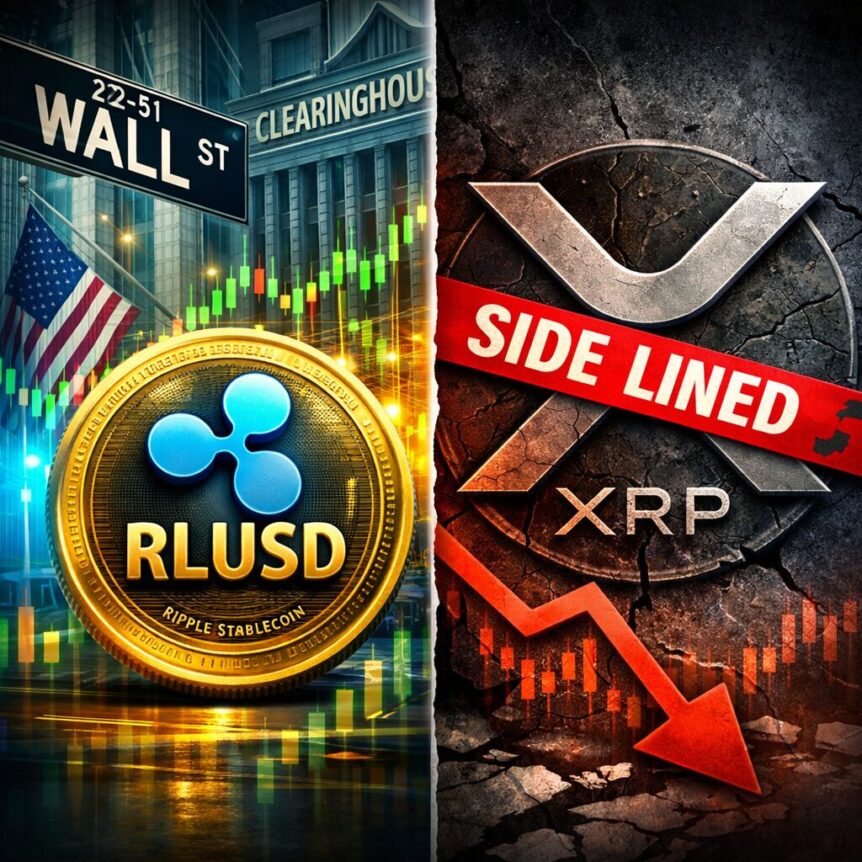
Ripple Prime expanded its institutional strategy after integrating with crypto platform EDX Markets. The partnership introduced unified access to spot trading and perpetual futures through centralized clearing and netting services. However, Ripple USD (RLUSD) became the main settlement asset, while XRP remained absent from the public-facing framework.
RLUSD Takes Center Stage in Institutional Expansion
Ripple Prime confirmed that the EDX integration supports institutional trading with centralized operational infrastructure. The framework combines spot markets and perpetual futures under one settlement structure. Consequently, RLUSD now serves as the preferred collateral and settlement asset within the system.
EDX Markets operates with backing from major financial firms, including Citadel Securities and Fidelity Investments. These firms continue supporting regulated digital assets with lower volatility exposure. Therefore, RLUSD fits institutional compliance demands more effectively than XRP.
Ripple structured RLUSD as a dollar-backed stablecoin for regulated financial environments. The asset provides predictable settlement conditions for clearing operations and margin management. Meanwhile, the company positioned the stablecoin as a bridge between traditional finance and digital asset infrastructure.
XRP Shifts Away from Public Settlement Narrative
The EDX announcement triggered debate across the XRP community and institutional trading circles. Market participants questioned XRP’s absence from the partnership’s settlement structure and marketing material. Consequently, discussions emerged about XRP’s long-term role inside Ripple’s institutional strategy.
https://x.com/mikehiggins/status/2057312097617543623?s=20
Evernorth Treasury, identified as a large institutional XRP holder, responded with a technical document addressing the issue. The report argued that RLUSD and XRP serve separate functions within Ripple’s broader ecosystem. Furthermore, the document described RLUSD as an external compliance-friendly layer for regulated finance.
The report also positioned XRP as a decentralized bridge asset operating beneath institutional settlement systems. According to the analysis, XRP continues to support instant asset conversion across different liquidity environments. However, the token no longer appears positioned as the primary public settlement product for Wall Street partnerships.
Ripple Separates Compliance Layer from Core Infrastructure
Ripple’s latest institutional direction reflects growing pressure from regulators and financial institutions across the digital asset sector. Stablecoins continue attracting interest because they reduce volatility risks during large-scale settlement operations. As a result, RLUSD now occupies a stronger position in Ripple’s enterprise-facing strategy.
RLUSD remains connected to banking reserves and compliance oversight through centralized issuer controls. Authorities can freeze wallets or enforce regulatory actions under existing financial rules. Therefore, traditional financial firms consider the stablecoin more compatible with institutional risk frameworks.
XRP operates differently because the token functions through a decentralized ledger infrastructure without centralized issuer intervention. Ripple now appears to separate its regulated financial products from its decentralized liquidity network. Consequently, RLUSD leads the institutional narrative, while XRP continues to support backend liquidity and cross-asset transfers.
Ripple Balances Institutional Demand and Crypto Infrastructure
Ripple has continued expanding its institutional business following years of regulatory disputes in the United States. The company increasingly focuses on payment infrastructure, tokenized finance, and regulated digital asset products. Meanwhile, RLUSD represents Ripple’s strongest push into traditional financial settlement markets.
The broader crypto industry also shows rising demand for stablecoin-based settlement systems among exchanges and institutional firms. Several trading platforms now prefer dollar-backed digital assets for collateral and operational efficiency. Therefore, Ripple’s RLUSD strategy aligns with the broader industry movement toward regulated digital dollar products.
XRP remains one of Ripple’s core ecosystem assets despite reduced visibility in institutional marketing campaigns. The token continues supporting liquidity operations across Ripple’s blockchain infrastructure and payment systems. However, RLUSD now dominates the company’s Wall Street-facing expansion strategy and institutional clearing narrative.
https://www.cryptobreaking.com/ripple-pushes-rlusd-into-wall/?utm_source=blogger%20&utm_medium=social_auto&utm_campaign=Ripple%20Pushes%20RLUSD%20Into%20Wall%20Street%20Clearing,%20XRP%20Sidelined%20
Comments
Post a Comment