
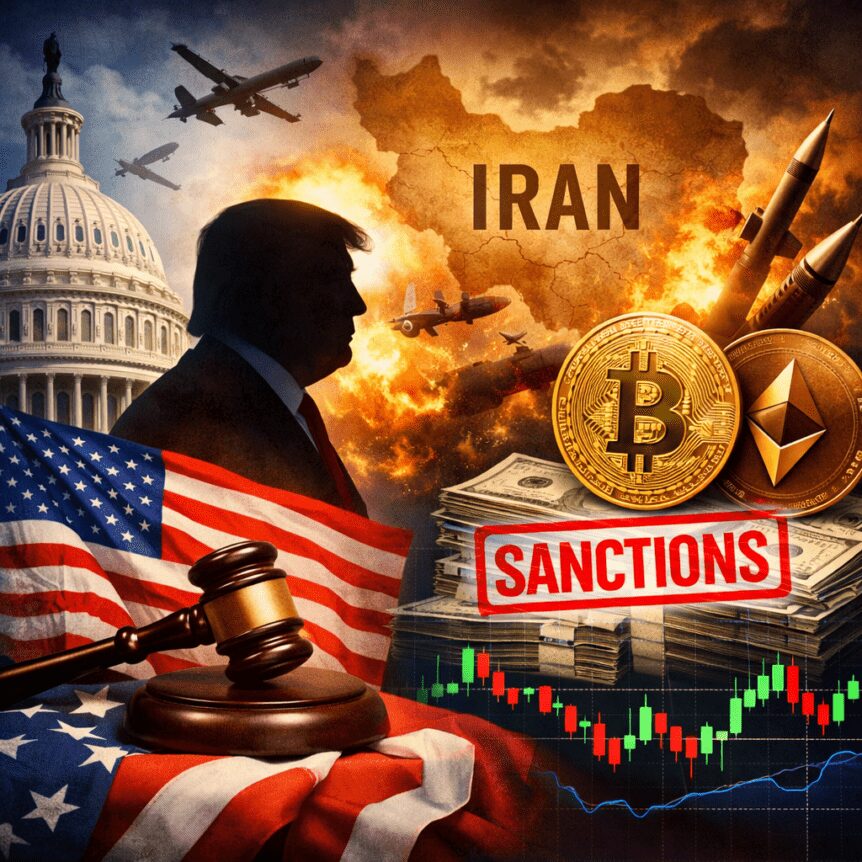
The US Senate moved to curb presidential war powers, advancing a resolution that could force President Trump to obtain congressional authorization before expanding military actions against Iran. The procedural measure passed 50-47, with four Republicans voting in favor, according to Reuters. The move underscores a long-running debate over who has the authority to commit U.S. forces, a dispute written into the constitutional balance between the executive and legislative branches.
The bill seeks to require congressional sign-off for any further U.S. troop deployments in or attacks on Iran, effectively challenging the administration’s unilateral discretion in a conflict that has endured for several months. While it signals legislative intent to reassert Congress’s war powers, the measure still faces substantial obstacles before becoming law. It must clear the full Senate and a Republican-led House of Representatives, and President Trump could veto the bill, potentially triggering a veto override that would demand two-thirds support in both chambers.
Key takeaways
- The Senate advanced a war-powers resolution related to Iran with a 50-47 vote; four Republicans sided with the Democrats, highlighting intraparty divisions on foreign-action authority.
- Even if approved by the Senate, the bill faces a steep climb through the Republican-controlled House and could be vetoed by the White House, with a two-thirds override unlikely without broad cross-party support.
- Supporters argue Congress should have a formal check on military engagement, while opponents warn that requiring authorization could hamper strategic responses to perceived Iran threats.
- Analysts see potential short-term crypto and risk-asset implications tied to the debate, especially if tensions de-escalate and oil prices ease; in the near term, Bitcoin traded around the mid- to upper-$70,000s.
The legal and political crossroads
At the heart of the vote is a constitutional question: who should authorize war? The measure’s sponsors frame it as a correction to what they view as an overreach by the executive branch in setting military policy. Democratic Senator Tim Kaine of Virginia, the bill’s sponsor, has framed the issue as a test of Congress’s constitutional prerogatives. On X, Kaine argued that Congress has the power to stop an “unwise conflict,” calling for the Senate to tell the President to halt the war. His message echoes calls from many lawmakers who contend that ongoing military commitments abroad should not proceed without legislative consensus.
Republican voices have cautioned against rigidity in wartime decision-making. Senator Bill Cassidy publicly voiced concerns that the administration and military leadership have left Congress insufficiently informed about the scope and aims of the operations in question, describing a lack of transparency around what has been termed an ongoing campaign in Iran.
What happens next—and why it matters for markets
Even with momentum in favor of the bill at this stage, passage through the Senate represents only part of the journey. The much larger political hurdle is the Republican-led House, where party leadership could resist moving the measure forward. A presidential veto remains a real possibility, and an override would require a two-thirds majority in both chambers—a threshold that is hard to obtain in the current partisan climate.
Beyond the political calculus, financial markets are watching the tug-of-war over war powers because it can influence risk sentiment and macro conditions. The ongoing Iran scenario has already fed macro headwinds—rising inflation, energy price volatility, and investor caution—contributing to a broader crypto market stagnation in recent months. Bitcoin and other digital assets have traded in a narrow range as traders weigh the geopolitical backdrop against the prospect of policy shifts and economic resilience.
HashKey Group senior researcher Tim Sun weighed in on the political signal this week, noting that the procedural advance “directly indicates that Trump is facing mounting domestic political pressure regarding his continued use of military force.” He suggested the move could act as a mild positive catalyst for risk assets, rather than a decisive driver, adding that the market’s attention remains anchored to macroeconomic shifts rather than a single congressional vote. If geopolitical tensions ease and oil prices retreat, Sun said, the valuation risk across risk assets could ease and support a broader crypto rebound.
In a separate assessment, Andri Fauzan Adziima, research lead at the Bitrue Research Institute, described the war-powers development as a bullish catalyst for crypto, potentially sparking a 6% to 10% relief rally in Bitcoin in the near term. Adziima pointed to prior episodes where de-escalation headlines quickly translated into price spikes for Bitcoin, estimating that a calmer geopolitical backdrop could relieve risk-off pressure and drive flows back into digital assets.
As of the latest notes, Bitcoin hovered around the mid- to upper-$70,000s, a level that observers see as a barometer for risk appetite in scales ranging from altcoins to large-cap tokens. The market’s sensitivity to the Iran dynamic reflects a broader pattern: crypto assets often move in relief rallies when headlines suggest reduced geopolitical risk or credible openings for economic normalization. Yet with the House and the White House still to weigh in, the immediate market trajectory remains uncertain.
Context for the current debate also includes the broader energy landscape. The conflict has been tied to shifts in energy markets—oil and gas prices can respond sharply to supply disruptions and geopolitical risk, with the Strait of Hormuz historically a critical chokepoint. Any near-term de-escalation could help temper energy-driven inflation pressures and, by extension, reduce the risk premium on high‑beta assets such as Bitcoin and altcoins.
Reuters’ reporting on the Senate vote anchors the procedural development in a concrete political process, while cryptocurrency researchers frame the potential market response in terms of risk-on sentiment and macroeconomic alignment. The unfolding narrative thus sits at the intersection of constitutional governance, U.S. foreign policy, and a volatile digital-asset market that remains highly sensitive to global risk signals.
Looking ahead, watchers should monitor whether the resolution gains traction in the Senate’s full vote and whether the House sponsors align with or resist the move. A veto scenario could still prevail, but even a protracted negotiation over war powers would shape investor expectations and could influence both traditional markets and crypto pricing in the months ahead. The next few legislative steps—and any corresponding shifts in oil prices or inflation expectations—will help determine whether crypto markets find a clearer path toward renewed risk-taking or remain tethered to ongoing macro uncertainties.
For readers tracking the implications of policy on prices and risk appetite, the key question remains: will Congress reassert its authority to check military action, and how swiftly could any resulting policy changes influence liquidity, capital flows, and the appetite for higher-risk assets like Bitcoin in the current economic climate?
Keep an eye on the coming votes and any executive responses, as markets will likely calibrate to the most immediate signals about how the U.S. intends to balance deterrence, diplomatic engagement, and domestic political dynamics in the months ahead.
https://www.cryptobreaking.com/senate-curbs-trump-era-iran/?utm_source=blogger%20&utm_medium=social_auto&utm_campaign=Senate%20curbs%20Trump-era%20Iran%20war%20powers;%20crypto%20markets%20weigh%20sanctions%20
Comments
Post a Comment