
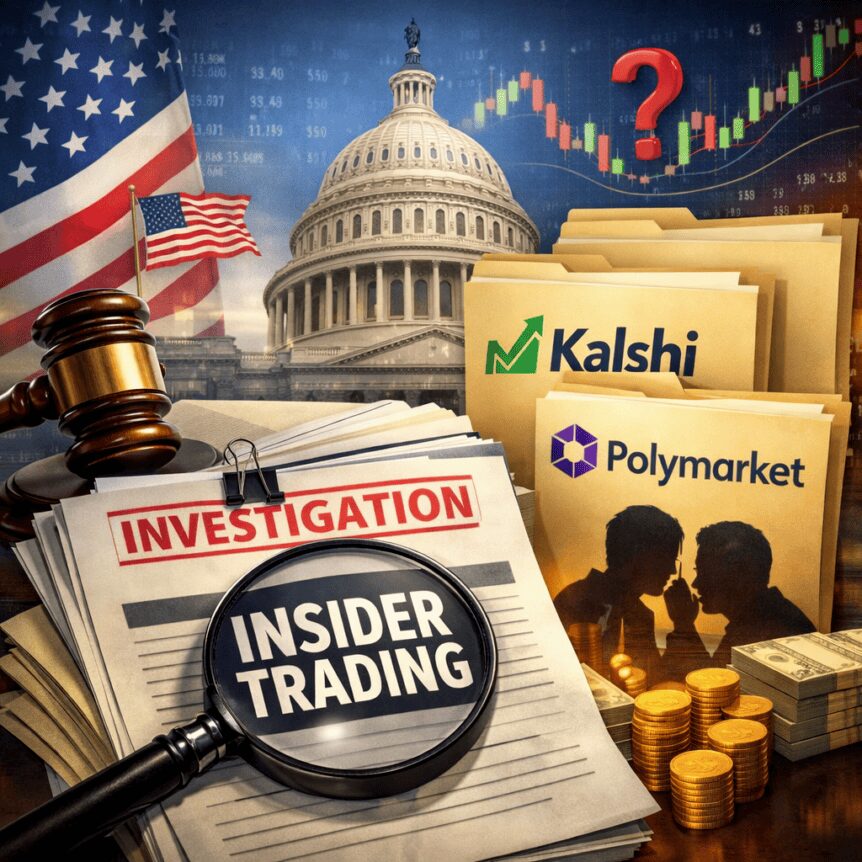
The U.S. Congress is intensifying its scrutiny of prediction-market platforms Polymarket and Kalshi, demanding internal records to understand how each platform handles insider trading. The move comes after public disclosures and media reports suggested traders might be using nonpublic information tied to government actions to place bets.
In a post on X, Rep. James Comer, chair of the House Oversight and Reform Committee, said he had sent letters to Polymarket CEO Shayne Coplan and Kalshi CEO Tarek Mansour, requesting internal documents that detail the firms’ procedures for detecting and mitigating insider trading. Comer warned that lawmakers are concerned about elected officials leveraging “basic insider knowledge” to profit from government actions, a practice he described as unacceptable.
Comer cited reports of more than 80 suspicious trades that appeared to be timed ahead of Iran-related military operations, a finding he linked to concerns that politicians and other officials with access to nonpublic information could place favorable bets and cash out. The reference traces to a New York Times article published May 13, which detailed bets surrounding Israel’s actions in the Iran conflict, a Trump ceasefire announcement, and other event contracts tied to U.S. politics. The Times report underscored how market activity can reflect sensitive real-world developments before they unfold.
Both Polymarket and Kalshi have faced ongoing scrutiny over insider-trading risks. Polymarket said in March that it had updated its approach to potential insider trading on the platform, while Kalshi announced in April that it had banned three U.S. politicians from wagering on their own races. The developments come as investors and users weigh how these markets should be regulated and safeguarded against abuse. Cointelegraph reached out to Polymarket and Kalshi for comment but did not receive an immediate response.
Key takeaways
- House Oversight Committee Chair James Comer says he has sent formal requests to Polymarket and Kalshi for internal records on handling insider trading, signaling intensified congressional oversight.
- A New York Times report cited by Comer details at least 80 suspicious trades timed around Iran-related military actions and other political events, highlighting potential insider-fueled profits.
- Polymarket and Kalshi have each introduced policy responses—Polymarket updating its approach to insider trading and Kalshi banning several U.S. politicians from certain bets—indicating industry reform under pressure.
- Separately, a U.S. Justice Department indictment connects a military figure to profits from Polymarket contracts tied to Maduro’s capture, illustrating potential national-security risks linked to these markets.
Congressional inquiry and industry response
The letters from Rep. Comer reflect a broader concern in Congress about whether prediction markets—designed to aggregate information and forecast outcomes—could be hijacked by insiders with government access. Comer’s public statements emphasize that lawmakers view insider trading as a threat to market integrity and a potential conflict of interest for public officials.
Beyond the committee’s actions, the media narrative points to concrete episodes in which insiders might have exploited timely, sensitive information. The Times report described bets around Israel’s military actions against Iran, a ceasefire announcement from the U.S. government, and other events that could plausibly be influenced by nonpublic information. While such events attract broad attention, the question remains: do current platform safeguards suffice to deter misuse, and how should regulators weigh further requirements?
Polymarket has acknowledged certain limitations and responded by updating its governance around potential insider trading. Kalshi has taken a different route by restricting participation of specific U.S. officials in bets related to their roles, action that signals a willingness to enforce stricter rules even as it navigates regulatory expectations for-compliant markets. As these platforms adjust, investors and users should monitor not only policy shifts but also how responsive the platforms are to inquiries from Congress and the public.
Linkage to broader legal cases and implications for users
Meanwhile, a parallel case involving Polymarket intersects with national security considerations. In April, the U.S. Department of Justice announced a criminal indictment against Master Sergeant Gannon Ken Van Dyke, a servicemember involved in the operation to capture Venezuelan President Nicolás Maduro. Prosecutors alleged that Van Dyke used Polymarket event contracts tied to Maduro’s capture to profit by more than $400,000 by relying on classified information. Van Dyke has pleaded not guilty to charges that include commodities fraud and unlawful use of confidential government information for personal gain. He was released on $250,000 bail and restricted to travel among North Carolina, California, and New York while the case proceeds. The charges and the related market activity underscore how insiders in and around government actions can intersect with digital prediction markets in ways that raise both legal and ethical questions for participants, platforms, and observers alike.
These developments come as the market for event-based contracts continues to evolve, with ongoing debates about what constitutes acceptable use, how to detect manipulation, and what safeguards are necessary to protect users and the integrity of the markets. The DoJ matter, in particular, highlights a potential warning sign for participants: even intra-government or government-linked actors may see opportunities in these markets, complicating the assessment of risk and reward for ordinary users.
What to watch next
As Congress seeks more transparency, expect continued inquiries into how Kalshi and Polymarket monitor for insider trading, what internal controls exist, and what remedies are in place when anomalies are detected. Watch for any formal regulatory guidance or updated compliance requirements that emerge from both congressional action and platform responses. The interplay between national-security concerns, market integrity, and user trust will shape how these platforms evolve and how investors approach prediction-market participation in the coming months.
The evolving story — including any formal responses from Polymarket and Kalshi and the progression of the Van Dyke case — will illuminate whether the market’s promise as a tool for price discovery and information aggregation can be preserved in a landscape increasingly scrutinized by policymakers and law enforcement. For readers, the key remains: how robust are the safeguards, and who bears the burden when safeguards fail?
https://www.cryptobreaking.com/us-house-probes-kalshi-and/?utm_source=blogger%20&utm_medium=social_auto&utm_campaign=US%20House%20Probes%20Kalshi%20and%20Polymarket%20for%20Insider%20Trading%20
Comments
Post a Comment