
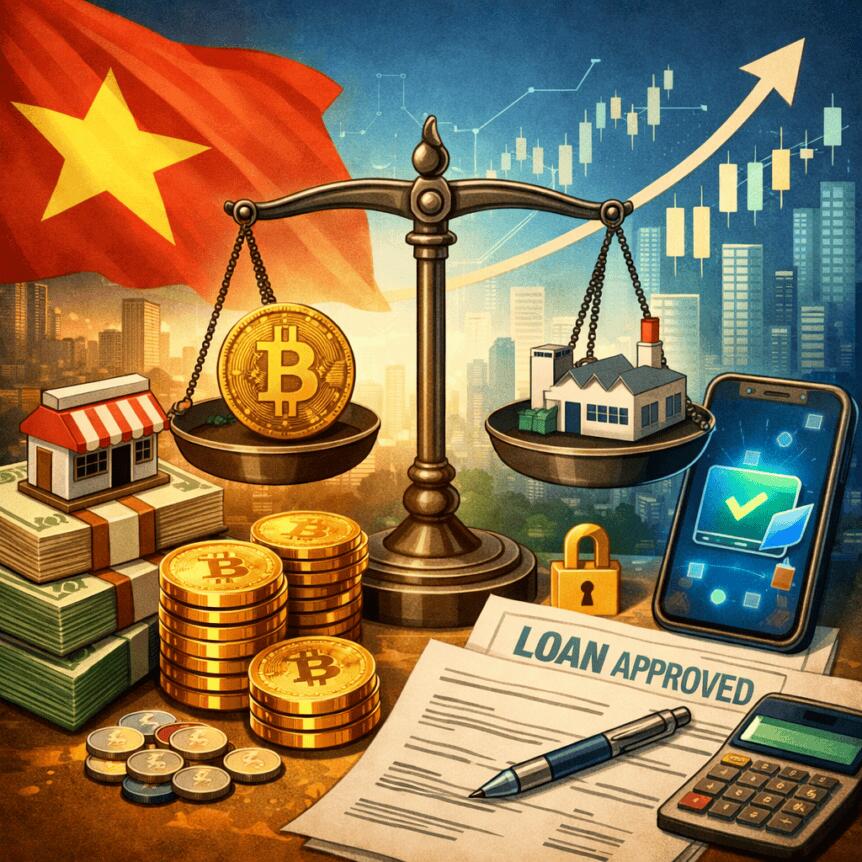
Vietnam’s Ministry of Finance is pushing a policy shift that could reshape credit access for small and medium-sized enterprises. A draft revision of the Law on Support for SMEs proposes allowing SMEs to use digital assets, virtual assets and intellectual property as collateral for bank loans. The proposal is open for public consultation, according to a Friday report from Vietnam News. Under the framework, businesses could borrow against future-formed assets, rights in property, intangible assets and digital or virtual assets.
Smaller businesses, including household enterprises, make up more than 98% of Vietnam’s business landscape, yet they receive only about 20% of total bank credit. The Ministry attributes the gap to a lack of eligible collateral, limited financial transparency and the relatively small capital bases of many SMEs. The new approach would acknowledge that valuable software, patents and other intellectual property can have real borrowing power, even when there are few physical assets to pledge. If adopted, the policy could unlock access to formal lending for a large swath of startups and tech firms that historically found themselves locked out of traditional credit channels.
Related: Bithumb enters Vietnam crypto license race with SSI Digital deal
Key takeaways
- SMEs could be allowed to pledge digital assets, virtual assets and intellectual property as collateral, widening access to bank credit as part of an SME law revision open for public consultation (per Vietnam News).
- The draft signals a shift toward lending decisions based on credit ratings, business plans, cash flows and market potential, not solely on fixed assets.
- Incentives for green and sustainable enterprises are included, such as credit guarantees, concessional financing, and support for ESG reporting and compliance.
- Vietnam is advancing toward a regulated crypto market, with a licensing pathway opened earlier this year and a potential launch window in Q3 2026, according to Cointelegraph.
- Chainalysis ranks Vietnam among the world’s most active crypto markets, placing it fourth in the 2025 Global Crypto Adoption Index behind India, the United States and Pakistan.
A broad shift in collateral rules
The core idea behind the draft revision is to furnish banks and other lending institutions with a broader set of assets that can back loans. By recognizing digital and virtual assets, as well as intellectual property, as legitimate collateral, the framework would align credit access with the modern asset economy—a crucial development for many tech-driven firms that rely on software platforms, patents and other intangible assets rather than land or heavy equipment.
The concept of “future-formed” assets—rights to assets that do not yet exist or are not yet monetized—appears central to the proposal. In practical terms, a startup with valuable IP or a robust stream of software-based revenue could, in theory, secure financing based on the anticipated value of its intangible holdings and projected cash flows. While details remain to be hammered out through consultation, officials describe a framework aimed at expanding the universe of eligible collateral beyond traditional physical assets.
As policymakers weigh this collateral expansion, they are balancing the goals of broader financial inclusion with prudent risk management for lenders. The SME sector’s historically limited collateral base has hindered credit access, particularly for technology-centric firms that may be asset-light but revenue-rich. If enacted, the policy could reframe the risk calculus for banks by integrating intangible asset valuations, governance disclosures and IP portfolios into standard credit assessments.
Credit decisions move beyond hard assets
Beyond collateral reform, the draft envisions a more nuanced approach to credit underwriting. Lenders would be encouraged to consider credit ratings, business plans, cash flows and the overall market potential of applicants. In other words, the bill seeks to formalize a more holistic evaluation of a borrower’s viability—especially for startups and knowledge-intensive firms that otherwise struggle to secure conventional financing due to a lack of tangible assets.
Supporters say the shift could help align Vietnam’s SME financing with contemporary risk analytics, leveraging data-driven assessments of cash generation, growth trajectories and competitive positioning. The emphasis on business plans and cash flow forecasts could also spur better financial discipline among smaller firms, as lenders demand clearer roadmaps and credible projections to accompany collateral in any new lending arrangements.
Officials stress that lending should remain anchored in responsible risk management. While expanding eligible collateral may reduce some barriers, lenders would still be expected to conduct due diligence and to price risk appropriately. The outcome could be more loans flowing to promising tech ventures and digital innovators that have demonstrated potential but lack hard assets to pledge, provided they meet the new underwriting criteria.
Incentives for green finance and ESG compliance
The draft also signals a broader policy push toward environmental sustainability and responsible financing. It outlines preferences for green and circular-economy projects, with potential access to credit guarantees, concessional financing and interest-rate support for eligible initiatives. Tax incentives and enhanced support for ESG disclosure and reporting are also included, aimed at lowering the cost of capital for sustainable ventures and encouraging transparent, standards-based reporting by borrowers.
These incentives align with global policy trends that increasingly link credit access to environmental, social and governance (ESG) criteria. For Vietnamese SMEs, that could translate into more affordable loans for energy efficiency upgrades, waste-reduction investments and other sustainability-focused activities. For lenders, ESG-friendly financing could come with clearer metrics and potential risk mitigants that help align capital allocation with long-term value creation.
Regulated market on the horizon
The policy mention of broader capital-market development parallels a parallel, separate track on crypto regulation in Vietnam. Cointelegraph has reported that Vietnam could see its first regulated crypto market activity as early as the third quarter of 2026, according to remarks from Deputy Minister of Finance Nguyen Duc Chi at the Digital Trust in Finance 2026 forum. The regulatory landscape has been evolving since regulators opened a licensing pathway for domestic crypto trading platforms earlier this year, with five companies—some affiliated with major banks such as Techcombank, VPBank and LPBank—advancing through an initial qualification stage to operate Vietnam’s first regulated exchange.
As the licensing process unfolds, policymakers are balancing domestic innovation with consumer protection and financial stability. The emergence of a formal exchange regime could provide a regulated on-ramp for residents and institutions seeking regulated access to digital assets, while also subjecting market participants to clearer standards and oversight. The juxtaposition of collateral reform for SMEs and the push toward a licensed exchange market underscores Vietnam’s broader ambition: to integrate digital assets and financial technology into a more formal, bank-assisted economy.
For market participants, the timing and scope of these developments will matter. A regulated market would offer more transparency, standardization and recourse for investors, potentially supporting broader adoption across consumers, startups and corporate treasuries. Yet questions remain about valuation frameworks for intangible assets, the calibration of risk in asset-light lending, and how such a regime would interact with international trading and cross-border flows. Observers will be watching how banks and non-bank lenders adapt to these shifts and how the regulatory framework evolves in response to market realities.
Adoption backdrop: Vietnam as a crypto hub
Vietnam’s crypto footprint has grown rapidly in recent years. Chainalysis ranks Vietnam among the most active crypto markets globally, placing it fourth in the 2025 Global Crypto Adoption Index, behind India, the United States and Pakistan. The ranking reflects a combination of on-chain activity, local usage, and the breadth of crypto-related services and infrastructure within the country. The new collateral and lending proposals arrive against this backdrop of heightened activity and policy experimentation, signaling a government intent to align financial integration with digital-asset innovation.
In broader market context, Vietnam’s regulatory and policy maneuvers come as domestic exchanges and crypto firms navigate licensing pathways and cross-border relationships. Earlier coverage highlighted ongoing regulatory developments and enforcement activity in the Vietnamese crypto ecosystem, underscoring a cautious but increasingly open stance toward digital-asset services when conducted within a clear regulatory framework.
As authorities solicit public input on the SME collateral framework and the crypto-regulatory trajectory continues to unfold, investors, lenders and startups alike will be keenly watching how the two strands intersect. The outcome could redefine how Vietnamese firms access credit and how digital assets are treated within formal financial channels, potentially shaping Vietnam’s role in the wider Southeast Asian crypto landscape.
Readers should monitor official updates to the SME law proposal and the evolving crypto licensing regime. The specifics of asset valuation, oversight mechanisms, and the exact scope of eligible intangible assets will determine how far these reforms go in practice and what they mean for corporate treasuries, fintechs and prospective lenders in the near term.
https://www.cryptobreaking.com/vietnam-weighs-digital-assets-as/?utm_source=blogger%20&utm_medium=social_auto&utm_campaign=Vietnam%20Weighs%20Digital%20Assets%20as%20Collateral%20for%20SME%20Loans%20
Comments
Post a Comment