
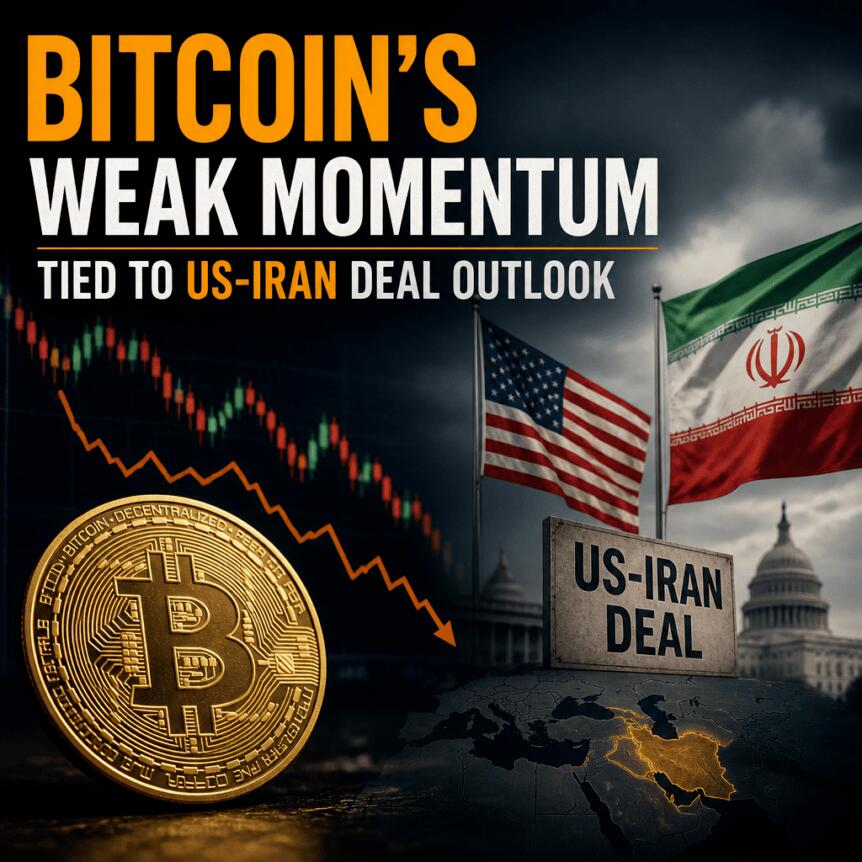
Bitcoin’s bounce appears to be running into an uncomfortable reality: despite reclaiming key price levels, traders are not seeing the on-chain and participation signals that typically accompany a durable recovery. Analysts argue that the next leg of price action may hinge less on internal market mechanics—and more on the outcome of a fast-moving U.S.-Iran détente.
According to LVRG Research director Nick Ruck, Bitcoin recently moved back toward $67,000, but “momentum remains weak, with declining volume and stagnant on-chain metrics indicating that the recovery lacks conviction and could quickly fade.” That view places heightened weight on geopolitical headlines, particularly if the proposed U.S.-Iran peace deal unravels.
Key takeaways
- Bitcoin’s recovery toward $67,000 is being tempered by indicators that suggest weak participation and stalled conviction.
- LVRG Research says falling volume and flat on-chain metrics raise the risk that the rebound could fade quickly.
- Swissblock reports that both price momentum and on-balance volume (OBV) remain in a bear-market regime.
- If the U.S.-Iran peace effort breaks down, analysts warn Bitcoin could face a volatility-driven “risk-off” path.
Geopolitics and the fragility of the current bounce
Bitcoin has been trading in closer alignment with broader market mood, a dynamic that analysts often associate with institutional positioning and macro-driven risk sentiment. The immediate catalyst for the latest lift was a political signal from Washington: U.S. President Donald Trump said the U.S. had “completed a peace deal” with Iran to end months of conflict, with expectations that the agreement would be signed on Friday.
While the terms remain largely unknown, Trump indicated the deal would involve opening the Strait of Hormuz and lifting the U.S. blockade of the Strait and of Iran’s ports. After that, the two sides would begin 60 days of negotiations on Iran’s nuclear program and potential sanctions relief, the Associated Press reported earlier this week.
For crypto investors, the key issue is that such developments can shift quickly from “risk-reducing” to “risk-repricing.” Ruck cautioned that if the peace deal breaks down, the likely return of geopolitical instability—and potential oil-related shocks—could put Bitcoin on a more turbulent course.
“It may initially find bids as a hedge asset before broader risk-off flows push it toward key support zones, underscoring how macro and geopolitical catalysts continue to dominate crypto price action.”
On-chain and participation signals: momentum hasn’t turned
Price alone is not the full story. Swissblock, in a post shared on Monday, said Bitcoin’s price momentum and on-balance volume (OBV) remain in what it described as a “weak momentum and participation regime.”
Swissblock tied the current setup to a pattern often observed in bear markets: momentum tends to weaken first, then OBV contracts, and price breaks lower. In other words, the market can bounce briefly, but the underlying flow indicators may lag—leaving traders vulnerable to renewed weakness.
In the data Swissblock cited, momentum remains negative and OBV is at levels described as among the lowest seen in years. Specifically, Swissblock pointed to momentum at -1, reflecting weak movement strength, while OBV sat at approximately -1.7 million. Even with Bitcoin recovering back above $67,000 following its decline to below $60,000 on June 6, both metrics were still not showing the kind of confirmation that typically strengthens confidence in a reversal.
Swissblock argued that the more convincing signal in historical bear-market recoveries arrives only when both momentum and OBV flip back into a positive regime. Until then, it said, “the risk of another retest of the lows remains on the table.”
What to watch: whether the macro tailwind becomes a real trend
Bitcoin’s latest rebound has also shown signs of hesitation. After the asset reclaimed $67,000 on Monday, it reportedly began to retreat, with early Tuesday trading seeing it slip below $66,000 from an intraday high.
That pullback matters because it aligns with the broader interpretation from both research and flow metrics: the market may be reacting to macro headlines, but conviction is limited. When momentum and participation do not improve at the same time, rebounds can be uneven—pushing traders to treat “breakout” attempts as potentially temporary until the indicators confirm.
For readers tracking risk conditions, the macro calendar implied by the U.S.-Iran framework is the central wildcard. The reported plan—opening the Strait of Hormuz and beginning a 60-day negotiation window—introduces multiple points where sentiment can shift. If negotiations progress as expected, Bitcoin may continue to benefit from easing risk perceptions. If they stall or face renewed escalation, Swissblock’s bear-market flow logic suggests weakness could return quickly.
Closing perspective
Bitcoin appears to be trading with geopolitical momentum for now, but analysts emphasize that the market still lacks the participation and on-chain confirmation that usually underpins sustained recoveries. The next few sessions—and the direction of the U.S.-Iran talks—are likely to determine whether this is the start of a stronger turn or a brief relief rally.
https://www.cryptobreaking.com/bitcoins-weak-momentum-tied-to/?utm_source=blogger%20&utm_medium=social_auto&utm_campaign=Bitcoin’s%20Weak%20Momentum%20Tied%20to%20US-Iran%20Deal%20Outlook%20
Comments
Post a Comment