
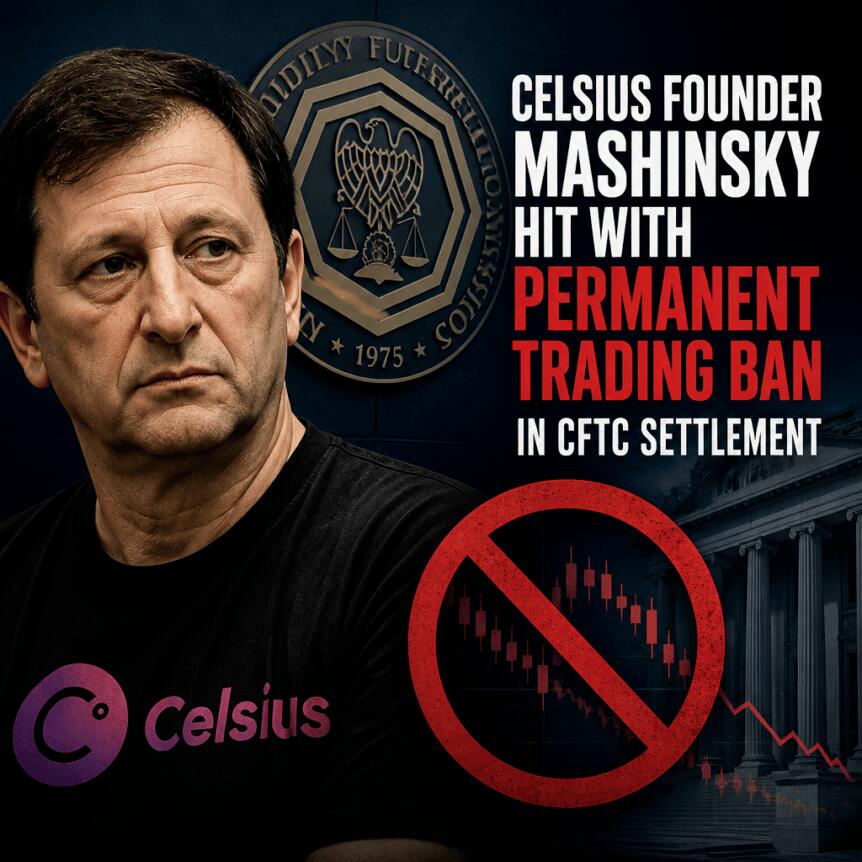
The US Commodity Futures Trading Commission (CFTC) has brought its case against Alex Mashinsky to a close, issuing an order that permanently bars the Celsius Network founder from trading in markets the agency oversees. The decision also prevents him from ever registering with the CFTC and ends the enforcement action the CFTC initiated in 2023.
In a statement issued Thursday, the CFTC said the resolution was formalized through a court consent order. The regulator stated that Mashinsky and Celsius “engaged in a scheme to defraud hundreds of thousands of customers” by allegedly misrepresenting the safety, profitability, and regulatory compliance of Celsius’ digital asset-based finance platform. The order means Mashinsky will be unable to participate in US commodities, futures, and derivatives trading subject to CFTC jurisdiction.
Key takeaways
- The CFTC permanently bars Alex Mashinsky from trading US commodities, futures, and derivatives regulated by the agency.
- The settlement also prohibits him from ever registering with the CFTC, effectively closing off a key regulatory pathway.
- The order ends the CFTC enforcement action launched in 2023 and resolves one of the last CFTC matters still pending against him.
- Mashinsky remains in ongoing legal proceedings, including a separate SEC case tied to Celsius token and business disclosures.
What the CFTC order changes for Mashinsky
The CFTC’s consent resolution is significant because it does more than stop a single activity. By permanently banning Mashinsky from trading in CFTC-regulated markets, the regulator removes his ability to engage in a wide range of derivatives and commodities-linked conduct that can intersect with crypto markets.
The agency also said the order bars him from registering with the CFTC in the future. While the practical meaning of registration requirements can vary by role, the prohibition signals the CFTC intends to permanently restrict Mashinsky’s involvement in regulated market activities tied to the commodities framework.
The CFTC’s Thursday announcement closes the book on an enforcement action that began in 2023. The regulator characterized the alleged misconduct as a broad scheme impacting a large customer base, rather than a narrow dispute about a particular instrument or disclosure.
Why the case matters for crypto regulation
This development lands at a time when the US regulatory line for crypto is increasingly shaped by distinctions between commodities and securities. Earlier in 2024, the CFTC and the US Securities and Exchange Commission (SEC) issued guidance stating they viewed most major cryptocurrencies as commodities, a position that has influenced how different parts of the crypto market are supervised.
Because Mashinsky’s ban applies to commodities-related trading, it reinforces how enforcement built on commodities jurisdiction can still lead to severe restrictions—even after other agencies’ actions. In Mashinsky’s situation, the CFTC is effectively adding another layer to a regulatory record that already limits him across multiple financial and crypto-related activities.
The CFTC also noted that the resolution marks the end of its first case against a digital asset lending platform. For market participants, that matters because lending firms have historically occupied a gray area between token trading, broker-like activities, custody-adjacent services, and interest-bearing products—areas regulators have targeted through different legal theories.
Sentencing and the alleged Celsius conduct
Separate from the CFTC settlement, Mashinsky was sentenced to 12 years in prison in May 2025 after pleading guilty to securities and commodities fraud. The plea involved allegations that he misled Celsius customers about the safety of the platform before it collapsed during the 2022 market downturn.
The CFTC’s complaint alleged that Celsius received roughly $20 billion in funds and made risky investments to meet the returns it promised. Although the CFTC’s Thursday statement focuses on the consent order’s terms, those allegations provide the backdrop for why the agency viewed the conduct as a customer-facing scheme tied to regulatory obligations and market risk.
For investors and users, Celsius remains a cautionary reference point in how yield products can be marketed and structured—and how the failure of underlying liquidity and risk controls can collide with regulatory scrutiny after a drawdown.
Other legal pressure still ongoing
The CFTC settlement does not end all of Mashinsky’s legal challenges. He is already subject to a permanent work ban connected to a Federal Trade Commission complaint filed earlier, which barred him from working with any product or service that can be used to “deposit, exchange, invest, or withdraw assets” after a settlement reported in April.
Meanwhile, the SEC’s case filed in July 2023 remains active. The SEC accused Mashinsky of making an unregistered securities offering, misrepresenting Celsius’ business and safety, and manipulating the price of Celsius (CEL) token. In late May, the SEC told a federal court that it had “engaged in substantive settlement discussions” with Mashinsky, but that no agreement had been reached. The court granted the regulators another 60 days to continue discussions.
Mashinsky has also challenged the criminal sentence. On May 26, he filed a motion seeking to vacate the 12-year term, alleging ineffective assistance of counsel, that evidence was tainted by authorities’ misconduct, and that Sam Bankman-Fried—described in the filing as the convicted fraudster and former FTX co-founder—was responsible for CEL token manipulation. A court ordered prosecutors to respond to the motion by mid-August.
Together, these proceedings show a complex enforcement footprint across multiple regulators and case tracks: CFTC sanctions closing commodities-related activity; SEC litigation over token and securities-related claims; and continued criminal review of the sentence.
As the SEC’s settlement discussions progress and the court schedules responses on Mashinsky’s bid to vacate his sentence, market participants should watch whether any resolution narrows the scope of pending claims, and what—if anything—changes in how regulators treat crypto-linked lending, customer-yield promotions, and token price conduct under different legal frameworks.
https://www.cryptobreaking.com/celsius-founder-mashinsky-hit-with/?utm_source=blogger%20&utm_medium=social_auto&utm_campaign=Celsius%20Founder%20Mashinsky%20Hit%20With%20Permanent%20Trading%20Ban%20in%20CFTC%20Settlement%20
Comments
Post a Comment