
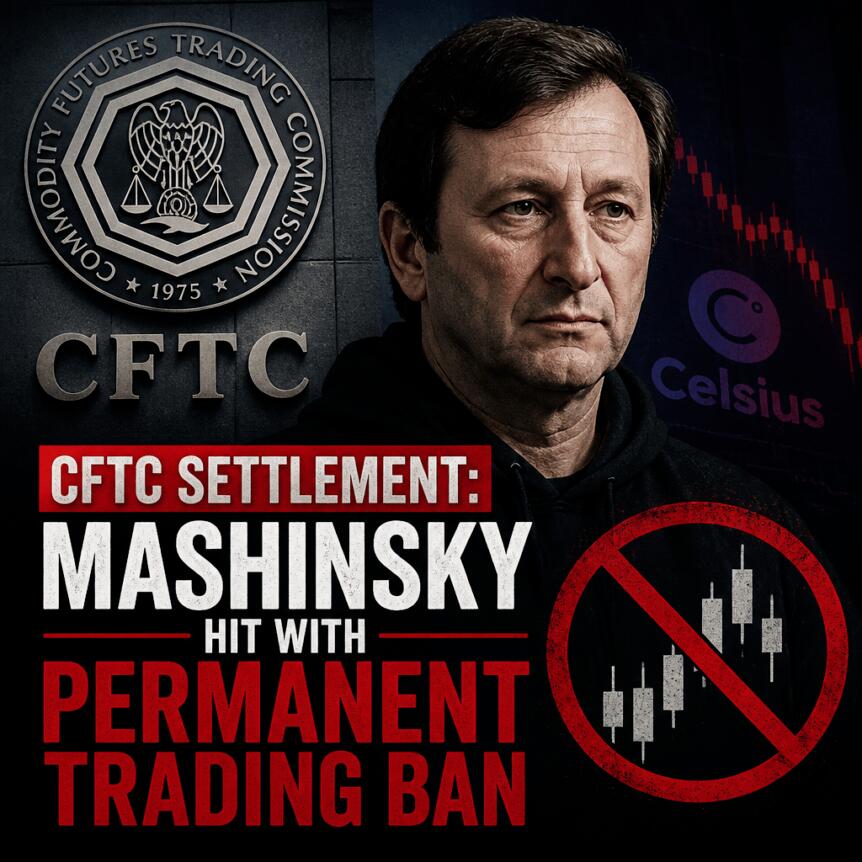
The U.S. Commodity Futures Trading Commission (CFTC) has concluded its remaining enforcement matter against Alex Mashinsky, the founder of failed crypto lender Celsius Network, permanently banning him from trading in markets overseen by the CFTC. The regulator said the action was resolved through a court consent order.
According to the CFTC, the settlement also prevents Mashinsky from ever registering with the agency, bringing to a close a case the CFTC first filed in 2023. The development is significant for compliance stakeholders because it further delineates enforcement risk for individuals associated with crypto lending platforms that marketed financial returns and interacted with digital-asset markets.
Key takeaways
- The CFTC permanently bars Alex Mashinsky from trading CFTC-regulated commodities, futures, and derivatives.
- A consent order also prohibits Mashinsky from ever registering with the CFTC, effectively ending the CFTC enforcement action filed in 2023.
- The regulator stated it viewed the conduct as involving misrepresentations about Celsius’ safety, profitability, and regulatory compliance.
- The ban follows Mashinsky’s criminal conviction and sentencing in May 2025 for fraud tied to Celsius’ collapse.
- The outcome adds to prior U.S. regulatory restrictions, including an FTC settlement and ongoing civil litigation by the SEC.
CFTC consent order ends 2023 enforcement case
In its announcement, the CFTC said the matter was resolved by court consent order. The order permanently bars Mashinsky from trading in any market the CFTC regulates, and it also prohibits him from registering with the agency in the future.
The CFTC characterized the alleged conduct as a scheme to defraud customers by misrepresenting key features of Celsius’ digital asset-based finance platform. In particular, the regulator said the alleged misstatements related to the safety of customer funds, the platform’s profitability, and its regulatory compliance.
For institutional observers, the practical effect is straightforward: even where criminal or civil outcomes are still unfolding, CFTC-specific trading bans can materially constrain an individual’s ability to participate in regulated derivatives and commodities markets. Such orders often carry compliance implications for counterparties, background checks, and internal controls used by regulated entities.
Broader market-structure implications for digital assets
The CFTC’s action arrives amid a U.S. regulatory landscape in which the classification of crypto assets affects which agencies have primary oversight. Earlier this year, the CFTC and the U.S. Securities and Exchange Commission (SEC) issued guidance indicating that they considered most major cryptocurrencies to be commodities. As a result, conduct tied to certain digital assets has been repeatedly framed through the lens of commodities and derivatives regulation.
While the consent order is case-specific and does not itself reclassify assets, it underscores how enforcement authorities may apply commodity and derivatives rules to crypto-related financial services. For compliance teams, the emphasis is less on asset marketing language alone and more on whether authorities view a platform’s conduct as misleading or fraudulent in ways that intersect with regulated markets.
The CFTC also described the settlement as ending its first case against a digital asset lending platform, and as closing one of the last remaining regulatory actions pending against Mashinsky. That positioning matters: it suggests authorities are using the remaining enforcement pathways to remove recidivism risk by restricting access to regulated trading venues and regulatory processes.
Criminal conviction, prior FTC restrictions, and ongoing SEC case
The CFTC’s ban follows Mashinsky’s criminal sentencing in May 2025. Authorities had prosecuted him in connection with misleading Celsius customers and the platform’s subsequent collapse in 2022. The CFTC said its allegations included that Celsius received about $20 billion in customer funds and made risky investments to meet the returns it promised.
In addition to the CFTC’s actions, Mashinsky has already faced broad restrictions arising from the Federal Trade Commission (FTC). According to the article’s account, Mashinsky settled an FTC complaint in April, resulting in a permanent bar on working with any product or service that can be used to “deposit, exchange, invest, or withdraw assets.”
Separately, the SEC’s case against Mashinsky remains pending. The SEC filed charges in July 2023 alleging, among other issues, that he participated in an unregistered securities offering, misrepresented Celsius’ business and safety, and manipulated the price of Celsius’ CEL token. As described in the earlier court activity, the SEC told a federal court in late May that it had engaged in substantive settlement discussions, but that no agreement had been reached. The court granted the regulators an additional 60 days to continue negotiations.
There is also an active post-conviction dispute. Mashinsky filed a motion in late May seeking to vacate his 12-year sentence, claiming ineffective assistance of counsel and alleging evidence was tainted by misconduct. He also argued that another individual, identified as Sam Bankman-Fried, was responsible for token-related manipulation. A court ordered prosecutors to respond to that motion by mid-August.
For regulated firms and compliance officers, this procedural layering—criminal conviction, FTC restrictions, CFTC ban, and SEC litigation—highlights the need to treat enforcement outcomes as evolving risk signals rather than isolated events. Each forum has distinct legal standards, remedies, and enforcement theories, and organizations should map those differences to onboarding policies, monitoring frameworks, and vendor due diligence.
Why the ban matters for compliance and enforcement readiness
Although the CFTC consent order is limited to Mashinsky, the compliance implications extend beyond one individual. Permanent trading bans can affect:
- Counterparty risk management: regulated firms often screen principals and beneficial owners against public enforcement orders and permanent bars.
- Programmatic controls: entities managing trading access—especially those interfacing with futures or derivatives—must ensure restricted persons cannot participate directly or indirectly.
- Regulatory reporting and attestations: compliance statements to counterparties or regulators may require updated disclosures when enforcement status changes.
- Cross-border enforcement alignment: where platforms operate internationally, overlapping U.S. restrictions can intersect with local licensing conditions and suitability requirements.
At a policy level, the case also reflects how U.S. regulators have been using civil enforcement and criminal prosecutions to address conduct that authorities characterize as fraud and customer deception, particularly in high-yield or “returns” models offered through crypto infrastructure. The Celsius collapse remains a reference point for regulators seeking to prevent similar structures from operating without adequate investor protections.
However, uncertainty remains where other proceedings are still active. Even with the CFTC matter closed, the SEC case and post-conviction motion could change the overall legal landscape for Mashinsky, including how allegations are ultimately resolved and what additional sanctions might follow. Until those processes conclude, compliance frameworks should account for both current restrictions and potential future developments.
Closing perspective
The CFTC’s permanent trading and registration ban closes a significant enforcement chapter tied to Celsius’ founder, but it does not end all legal exposure. Market participants and compliance teams should monitor the status of the SEC litigation and the outcome of the post-sentencing motion, as these proceedings may further shape the regulatory and legal record relevant to crypto lending, customer disclosures, and the enforcement posture of U.S. agencies.
https://www.cryptobreaking.com/cftc-settlement-mashinsky-hit-with/?utm_source=blogger%20&utm_medium=social_auto&utm_campaign=CFTC%20Settlement:%20Mashinsky%20Hit%20With%20Permanent%20Trading%20Ban%20
Comments
Post a Comment