
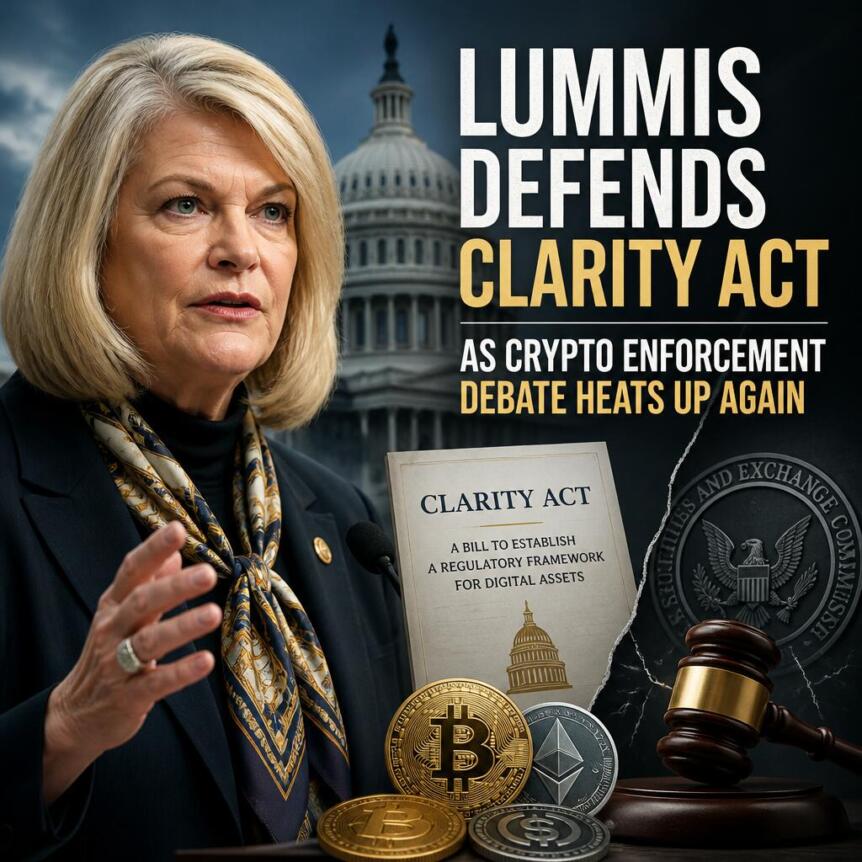
Senator Cynthia Lummis has pushed back against criticism of the Clarity Act as debate over crypto rules intensifies. She said the bill strengthens fraud enforcement and directs new money toward digital asset investigations. The defense comes as lawmakers weigh developer protections, crime risks, and wider market oversight.
Clarity Act Funding Takes Center Stage
Lummis framed the Clarity Act as a law enforcement tool, not a rollback of oversight. She said the bill provides $150 million to help agencies pursue crypto scams and bad actors. Therefore, her message directly answered claims that the measure could weaken compliance standards.
The funding provision has become a key argument for supporters of the crypto market structure bill. They say enforcement agencies need clearer authority and stronger resources to police digital asset activity. However, critics argue that some language may narrow the reach of financial crime rules.
The latest dispute followed White House discussions with law enforcement officials over the bill's impact. Those talks focused on developer protections and their possible effect on illicit finance cases. As a result, the enforcement debate now sits at the center of the Senate process.
Developer Protections Remain a Major Flashpoint
Solana Institute President Kristin Smith urged lawmakers to preserve the Blockchain Regulatory Certainty Act language. She argued that developers, validators, and node operators should not face money transmitter rules. She said the protection should apply when those participants never control customer funds.
Supporters of that provision say it creates a clear line between software builders and financial intermediaries. They argue that open-source code writers and node operators do not hold user money. Therefore, they should not carry the same duties as custodial crypto platforms.
Opponents have raised concerns that broad exemptions could complicate enforcement against illicit finance networks. They worry that bad actors may hide behind technical roles or decentralized systems. Still, backers say the bill keeps fraud enforcement intact and targets real control over funds.
Senate Talks Add Pressure to Crypto Rulemaking
The Clarity Act has gained momentum as Senate talks move toward a possible floor vote. Lawmakers continue to shape the Senate version after the House advanced earlier market structure work. Meanwhile, policy groups and industry leaders are preparing for more discussions in Chicago.
Rep. Dusty Johnson remains one of the key figures tied to the earlier House Agriculture Committee version. His role matters because the bill divides oversight between market regulators and financial enforcement agencies. Therefore, House views may still influence the Senate draft.
Journalist Eleanor Terrett has said she wants to track how House Agriculture members view the Senate version. That question matters because both chambers must align before final passage. If major gaps remain, the bill could face new delays or revisions.
Industry Leaders Reject Weaker Oversight Claims
JPMorgan CEO Jamie Dimon recently drew attention after criticizing the Clarity Act debate. His remarks triggered pushback from crypto executives who support clearer federal rules. Ripple CEO Brad Garlinghouse then argued that the bill improves compliance oversight rather than reducing it.
Garlinghouse said claims about weaker oversight misrepresent the measure and its enforcement goals. His position aligned with Lummis, who pointed to dedicated funding for fraud probes. Together, their comments reflect a broader industry effort to defend the bill's compliance structure.
The Clarity Act now sits at a decisive stage in Washington's crypto policy fight. Supporters present it as a framework for rules, enforcement, and innovation. Critics continue to test whether its protections could limit action against digital asset crime.
https://www.cryptobreaking.com/lummis-defends-clarity-act-as/?utm_source=blogger%20&utm_medium=social_auto&utm_campaign=Lummis%20Defends%20Clarity%20Act%20as%20Crypto%20Enforcement%20Debate%20Heats%20Up%20Again%20
Comments
Post a Comment