
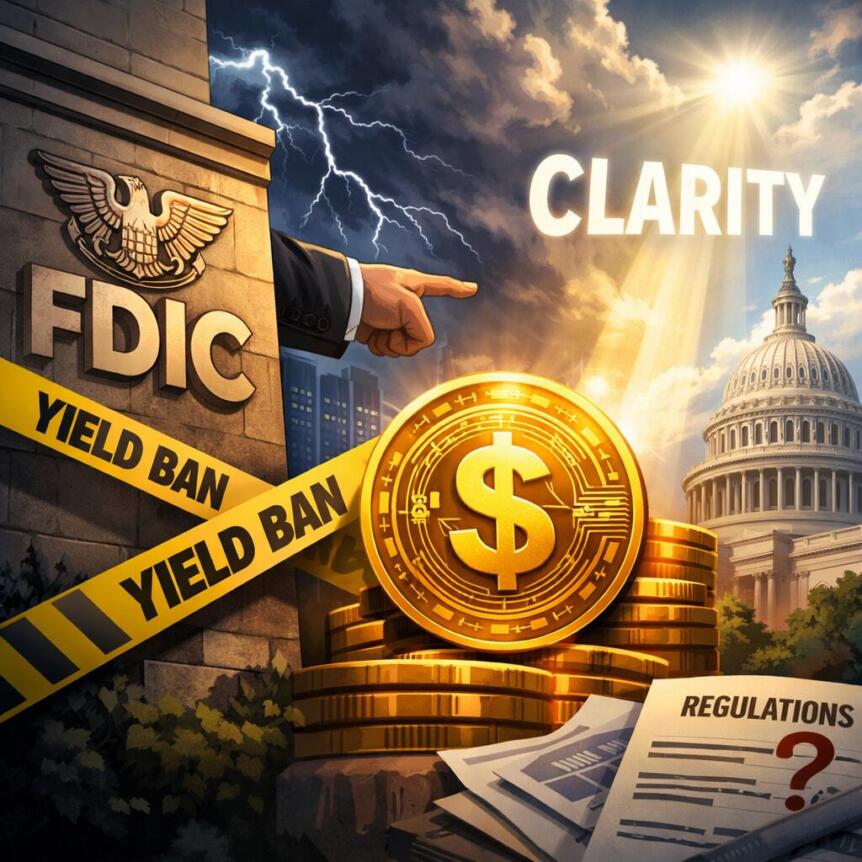
Paradigm has challenged the FDIC’s proposed stablecoin rules, warning against a broader yield ban. The firm says the GENIUS Act limits issuers, not independent third-party platforms. The letter adds pressure as Congress weighs the CLARITY Act and wider crypto market rules.
Paradigm Challenges FDIC Stablecoin Yield Plan
Paradigm told the U.S. Federal Deposit Insurance Corporation that its proposal exceeds the GENIUS Act. The firm said the law does not allow the agency to restrict third-party stablecoin rewards. It also argued that Congress rejected similar restrictions during earlier legislative talks.
The GENIUS Act bars stablecoin issuers from paying yield directly to holders. However, Paradigm said that the rule does not apply to exchanges or other outside firms. Therefore, the FDIC should not treat third-party rewards as automatic violations.
The firm urged the FDIC to remove language that expands the act beyond its text. It also asked the agency to match limits proposed by the OCC and NCUA. In addition, Paradigm called for a cure period for good-faith issuers.
CLARITY Act Keeps Stablecoin Rewards in Focus
The debate comes as the Senate considers the CLARITY Act, a broader crypto-market-structure bill. That bill protects activity-based stablecoin rewards offered by third-party firms. As a result, exchanges could still reward users without acting as stablecoin issuers.
The CLARITY Act follows the GENIUS Act, which has already advanced stablecoin regulation. Lawmakers designed the GENIUS Act to create reserve, licensing, and oversight rules. However, the reward issue remains a major point for crypto firms.
Ripple, Coinbase, and other companies have pushed lawmakers to advance the CLARITY Act. Yet the Senate faces a crowded schedule and several competing policy priorities. Even so, crypto firms view the bill as central to market clarity.
Paradigm Seeks Changes on Reserves and Reporting
Paradigm also asked the FDIC to protect white-label stablecoin arrangements. The proposal could force issuers to maintain separate systems for each branded stablecoin. The firm said subledgering would offer a cleaner and less costly approach.
The crypto firm also urged the FDIC to recognize tokenized reserve assets. It said the OCC already proposed similar treatment for such assets. That change could help stablecoin issuers manage reserves with clearer operational rules.
Paradigm further asked the FDIC to reduce weekly reporting requirements to monthly reports. It said weekly filings would raise fixed costs for smaller and growing firms. The firm also asked regulators to place reporting categories directly in the rule text.
Wider Industry Pushes Back on FDIC Proposal
Other crypto firms have also submitted comment letters on the FDIC’s stablecoin proposal. ConsenSys has urged the agency to revise parts of the planned rule. Circle also asked regulators to separate payment stablecoins from tokenized bank deposits.
Circle’s position matters because it issues USDC, one of the largest stablecoins in circulation. The company wants regulators to avoid treating distinct products under one framework. That split could shape how banks and crypto firms launch digital money products.
The FDIC now faces pressure to align its rules with Congress and other agencies. Paradigm’s letter adds another industry challenge to the proposed stablecoin framework. The final rule could define how rewards, reserves, and reporting work across the market.
https://www.cryptobreaking.com/paradigm-presses-fdic-over-stablecoin/?utm_source=blogger%20&utm_medium=social_auto&utm_campaign=Paradigm%20Presses%20FDIC%20Over%20Stablecoin%20Yield%20Ban%20as%20CLARITY%20Looms%20
Comments
Post a Comment