
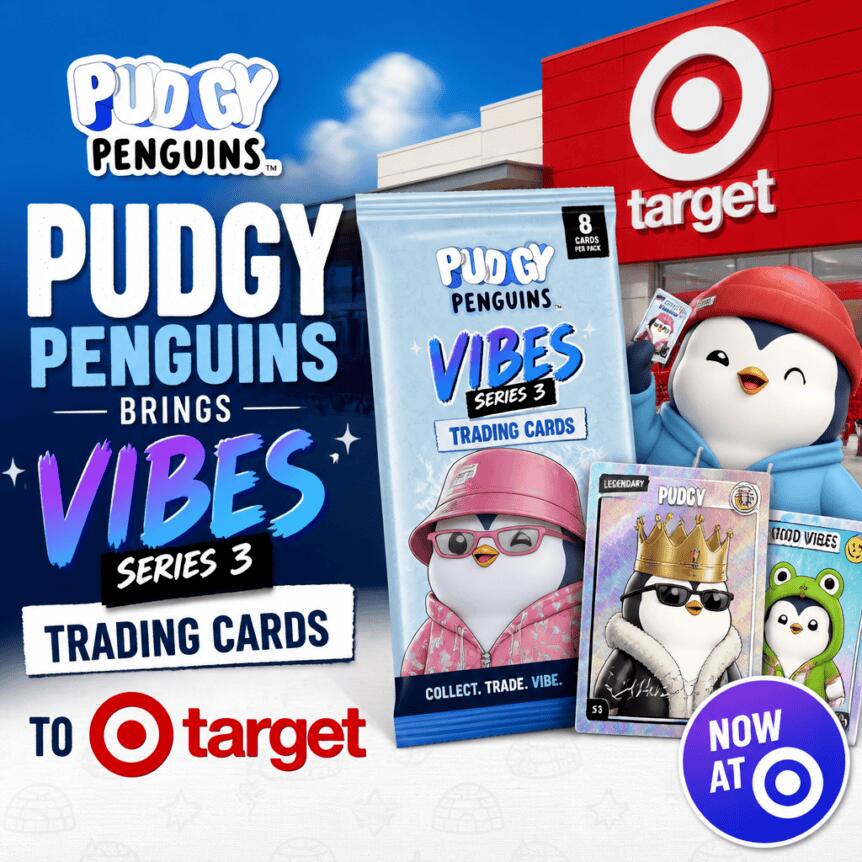
Pudgy Penguins is pushing its NFT identity deeper into mainstream retail with a new chapter for its trading card game. The Ethereum-based NFT brand says its Vibes Series 3 rollout is arriving at Target stores across the United States, marking what it calls the largest retail expansion for the card game so far.
In a press release shared with Cointelegraph, the company said the launch adds new gameplay mechanics and fresh artwork, alongside characters from its Moonbirds NFT collection. With Series 3, Pudgy Penguins also reports that a total of 15 million trading cards have been circulated.
Key takeaways
- Pudgy Penguins’ Vibes Series 3 is being rolled out nationwide at Target, expanding retail distribution beyond earlier launches.
- The company says total circulated Vibes cards will reach 15 million with the new set.
- Series 3 introduces additional gameplay mechanics and features artwork and appearances tied to the Moonbirds collection.
- Pudgy Penguins continues building a consumer franchise around its NFT IP via toys, licensing, and games—not just on-chain collectibles.
Vibes Series 3 arrives at Target
Vibes began as a way to translate Pudgy Penguins’ NFT ecosystem into a physical collectible format. With Series 3, the project is broadening its consumer reach through a major U.S. retailer.
According to the press release provided to Cointelegraph, the Target rollout is positioned as the biggest retail expansion to date for the Vibes trading card game. The set is designed to be more than a simple collectible: Pudgy Penguins says it includes additional gameplay mechanics, which can help keep the physical product connected to the broader “play-to-collect” narrative behind the project.
The new release also leans on cross-collection recognition. Pudgy Penguins says Series 3 incorporates original artwork and characters from its Moonbirds collection, adding a visible bridge between separate NFT communities in a format that doesn’t require buyers to navigate a crypto wallet.
Turning NFT IP into retail products
The Target push reflects a strategy Pudgy Penguins has been pursuing for years: use its NFT-born intellectual property as the foundation for consumer entertainment. While the trading card game is still rooted in its NFT universe, the company is increasingly developing physical and mainstream digital products that can appeal to audiences who may not engage with NFTs directly.
That approach has already shown up in retail. Pudgy Penguins has expanded into toys and other merchandising, and it previously announced that its physical toys entered more than 2,000 Walmart stores in 2023. In May 2024, CEO Luca Netz said in remarks to PRNewswire that more than 1 million toys had been sold over the preceding 12 months.
Pudgy Penguins also highlighted a licensing model that ties ownership to physical product value. The company says NFT holders can receive 5% of net revenue from physical products featuring their individual penguins, creating a continued link between on-chain ownership and offline sales.
For investors and traders watching NFT sector developments, this kind of mainstream retail rollout matters because it suggests a revenue model that is not solely dependent on market activity for the underlying NFTs. If adoption of physical products grows, it can reduce how directly the brand’s audience and monetization are tied to NFT speculation cycles—though the long-term economic balance remains something the market will need to monitor.
Series 3 follows earlier releases—and a gaming push
Pudgy Penguins’ Vibes rollout comes after two earlier trading card game releases, with Series 3 now positioned as the next step in the product roadmap. The brand says Vibes was developed in partnership with Orange Cap Games, and that Series 3 is the latest installment in a system meant to extend the IP beyond simple digital collectibles.
Beyond cards, Pudgy Penguins has also been working to bring its characters into blockchain gaming. In 2025, the company launched the skill-based game Pengu Clash on The Open Network. Netz described gaming as a way to expose the project’s intellectual property to wider audiences, treating play as a growth channel for the IP.
More recently, Pudgy Penguins expanded into mobile gaming with Pudgy Party. The company said in August 2025 that downloads for the title had exceeded 1 million. However, it later announced that it would halt further development of the game and redirect resources toward a browser-based project called Pudgy World, according to earlier Cointelegraph coverage.
This shift—expanding into new formats and then consolidating efforts—highlights a pattern common to emerging entertainment products: not every title keeps its original roadmap, and resources often move toward the games that show the clearest traction or fit with the brand’s longer-term distribution goals. For readers following Pudgy Penguins, the immediate question is whether the combined push across retail and gaming will reinforce each other, driving brand awareness that translates back into the community around Pudgy NFTs.
Where Pudgy Penguins sits in the NFT landscape
Even as the company emphasizes consumer products, Pudgy Penguins remains an established NFT brand in market terms. The press release points to NFT Price Floor data, noting that the project is the fourth-largest NFT collection by market capitalization, based on the tracker.
That positioning can be important context for why partnerships and cross-collection collaborations are feasible in physical formats. Large, recognizable NFT collections typically have more leverage to coordinate with other communities and to attract retail-facing distribution opportunities, especially when the product framing is tied to brand familiarity rather than crypto mechanics alone.
At the same time, the Vibes Series 3 announcement doesn’t specify how physical sales will translate into measurable on-chain outcomes. While the licensing structure suggests a direct economic bridge for holders, the broader impact on NFT demand, secondary-market behavior, or user conversion will likely be something to watch over the coming retail cycle—particularly after the Target rollout begins.
Next, investors and collectors will likely focus on how quickly Vibes cards sell through at Target, whether Series 3’s additional gameplay mechanics drive repeat purchases, and if Pudgy Penguins’ gaming and retail efforts continue to strengthen the brand’s customer funnel rather than fragment it across too many initiatives.
https://www.cryptobreaking.com/pudgy-penguins-brings-vibes-series/?utm_source=blogger%20&utm_medium=social_auto&utm_campaign=Pudgy%20Penguins%20Brings%20Vibes%20Series%203%20Trading%20Cards%20to%20Target%20Stores%20
Comments
Post a Comment