
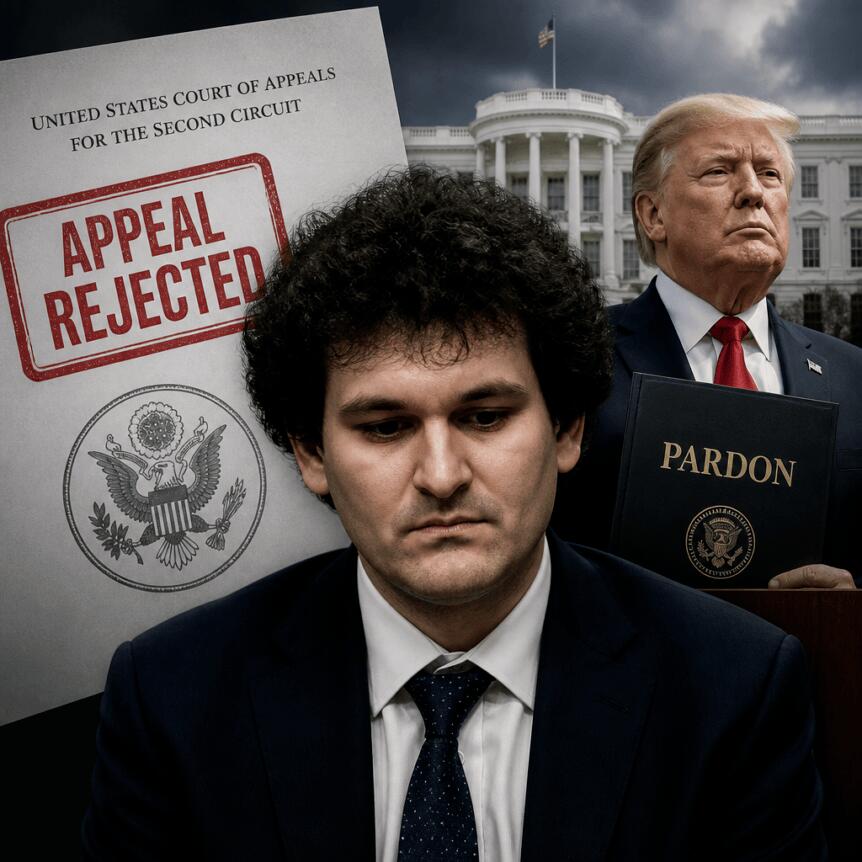
Sam Bankman-Fried’s latest attempt to overturn his FTX fraud conviction has been rejected. In a unanimous decision issued by a three-judge appeals panel of the US Court of Appeals for the Second Circuit in Manhattan, the court denied his bid for relief and upheld the conviction and 25-year prison sentence linked to the 2022 collapse of FTX.
According to Reuters, the panel characterized the government’s case as “conservatively stated, robust,” signaling that the appeals court found the original trial record supported the conviction.
Key takeaways
- Bankman-Fried’s appeal was rejected unanimously by a Second Circuit panel, leaving the fraud conviction and 25-year sentence intact.
- The appellate court said the government’s case against him was “robust,” indicating strong support in the trial record.
- The ruling does not end the matter for Bankman-Fried, who is pursuing other legal options including clemency.
- His effort to seek a presidential pardon appears to face uncertainty given prior public statements from President Donald Trump.
A conviction upheld, not reopened
The Second Circuit decision means Bankman-Fried’s conviction for fraud and conspiracy charges tied to FTX’s collapse will stand for now. The appellate court’s ruling did not suggest the case was close or that errors undermined the verdict. Instead, the judges described the prosecution’s evidence as substantial.
In the decision, Circuit Judge Barrington Parker wrote about what the court viewed as the contradiction between Bankman-Fried’s public messaging and the conduct alleged in the case. As reported by Reuters, Parker noted that while Bankman-Fried was publicly reassuring customers, investors, and regulators that FTX customer funds were safe, the government’s narrative portrayed FTX as being used to cover spending tied to Bankman-Fried personally—described as including real estate expenditures, political contributions, and investments.
For investors and crypto market participants who have been tracking the long legal aftermath of the FTX bankruptcy, the appeals ruling underscores how firmly the judiciary has treated aspects of the case. The longer this process runs without reversal, the more difficult it becomes for defendants relying on appellate arguments to change outcomes, even as other avenues remain open.
Clemency replaces appeal as the next path
The appeals court’s rejection shifts the focus to Bankman-Fried’s other legal strategy. Earlier coverage from Cointelegraph said he formally applied for a presidential pardon from Donald Trump. The request appeared on the US Department of Justice Office of the Pardon Attorney website in early June, according to the reporting cited in that article.
Bankman-Fried was sentenced to 25 years in 2024 after being convicted on fraud and conspiracy charges related to FTX’s multibillion-dollar collapse.
While clemency is a different process from appeals—often grounded more in executive discretion than legal error—it remains a meaningful watch point for the broader crypto community. It is also a reminder that even when appeals fail, defendants may still seek relief through political or executive channels.
Why a pardon remains uncertain
Public signals around the clemency effort appear mixed. In an interview with Fox Business, Bankman-Fried said he was “absolutely” seeking a presidential pardon from Donald Trump. However, the strongest obstacle is the president’s prior posture.
Trump told The New York Times in January that he had no plans to pardon Bankman-Fried. Separately, a White House spokesperson declined to comment on the clemency request, Bloomberg reported, referencing the earlier remarks.
Even so, Trump has demonstrated willingness to grant high-profile pardons in the past. One example cited in the reporting is a pardon granted in January 2025 to Ross Ulbricht, the founder of the dark web marketplace Silk Road. Ulbricht had been serving two life sentences plus 40 years before the pardon. Silk Road’s platform used Bitcoin as a primary payment method, which keeps the case relevant to crypto-linked audiences even years after the marketplace was shut down.
For observers trying to interpret Bankman-Fried’s odds, the key tension is straightforward: past statements suggest reluctance, but precedent shows the executive branch can change course depending on the case.
What to watch next
The immediate development is clear—Bankman-Fried cannot undo the conviction through this appeals ruling. The next decisive question is whether his pardon application gains traction, and what any further statements from the White House or the DOJ’s Pardon Attorney process indicate about the likelihood of executive relief.
https://www.cryptobreaking.com/sbf-appeal-rejected-as-trump/?utm_source=blogger%20&utm_medium=social_auto&utm_campaign=SBF%20Appeal%20Rejected%20as%20Trump%20Pardon%20Effort%20Presses%20On%20
Comments
Post a Comment