
Many of the systems people interact with every day were designed for a different era. Universities follow models developed decades ago. Financial institutions rely on frameworks, regulations, and operational practices that have evolved over decades rather than being rebuilt from scratch with each technological breakthrough.
This persistence is not necessarily a flaw. Stability is often what allows large systems to function. The global financial system moves trillions of dollars every day because it operates under a common rulebook of procedures and expectations that banks have spent years building processes around.
But the result is a financial system that is difficult to change. While online banking changed how customers interacted with their accounts and electronic trading increased speed and accessibility, these innovations worked largely because they complemented the existing financial system rather than challenging its foundations.
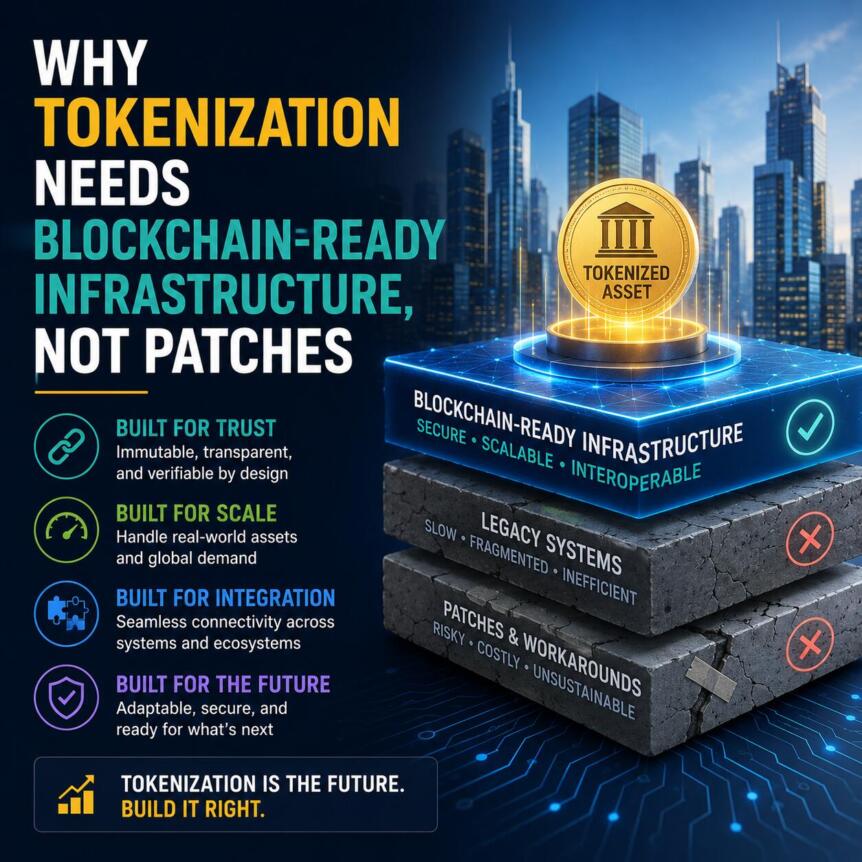
For some areas of technology, building new layers on top of old infrastructure is enough. A better interface or more efficient processing system can improve how a system operates without changing what it is. But for industries like blockchain, where digital assets are fundamentally different from fiat, the challenge runs deeper, and problems arise when old systems are expected to support models they were never designed to handle.
On June 22, former 21Shares co-founder Opheila Synder argued that the industry’s primary challenge isn’t tokenization itself, but integrating blockchain-based assets into systems banks already rely on. Synder's argument assumes that as financial institutions prepare for their next phase, in which they welcome digital assets into their ecosystems, blockchain-based assets will naturally become part of the existing financial system.
However, integration does not automatically equate to compatibility.
Traditional financial infrastructure was not built with blockchain in mind. It was built around centralized ownership records, intermediary-driven settlements, and operational processes that have remained largely intact, even as new waves of technology changed how people access and interact with financial systems.
This is where Snyder’s argument might fall short. Integrating blockchain-based assets into existing financial frameworks assumes those systems are fundamentally compatible with blockchain. It also assumes that tokenization is simply a matter of converting traditional assets into digital form and then connecting them to the institutions that already manage finance.
However, tokenization is not just a new format for an old asset. It changes how ownership is recorded, how transfers can occur, how settlement is handled, and how compliance may need to be enforced. It can automate transfers, enforce restrictions, and distribute payments without relying on the many manual processes that have long defined traditional markets.
Under that lens, traditional financial institutions cannot treat tokenization as something to be patched onto old systems. This is where purpose-built RWA platforms become more relevant. Mavryk, for example, was designed specifically for tokenized real-world assets, allowing users to tokenize, trade, and leverage assets such as real estate, bonds, and commodities directly onchain. Its infrastructure is also built with institutional requirements in mind. Through integrations with security and custody providers, Mavryk supports safeguards around asset protection, compliance, and operational risk. Its purpose goes beyond issuing tokens, but creating an environment where those assets can be properly managed, traded, secured, and used within a compliant ecosystem.
While it's exciting to see industry leaders take tokenization more seriously, adoption cannot be measured by issuance alone. The real test is whether the infrastructure around these assets can support the management needed for them to function. Without that foundation, tokenization risks becoming another layer on top of finance rather than a meaningful step toward the financial system the industry is attempting to rebuild.
https://www.cryptobreaking.com/why-tokenization-needs-blockchain-ready/?utm_source=blogger%20&utm_medium=social_auto&utm_campaign=Traditional%20finance%20can’t%20‘software-update’%20its%20way%20to%20tokenization%20
Comments
Post a Comment