
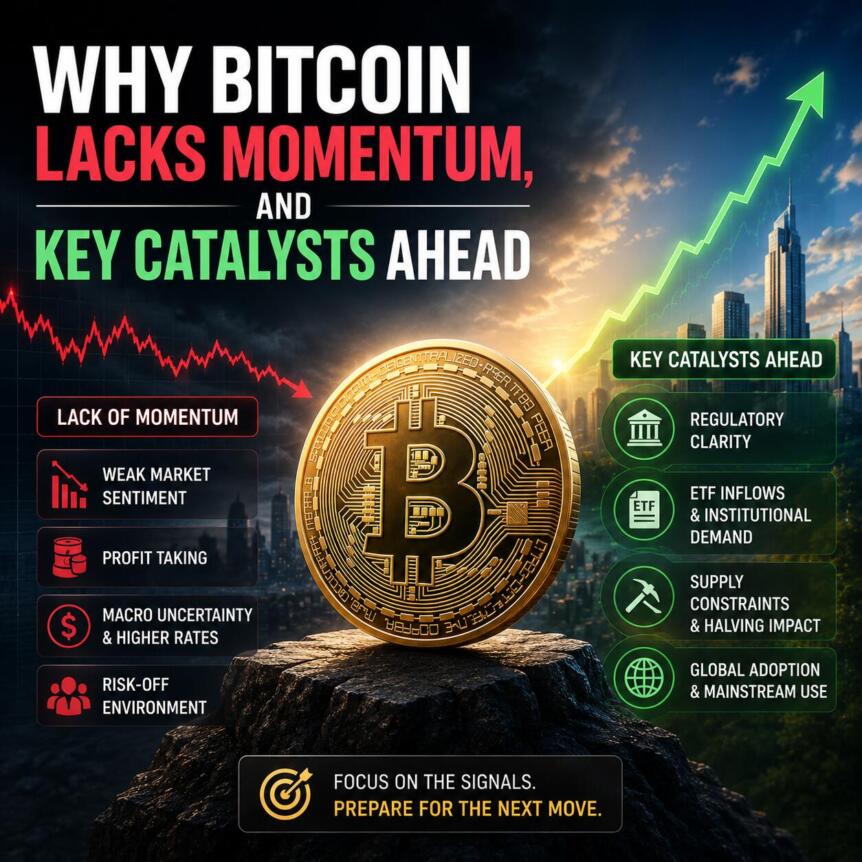
Bitcoin is trading just above $66,000, but the move has lacked sustained follow-through. In recent commentary shared with CryptoBreaking.com, Nagham Hassan, market analyst at eToro, argues that three overlapping forces are keeping a lid on price action, even as broader risk assets show resilience.
While the near-term backdrop includes headline-driven volatility, Hassan frames the current price behavior as more than simple sentiment. The argument, in brief, is that traders are waiting for confirmation across geopolitics, the typical rhythm of Bitcoin’s market cycle, and how capital is being redeployed across equities and thematic trade ideas, particularly around artificial intelligence.
Geopolitical headlines, without the market confirmation traders want
One element in Hassan’s view is the market’s reaction to developments around the Strait of Hormuz. The US and Iran have reached a memorandum of understanding intended to reopen the waterway, with a signing planned for Friday. Oil prices have eased and equities have risen, and Bitcoin is up modestly on the day.
However, Hassan cautions that trading activity appears to reflect an interim arrangement rather than a settlement. In the commentary, he suggests the market is not yet pricing the practical outcome, namely ships actually transiting the strait, and that related elements such as nuclear talks remain deferred.
For Bitcoin, which tends to respond to macro and liquidity conditions but can also be affected by geopolitical risk appetite, the implication is that partial agreements may not be enough to create a durable trend. Until traders see concrete changes to risk exposures, price may remain in a range.
The four-year cycle still matters, analysts say, even if timing is debated
The second factor is cycle positioning. Hassan characterizes Bitcoin as still being in a bear-market phase of its widely discussed four-year rhythm. He references a peak at $126,000 in October 2025 and notes that historical patterns often show a bottom arriving 12 to 13 months after the peak.
On that timeline, he places the market roughly eight months into the post-peak period. A key point in the analysis is the ongoing debate over whether the $59,000 level marked a true floor or merely an intermediate low.
Instead of treating recent weakness as a completed reset, Hassan’s view is that further downside risk is possible until Bitcoin demonstrates reversal characteristics. He points to the 200-day moving average as a technical benchmark and says the area is currently in the $82,000 to $83,000 range. In his framing, reclaiming that level with conviction would be more consistent with a change of regime than a short-term rebound.
Liquidity rotation toward AI, plus ETF outflows, reduces Bitcoin’s pull
The third factor is capital allocation. Hassan argues that investor attention is being pulled toward the artificial intelligence trade and toward a wave of high-profile initial public offerings, creating a headwind for Bitcoin demand.
He cites market examples tied to AI momentum, including a reported view that AI-linked spending and infrastructure has been a major contributor to broader equity gains. In addition, the commentary references outflows from Bitcoin ETFs, describing a week in which net flows totaled $3.4 billion leaving these products. The analysis frames this as meaningful because ETF flows are one of the channels through which institutional investors express BTC exposure.
Even with Bitcoin up modestly on the day, the broader implication is that passive and institutional participation may be paused or redirected. If the marginal buyer is focused on AI-linked equities and upcoming listings, Bitcoin may struggle to find the sustained bid needed for a breakout.
What would need to change in the second half of 2026
Looking ahead, Hassan does not present a base case for an immediate recovery. He argues that for a more reliable bottom to form, multiple conditions would likely need to line up, including macro policy expectations. His commentary notes that the Federal Reserve has not “turned,” implying that interest-rate expectations remain a key variable for risk assets and liquidity-sensitive markets.
On the geopolitical side, he suggests the Iran-related framework would need to survive not only the formal signing but also the following weeks in order for markets to treat it as durable rather than conditional.
Finally, he expects that AI and IPO-driven capital absorption could continue for at least the next two quarters. In practical terms, that means Bitcoin’s next move may depend less on single-day narratives and more on whether flows return, whether ETF outflows stabilize, and whether technical resistance levels begin to break in a sustained way.
Market context: consolidation can be a feature, not a failure
Bitcoin’s lack of momentum can frustrate traders, but in cycle- and liquidity-aware analysis it can also be interpreted as consolidation. When catalysts are partial, policy direction is unclear, and capital is being redirected to other themes, price often trades in a holding pattern while the market waits for the next regime shift.
For investors monitoring Bitcoin into the latter half of 2026, the checklist implied by this commentary is clear: look for evidence that geopolitical risk is actually changing, watch how ETF flows behave, and measure whether broader macro conditions and technical levels begin to align.
Disclaimer: This article is based on analyst commentary provided by eToro and is for informational purposes only. It does not constitute investment advice.
https://www.cryptobreaking.com/why-bitcoin-lacks-momentum-and/?utm_source=blogger%20&utm_medium=social_auto&utm_campaign=Why%20Bitcoin%20Lacks%20Momentum,%20and%20Key%20Catalysts%20Ahead%20
Comments
Post a Comment